
Common Clothing Mistakes To Avoid When Camping
Whether you're a seasoned camper who packs only the essentials or a pampered glamper who takes everything and the kitchen sink, it's often what you pack (or forget to pack) to wear while camping that can truly make or break your experience. Anyone who has ever gone to bed warm and woken up in the middle of the night shivering knows what it takes to stay comfortable and safe while you're camping can change drastically within a matter of hours or even minutes, which is why it's so important to plan your clothing well.
No matter where you're heading on your next camping adventure, picking the right clothing means you don't end up soaked, overheated, or shaking in your boots. It also means thinking about how you plan to store or dry those clothes. What might be a source of discomfort when you're close to home can turn into a health crisis when you're far from civilization in the desert, mountains, or lakeside forest.
Strategic camp clothing packing goes far beyond dropping a mint on the most popular U.S. camping brand. It's all about understanding what you'll actually need. To learn which common clothing mistakes campers should try to avoid, we combed through message boards, subreddits, and camping blogs for recommendations. Save this list to consult the next time you're packing for a camping trip.
Not bringing a spray bottle filled with rubbing alcohol
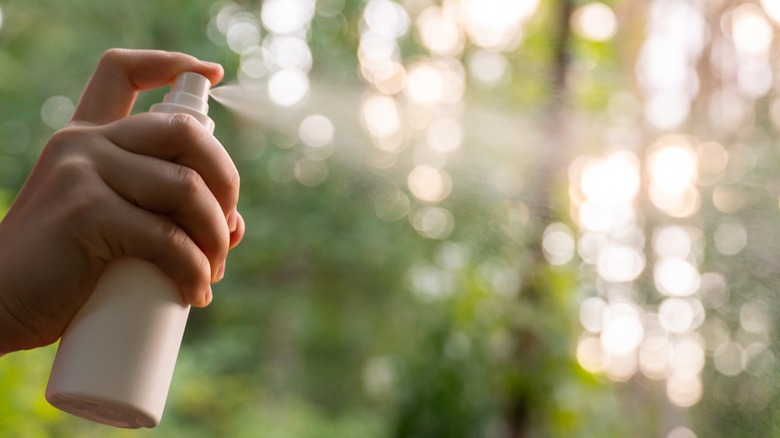
No camping trip gear update would be complete without a requisite trip to the Dollar Tree for camping supplies under $5. While you're there, be sure to pick up a handful of travel-sized spray bottles — an essential for some of the best DIY camping hacks like spray cooking oil or DIY bug spray. And, according to Girl Camper camping guide Lisa Dempsey, they're great for filling with rubbing alcohol to spray on your clothing to help them dry more quickly and feel fresher longer when there's nowhere to wash your clothes. Girl Camper suggests purchasing 70% rubbing alcohol for odor control and disinfecting as it can effectively knock out bacteria. For rapid drying, 91% alcohol is much more effective as it pulls away moisture easily.
Using a funnel, simply pour the rubbing alcohol directly into your travel-sized spray bottle. When you're ready to use it on the clothing you've worn that day, spray a light mist all over the outside of your clothing before turning them inside out and spraying the inside. Be sure to hang them in a well-ventilated area to dry, preferably outdoors on a clothing line. When you wake up, they'll be fresh and good to go.
To apply to wet clothing, wring them out thoroughly to remove as much moisture as possible. Lightly mist both the inside and outside, hanging each item in a well-ventilated area. Remember that alcohol is highly flammable, so never hang them near a stove, heater, or fire, and never place alcohol-soaked clothing in a dryer.
Not properly storing the clothing you cook in
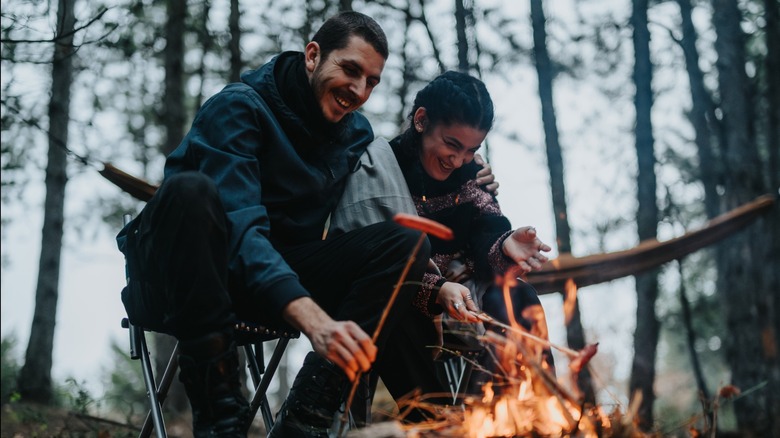
According to the U.S. National Park Service, black bears have a sense of smell so strong it is difficult to quantify, with conservative estimates suggesting they can sniff out a food source from at least a mile away. But even if you're not in bear country, it's probably a good idea not to sleep in the clothing you cooked just in case any other critters with a strong sense of smell happen to be around.
Seasoned campers with experience camping out in bear country separate their cooking clothes from their tent after they change into fresh clothing at bedtime. Writing on a Backpackinglight.com thread, one scoutmaster advised removing the outer layer of clothing worn while preparing dinner and eating and then changing into a sleep outfit. "The clothing is stowed with packs under a gear tarp more than 100ft away from the tents," he advised. For clothing marked by food spills, he suggested stowing them in bear bags.
Other seasoned campers on Reddit advised keeping these items even further away with your cooking gear. "Food should be stored 100 yds away from camp, and strung up to the pole," one camper advised, adding, "You are to change clothes that you were in while cooking and store with the food you have strung up, as your clothing would have all the cooking scents."
Not layering effectively
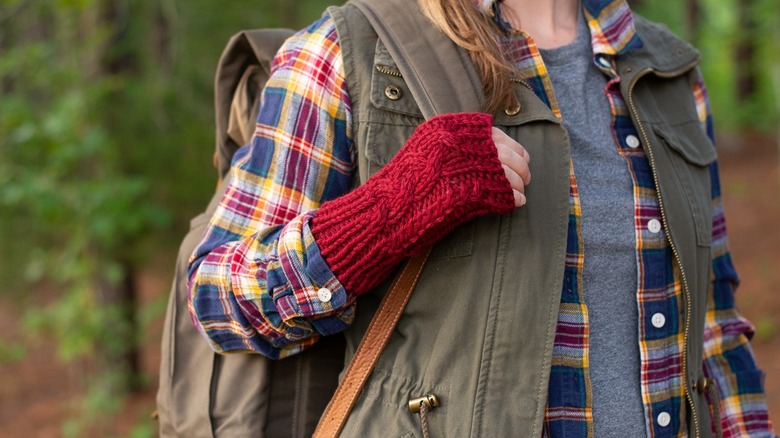
Layering is an essential principle for safe and comfortable camping and hiking. This allows you to add or subtract what you need as the temperature rises or drops, and it works well no matter what time of year you're camping, as long as you layer with the right fabrics. It could even save your life if you're suddenly caught in an unexpected snowstorm.
Most experienced campers recommend using a three-layer system consisting of a base layer, midlayer, and outer shell. The base layer, typically a long-sleeved shirt made of comfy, breathable fabric, is important because it helps to wick moisture away from your body and provide a protective cushion against any itchier midlayer fabrics. One Redditor shared on r/hiking, "Having something light to push the moisture away and into a layer that isn't directly on my skin adds a lot of comfort. Plus, it's something very light that I can strip down to if I get particularly overheated." It also saves campers from having to retain sweat under winter layers, and the fabrics can be adjusted as needed depending on the season. "Being sweaty and cold is the worst feeling, so I avoid sweating by using minimal, light layers," the user added.
Think of your midlayer as variable — it doesn't have to be just one clothing item and can be adjusted based on your specific camping conditions. A second, heavier long-sleeved shirt, a cashmere or wool sweater, or a layer of fleece can all make excellent midlayers. And for your outer layer, you'll need a hard-shell jacket and an outer soft-shell pant layer. If conditions are extremely cold, add puffy jacket and over-pants layer as needed.
Not checking the thrift store for cashmere and wool
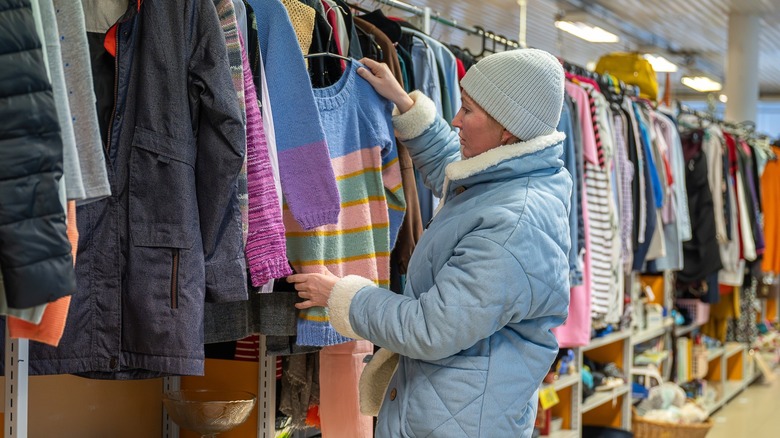
Cashmere and merino wool are essential layering elements for winter camping. Cashmere is produced from the soft undercoat of the cashmere goat, while more durable merino wool comes from the merino sheep, with both offering a protective layer of warmth for campers. And both products can get quite expensive, especially when you're picking up new items for a camping trip. But seasoned campers say you don't necessarily have to pick up a Scheels credit line to stock up on these layers. Just make the rounds at your local thrift stores to peruse their sweater section, where you can often find cashmere and wool for around $10 or less.
These items can often end up donated to thrift stores with tiny moth holes in them, but that doesn't matter when you're buying them for camping. "My husband and I both have thrifted cashmere... that we use for camping/backpacking!" shared one Reddit user on r/ThriftStoreHauls. "It's lightweight, super warm, and only cost us $10 total. It really is the goat (haha) of natural fibers!"
Writing in the same thread, another user reported picking up cashmere pieces that retailed for $150 and $450 at the low price points of $3.99 and $7.99, respectively. The same is true for fleece. As another Redditor noted in r/CampingGear, these fabrics tend to come from the same mills, whether they're designed for athletic stores or more general purposes. Thrifting is a fantastic and fun way to avoid overpaying for these layers, leaving more money to blow on other luxury camping equipment.
Packing cotton clothing of any kind
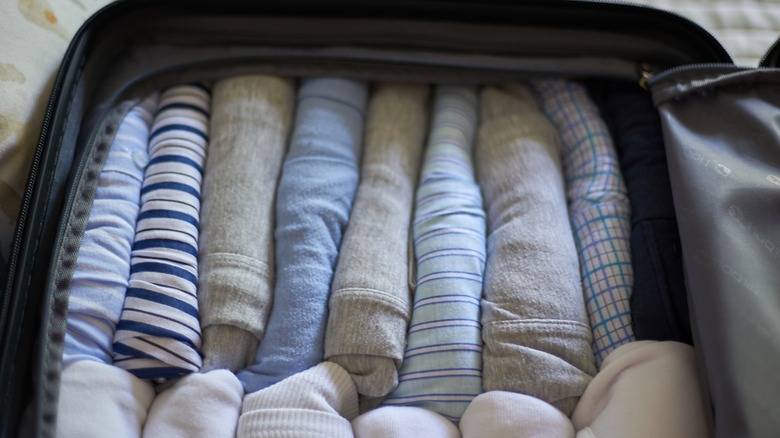
One thing most experienced campers and hikers tend to agree on when it comes to camping gear is that cotton is a bad choice for anyone planning to be out in the elements. Cotton products retain moisture, which can be bad whether you're retaining sweat in your first or midlayer or you're dealing with a thinner outer layer. It can also take forever to dry, especially when it's cold, overcast, and/or damp outside.
The warning even extends to cotton underwear, which experienced hikers say can lead to chafing thanks to the moisture factor. Writing on r/hiking, one Reddit user found merino boxers so effective that they adopted them for everyday use after testing them out while hiking. "They're so comfortable, never cause chafing...It's a total game changer." For women's underwear, which require breathability to maintain feminine health, seasoned campers recommend using synthetics or merino wool with a cotton fabric panel in the lower body region.
The same is true for socks, since cotton socks can retain sweat and other weather-related moisture, increasing discomfort, health risks, and the opportunity for blisters to arrive. Synthetics or wools are also preferable over cotton shirts in cold weather or mountainous environments, where they could potentially lead to hypothermia, as well as in hot and humid climates where they could end up sticking to your back. As for cotton jeans? One Reddit user warns, "Only if you want to look cool and chafe."
Not packing cooling fabrics in summer
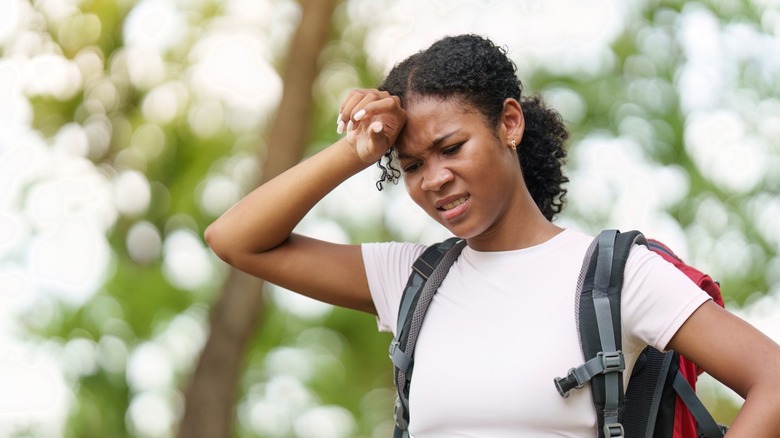
It's easy to underestimate the heat, especially if you're not used to living in a high-temperature climate. Ask anyone from a region where the temperatures can hit three digits during the summer months, and they'll tell you it's not just about taking off layers when the temperature rises. There's a reason desert-dwelling communities cover most of their skin even in high heat: they've mastered the concepts of cooling fabrics and ventilation.
When you're camping in high temperatures, you want to bring fabrics that are both breathable and cooling, and also durable enough to protect you when you're camping. Synthetic fabrics designed to keep cool are the best choice, with many offering built-in UV protection at the same time, and Reddit is full of recommendations from regular campers and hikers. "I live in Florida, so I wear cooling fabrics most of the time," shared one Reddit user on r/CampingGear. For thin, breezy fabric that's resilient enough for hiking through forests and scrub, they recommended Columbia anytime outdoor pants. "They are super thin, so you don't feel like you're wearing pants at all, cooling, quick dry, and very strong."
For cooling and fast-drying high-temperature shirt recommendations, the user suggested Duluth Trading's Armachillo, Uniqlo Airism, or the less-spendy Amazon Essentials Tech Stretch. "They are cheap, cooling, and quick dry," they concluded. Other recommendations included linen fabric, Patagonia Capilene Cool, REI Sahara shirts, Icebreaker, and Outdoor Research Astroman or Ferrosi.
Not bringing a waterproof light jacket
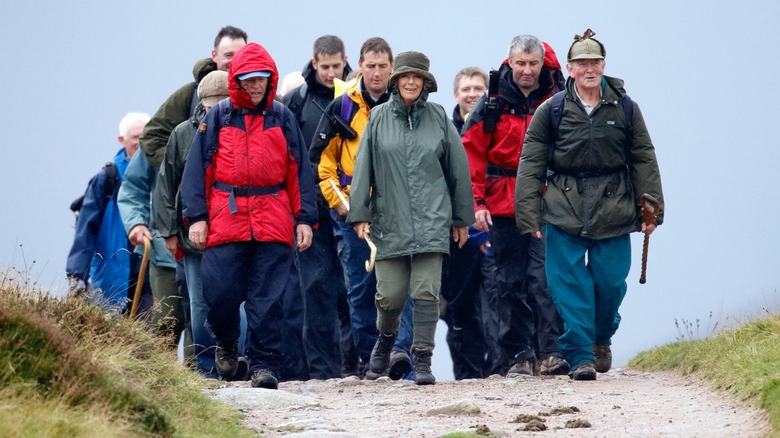
Even if the weather report is bone dry, planning to pack a waterproof light jacket can save your bacon if there's any unexpected moisture. What might seem like just a cute little light rain back at home can leave you completely soaked in the few minutes it takes to set up your campsite. And when you're soaked in the cold, it can seem like your clothes will never dry. Seasoned campers and hikers say you want a light jacket made using waterproofing technology to prevent this from happening.
Outlining the two main waterproofing technologies on r/hiking, one Reddit user emphasized the importance of understanding how they both work as you settle on a decision for which option you plan to use. The first is not a fabric but a chemical treatment applied to the outer layer of a material. Durable Water Repellent (DWR) is an effective hydrophobic water repellant that creates a barrier where water beads up and sheds rather than absorbing into the material. The downsides of DWR are that while it is breathable when dry, it loses this breathability as water builds up on the outside, and the DWR membrane tends to break down over time. On the flip side, the membrane can be renewed when needed.
Synthetic waterproof fabric technologies like Gore-Tex are made from microporous polymers. Gore-Tex, for example, features billions of microscopic pores across every square inch — all of them thousands of times too small to allow any rain droplets to pass through. Similar products like eVENT, Polartec Neoshell, and The North Face's FutureLight harness comparable technologies to create a waterproof barrier that will keep you dry in the soggiest weather. Just remember not to wear your waterproof jacket when it's hot since that moisture retention goes both ways.
Not having the right pockets
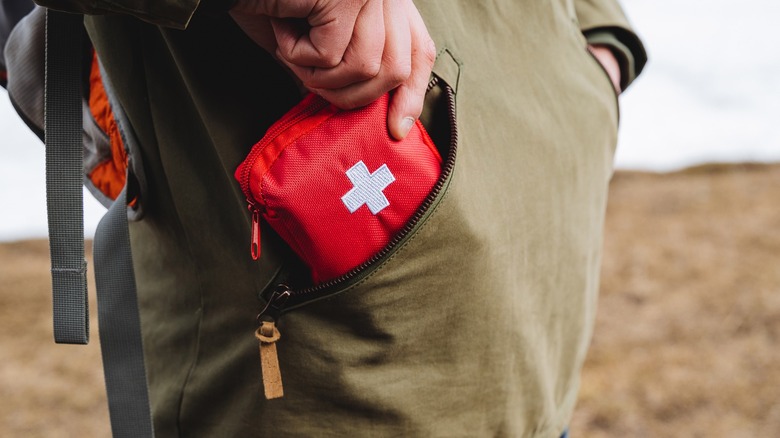
Clothes with lots of good pockets can be a godsend when you're camping. Over the course of your day, you might use your hand sanitizer and pocket knife dozens of times — but you'll also want access to your phone, bug spray, keys, chapstick, wallet/ID, and maybe a quick granola snack. Cargo pants usually offer plenty of deep pockets, but seasoned campers and hikers recommend looking for pockets that come with zippers to keep your belongings from falling out all over the campsite.
Writing on r/camping, one seasoned camper sang the praises of their chef pants. "They are perfect for my needs. They're cheap, billowy with a loose weave to ensure airflow, tough as nails, and have big pockets plus a cargo pocket." Another Reddit user recommended prAna's hiking pants for a camping-friendly pant with decent pocket action, writing, "[T]hey dry super fast if you get wet and they have tons of pockets." Others recommended checking out Costco's offerings for camping pants with good pockets. Reddit users have frequently compared Costco's hiking clothes to higher-end brands, noting that they're available at a fraction of the price.
Not wearing the right hiking shoes or boots
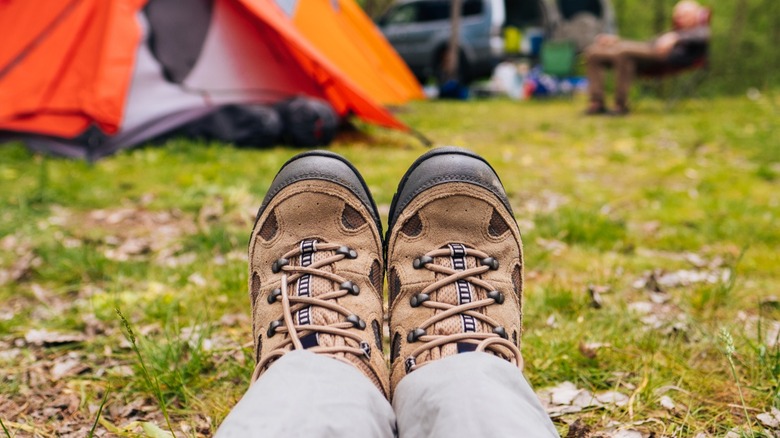
Even if your camping plans mostly involve roasting marshmallows and telling ghost stories around the campfire, it's still a good idea to invest in a quality pair of hiking boots ahead of your camping trip. The terrain around campsites can get pretty uneven, and you don't want to bite it while trekking your way out to the loo in the middle of the night. Even if your trusty old trainers might serve you well enough for that purpose, step on a sharp twig or rock and it can go right through the sole of your shoe.
On the other hand, a good, sturdy pair of trail runners or hiking boots will be better suited for walking on rough terrain while providing the support you need so you don't end up with a backache, muscle fatigue, or leg and ankle pain. They also tend to be water resistant or waterproof with Gore-Tex or similar technology with grippier soles designed to perform better on wet or icy ground, steep surfaces, and gravel, mud, or dirt.
Experienced hikers and campers recommend investing in a solid, durable pair of lightweight trail runners or hiking boots if you're planning to spend time in the great outdoors. And while it's fine to shop around and try to save a little cash, many emphasize researching the brand and making your decision based on the ratings. As one Reddit user warned on r/CampingandHiking, "Please get a good pair! I hiked around Alaska for two weeks in the worst ones and regretted it instantly." Look for brands like Merrell, Keen, Salomon, Zamberlan, Columbia, and Vasque when you're shopping. And according to the hiking community, it's best to try them on at the end of the day when your feet are swollen.
Not bringing the right hand warmers
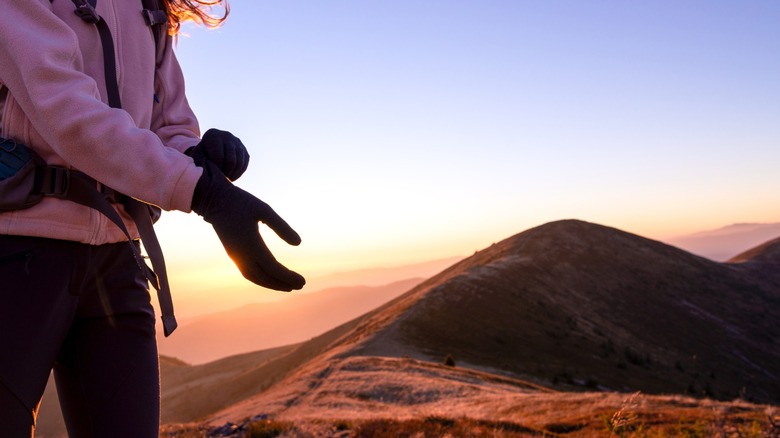
Cold, wet hands can make it incredibly difficult to do all the things you need to do around a campsite from gathering wood to taking down a tent and loading your gear. But failing to bring the right level of hand warmth can cause far more than a little discomfort, leading to chapped hands or even frostbite. It's also easy to underestimate how cold things can get when the wind whips up in a frosty climate, especially when you're camping lakeside. When in doubt, it's always best to over-layer your hand warmth since, just like your body layers, you can always remove one if it's too much.
Seasoned hikers and campers experienced with cold climates recommend bringing glove liners to wear under your thick gloves. When those heavy winter gloves get to be too much, glove liners provide a layer of warmth and protection without compromising your movement too much. The best glove liners will be insulating, breathable, and dexterous so you can feel what you're doing and aren't tempted to take off your gloves. It's also a good idea to pick up gloves with electronic tips so you can still use your phone without baring your hands to the cold. And, as one Reddit user advised on r/CampingGear, "For thick outer layer hand protection, mittens > gloves."
Wearing dark clothing
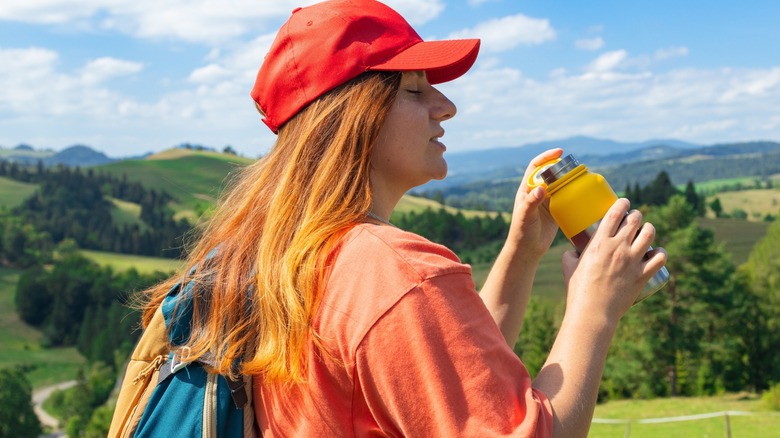
In the summertime, lighter clothing will help you stay cooler since dark fabric absorbs the sun's rays, which can make a dramatic difference as the mercury starts to climb. Lighter and brighter clothing also allow greater visibility against the deep greens of a forest, making it easier to avoid getting separated from the rest of your camping party and providing an added layer of protection against hunting accidents if you're out during deer season. And no matter which biome you're camping in, lighter and brighter clothing can make you easier to spot if, heaven forbid, search and rescue teams should need to find you.
While light and bright clothing won't prevent ticks from selecting you as a dinner date — in fact, studies suggest they may actually attract them — experienced campers prefer light clothing so you can spot them better. "The official recommendation is light colors so you can see the ticks," shared one Reddit user on r/hiking. Another Reddit user wrote, "Ticks will likely take some time to find their preferred spot, so they crawl around for sometime before biting." And you'll definitely be more likely to see them crawling on neon pink than on camouflage or black.