
This Abandoned Town In The Texas Hill Country Is A Historic Treasure With Serene Natural Beauty
Texas is a state of great stories, and this one began just an hour's drive northwest of San Antonio. The year was 1858, and an Army scout named José Policarpio Rodriguez was assigned an unusual mission: tracking down escaped camels in the Texas Hill Country after a failed U.S. Army cavalry experiment. Those strange circumstances, combined with the vision of one determined man, helped lead to the founding of Polly, Texas.
Although the town has been abandoned for nearly a century, its brief life was prosperous and full of color. Located along Privilege Creek, the area is a serene oasis filled with cypress, oak, and cedar trees. Named for the founder's nickname, Polly — and officially known as the J.P. Rodriguez Settlement — this beautiful slice of the country attracted settlers who transformed it into a thriving community of ranchers and farmers under the watchful eye of the retired Army scout.
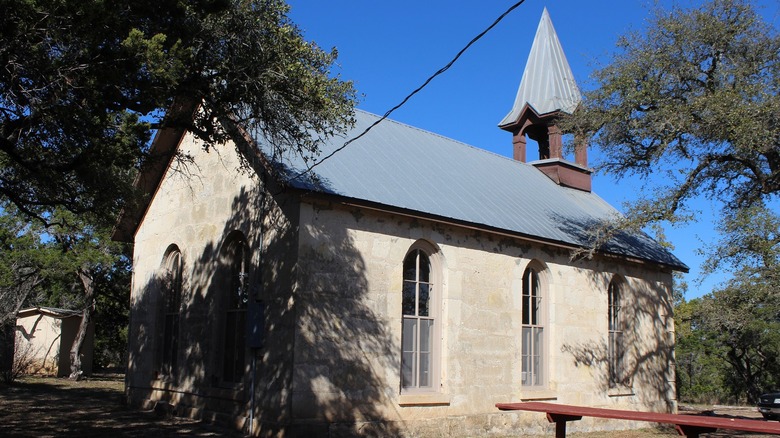
Today, the town no longer appears on most maps, but its legacy remains alive. Descendants of the original settlers continue to preserve the community's history through the Polly Texas Pioneer Association. The site still includes a restored chapel, a schoolhouse, and a cemetery. Urbanization may have emptied many of Texas' small pioneer settlements, but Texans have made a point of remembering their roots.
Polly's great legacy
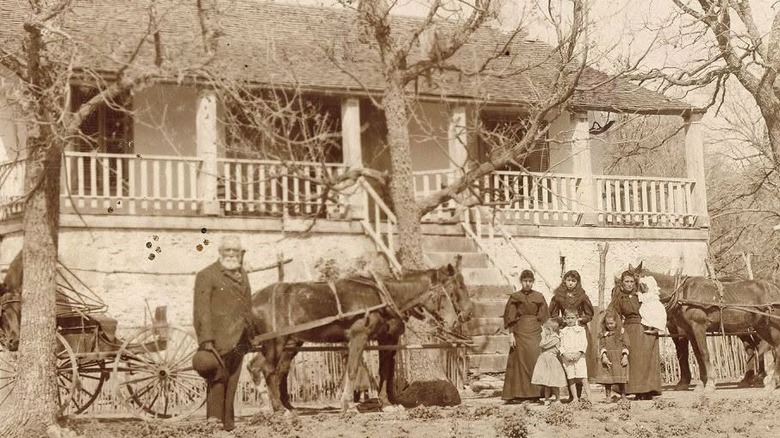
Born in Zaragoza, Mexico, in 1829, José Policarpio "Polly" Rodriguez was a frontiersman. As a Tejano, he belonged to the Spanish-speaking community that had helped shape Texas since the 18th century. Raised on the outskirts of San Antonio, Rodriguez lived a remarkable life as a gunsmith, expedition surveyor, and scout before setting his sights on the Privilege Creek valley. If you're setting out from San Antonio to visit this treasured former hamlet, consider stopping in Monte Vista, the city's beautiful historic district with walkable streets.
After discovering the lush valley, Rodriguez purchased 420 acres from his friend Judge John James and envisioned a settlement where families could build new lives. By the 1860s, he had acquired more than 4,000 acres and accumulated substantial livestock as more families arrived to raise sheep and Longhorn cattle.
By the mid-1890s, the settlement had grown to roughly 300 residents. Beneath the oak and juniper trees stood the hallmarks of a frontier town: a schoolhouse, post office, general store, and chapel. Rodriguez built the chapel himself from locally sourced limestone. He later became a Methodist minister and preached to residents throughout the region. Today, Polly's Chapel still stands at 359 Polly's Chapel Road and remains open to visitors . It can also be rented for ceremonies.
Polly's dawn and what to see
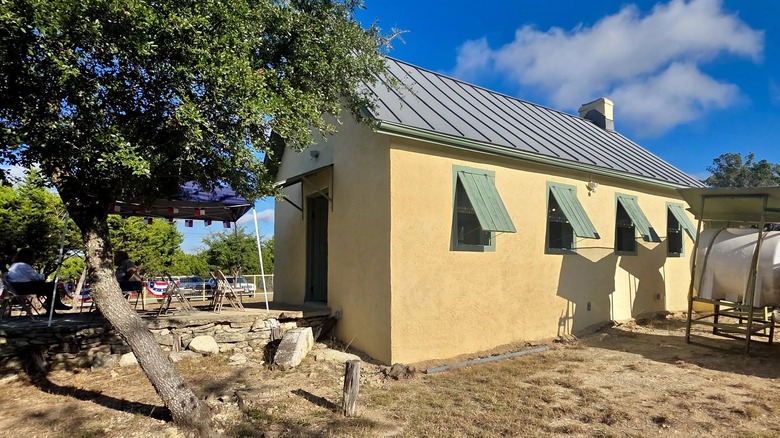
The town's fortunes appear to have been closely tied to its founder. Call it a tragic coincidence, or at least the consequences of a shifting economy; following Rodriguez's death in 1914, Polly entered a long period of decline. The post office had already closed in 1912, and the school's pupils were sent to nearby Bandera. Rodriguez's legacy, however, remains carefully preserved. The Polly Texas Pioneer Association continues to maintain the chapel, schoolhouse, and cemetery. Polly's Chapel is a Recorded Texas Historic Landmark, and visitors can pay their respects at Rodriguez's grave in the town cemetery. Sadly, such a story repeated itself across the region, with many similar settlements going the same way, making Texas the state with the most abandoned towns in America.
Polly's surviving landmarks and the surrounding countryside are well worth exploring over a weekend. About 15 minutes from the chapel, you'll find Bandera, the "Cowboy Capital of the World," which is reminiscent of a Western movie set. If you wish to experience the surrounding countryside and the warmth of local southern hospitality, the neighboring Dixie Dude Ranch combines its ranching operations with a welcoming stay.
Polly is roughly an hour's drive from downtown San Antonio. It goes without saying that when in Texas, do as the Texans do: Pack a good hat, water, and hiking boots before hitting Bandera County to brave the sun and soil. And if it gets too hot, take a rest underneath a juniper tree next to the waters of Privilege Creek, as Polly must have done countless times while mulling over what calling he was going to tackle next.