
Tennessee's Abandoned Military Fort Is Now A Scenic Park With Riverfront Trails And Wildlife
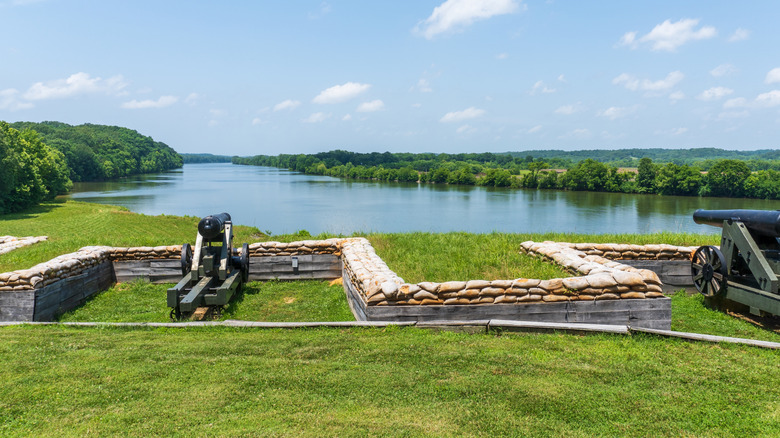
Walking along the bluffs of the Cumberland River in northern Tennessee, you can imagine the sound of cannon fire and bugle calls that would have permeated the site about 150 years ago. Military history fanatics may know that several important Civil War battles took place in Tennessee, not the least of which was the Battle of Fort Donelson. The battle resulted in the first major victory for Union forces in the Civil War, according to the National Park Foundation. After the war, the fort was left behind and unused, but the fort and grounds where this clash took place is preserved as the Fort Donelson National Battlefield. The site boasts original defense earthworks, batteries, and a Civil War cemetery maintained for visitors to wander.
When the battlefield was taken over by the National Park Service (NPS) in 1928, it was designed to be naturally as well as historically evocative. As you're walking among artillery stationed on the riverbanks or past war monuments, you might also spot a bald eagle flying overhead or a deer sprinting through underbrush. There are four trails in the park that link battlefield relics to the pretty natural landscapes that have witnessed history unfold, from deciduous forest to overlooks on the Cumberland River.
See historic battle remnants at Fort Donelson National Battlefield
Over the course of just a couple days in 1862, the Battle of Fort Donelson unfolded, as the NPS tells it. Union troops, led by General Ulysses S. Grant, surrounded the Confederate fort at its perch along the river. Visitors can still follow the earthen ramparts where the fort was laid out, though they've eroded to a lower height than during wartime. There were also, in its active years, up to 400 log cabins for housing soldiers, and you can see a replica version of one of these huts at the fort's site. Another defensive measure of the fort was its batteries, aimed at the river to fire at approaching Union ships. An upper and a lower battery are reconstructed at the park, equipped with one cannon that was actually used in the battle, according to National Park Planner.
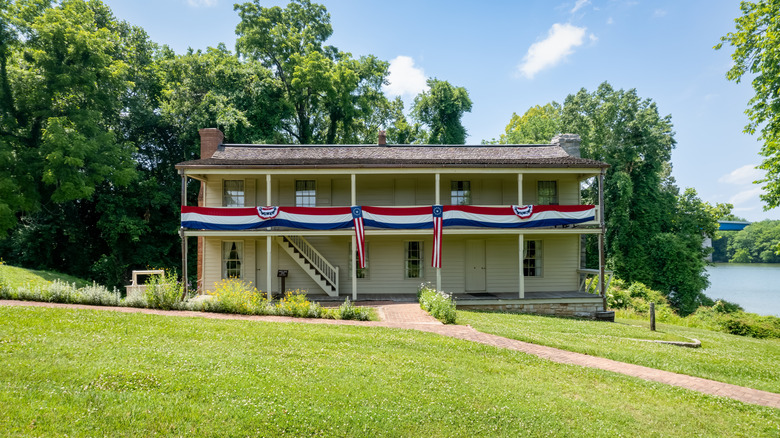
After Confederates realized they had no escape route from the Union-besieged fort, they surrendered, making it an early victory for Grant, who would later accept the pivotal Confederate surrender in the charming town of Appomattox in the heart of Virginia. Yet Grant's most notable earlier victory occurred after Fort Donelson. The generals on both sides met at the Dover Hotel — previously used for housing travelers along the river — to lay out the surrender's terms, per the NPS. Incidentally, Grant's terms were "unconditional and immediate surrender." After the battle, the Dover Hotel continued to operate as a hotel until the 1930s, one spot within the park with a history extending beyond the Civil War (it's located a bit outside the fort itself, in the town of Dover). Though not totally original, the hotel was restored to look as it did during the Civil War era, with an exhibit space inside.
The trails and animals of Fort Donelson National Battlefield
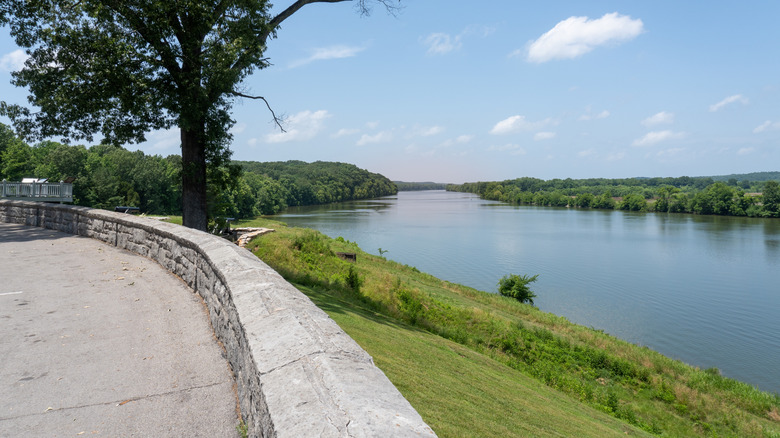
As you make your way along the self-guided tour stops of Fort Donelson National Battlefield, you can follow one of multiple trails branching off through the hills. The trails get praised by reviewers for their scenery and quietness. The main trail that covers many of the significant historic features, including earthworks and the river batteries, is the 3.4-mile Donelson Trail loop. It's easy to access from the Fort Donelson Visitor Center, per National Park Planner. Parts of the trail meander through forest, going up and down hills, before coming to the clearing where there's a picnic area overlooking the river. Another unique and somewhat shorter trail is the Graves' Battery to French's Battery Trail, which is 2 miles if you go out and back. This trail leads you to some earthworks and a battery that can't be accessed by car, according to National Park Planner.
Hikers might spot some of the park's animal residents on their route. According to the NPS, white-tailed deer, raccoons, and squirrels are some of the mammals that live here. It's also a prominent birding location, with almost 300 documented bird species from the site on eBird. Fort Donelson is even home to bald eagles, though it's not necessarily one of the parks where you're most likely to see one. It's also home to an endangered species: the gray bat.
A major advantage of Fort Donelson National Battlefield is its free entry. Visitors can reach the park's visitor center in about an hour and 40 minutes by car from the Nashville International Airport. If you're looking for more nature spots to visit outside of Nashville, you could head to Cheatham Lake, Tennessee's scenic lake for camping and boating, under an hour drive from the city.