
Indiana's Smallest State Park Is Right Outside Louisville With Otherworldly Landscapes And Ancient Fossils
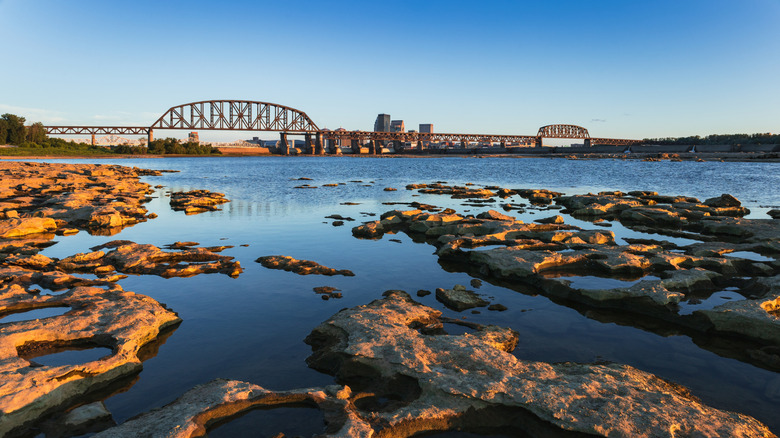
If you're looking for a quick getaway from Louisville, but have limited free time, Falls of the Ohio State Park provides a much-needed escape and the chance to see a one-of-a-kind attraction. Hugging the banks of the Ohio River, this 165-acre state park is the smallest in the Indiana Park System and is about 10 minutes from Louisville, Kentucky. Despite its central location just outside Clarksville, Falls of the Ohio State Park hides a rare treasure: The largest exposed fossil beds in the world from the Devonian Period.
Measuring 220 acres, these fossil beds jut out into the Ohio River, where eons of flowing water have gradually revealed over 600 distinct fossil types. The fossils offer a record of the animals and plants that lived 390 million years ago, before the dinosaurs walked the earth. During the "Age of the Fishes," a vast tropical sea covered Indiana. Sponges grew in abundance, and jawless fish propelled themselves through the waters. As you walk across the fossil beds, you can clearly see trilobites, snails, and other creatures immortalized in stone.
You may have noticed that the fossil beds are larger than the park. That's because the beds lie on both sides of the Ohio River, falling within the bounds of Falls of the Ohio National Wildlife Conservation Area, a 1404-acre preserve that encompasses the state park. These two preserves are so intertwined that they appear as one on the official Indiana State Parks map.
How to see the fossil beds at Falls of the Ohio State Park
Unlike Washington D.C.'s Smithsonian Museum of Natural History, Falls of the Ohio allows visitors to walk all over the fossil beds. Here, you can spot snails, trilobites, sponges, brachiopods, and corals that look like cornucopias. You'll encounter a coral colony that's as large as a city bus and the largest horn coral in all of the Western Hemisphere. Visitors can explore the upper beds most of the year; however, the lower beds are typically accessible only during the summer and fall.
The landscape itself warrants special attention, too. Limestone shelves replace sandy beaches or muddy river banks, creating an alien landscape next to the Clark Memorial Bridge. River water collects in honeycomb-like craters that look almost like a moonscape, while the Ohio River seems to melt into the stone.
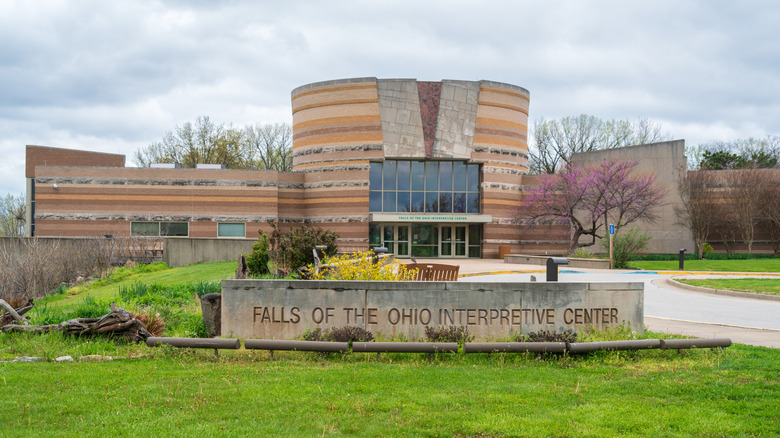
Before heading to the river, stop by the 3,000-square-foot interpretive center. The award-winning exhibits take visitors from the Devonian Period, through the ice age that created the Ohio River, and up to the first contact between indigenous communities and European settlers. The center boasts panoramic views of the river and fossil beds, plus an auditorium, classroom, and hands-on exhibits. Don't forget to pick up the "Fossil Challenge." This scavenger hunt turns a visit to the beds into an epic quest, requiring kids (and adults) to look closely at deceptively similar trilobites and brachiopods. The interpretive center is open from 9 a.m. to 5 p.m. on Monday to Saturday and from 1 p.m. to 5 p.m. on Sunday.
Tips for visiting and other things to do at Falls of the Ohio State Park
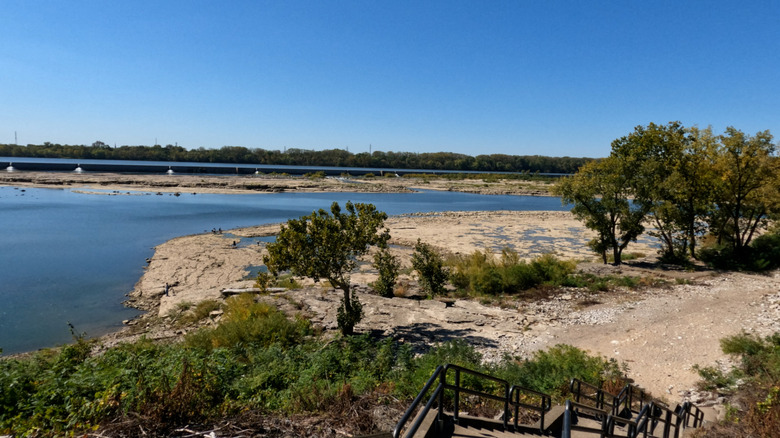
The best time to discover why Falls of the Ohio is one of America's most breathtaking destinations to see fossils is between August and October. During this time of year, the river is low, and you can see a good chunk of the fossil beds. Although collecting fossils directly from the river zone is prohibited, visitors can dig through the collection pile to find treasures.
After discovering the fossils, visit the park's upper and lower woodland habitats via the Woodland Loop Trail. This 0.5-mile path offers opportunities for birding and takes hikers beneath canopies of shady hardwoods that put on a display of colors in the autumn. Featuring mostly level ground, the trail is a good choice for families with kids. Pets are also allowed, but they must remain on a leash. Parts of this trail can become impacted by logs and other debris washed down the river, so consider checking the conditions at the interpretive center.
Finally, if you hear a loud siren while exploring the fossil beds or low-lying parts of the Woodland Trail, head to higher ground immediately. This siren signals imminent flooding or a massive water release from the dam. Although it's highly unlikely you'll encounter this particular situation, knowing what to do in an emergency can keep you safe. Still craving more fossils? See a 375-million-year-old ocean floor at Iowa's Devonian Fossil Gorge.