
These East Coast States Have Banned Billboards (And The Reason Why Is A Huge Bonus For Travelers)
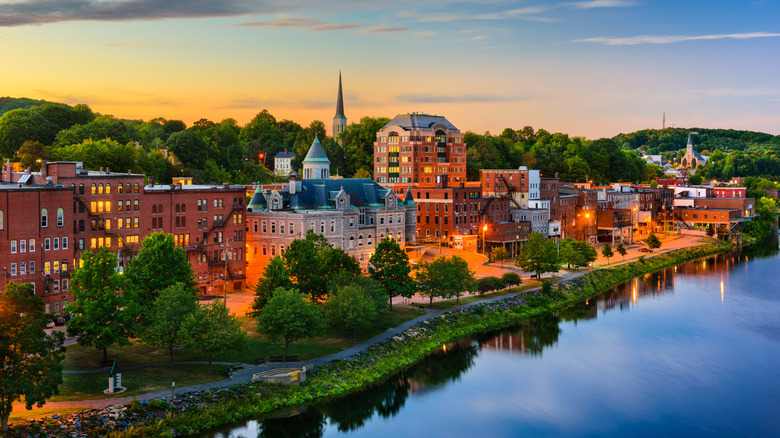
From the forest-fringed Blue Ridge Parkway to the coastal awe of Outer Banks National Scenic Byway, the East Coast rewards travelers with some of the most magical drives in the country. While breathtaking panoramas stun road trippers along the way, many people agree that America's open roads could be more enchanting with the removal of one particularly glaring eyesore: the billboard. This is already a done deal in Maine and Vermont, where residents decided long ago that this roadside advertising staple aimed at courting motorists was a blight on their states' scenic beauty. Billboards have been banned for decades in both states, and the reason why is a huge bonus for travelers.
Tourism in Maine and Vermont is heavily rooted in their aesthetic appeal. Recognizing this, government leaders, residents, and special interest groups in both states have fought hard over the years to preserve the attractive character of the charming towns and unspoiled nature that lure visitors to this beautiful pair of New England gems. Vermont's ban went into effect in 1968 and Maine's followed in 1978, with both states acknowledging that maintaining unobstructed landscapes in the name of tourism was crucial to their bottom line.
Today, revenue from tourism contributes billions to Maine and Vermont, but this wasn't always the case. Vermont's push to ban billboards stretches all the way back to the 1930s, a time when the population was waning and tourism dollars were essential for the survival of many businesses. In the late 1960s, Maine was clawing its way back to economic stability after years of manufacturing losses and environmental degradation. Tourism was Maine's second biggest industry at the time, and targeting the unsightly billboards along its highways was an obvious way to increase the state's destination appeal, and thereby its revenue.
Tracing the history of Vermont and Maine's billboard bans
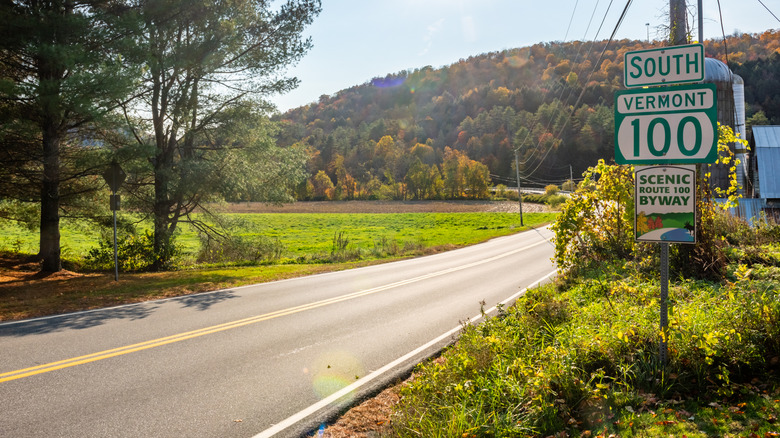
Vermont's anti-billboard crusade began in 1936. Billboards sprang up on America's roadsides in the early 20th century, with Vermont counting roughly 750 by the mid-30s. A revolt spearheaded by fed-up residents in the town of Springfield led to the removal of several roadside ads. This ignited a statewide movement, the Vermont Association for Billboard Restriction, which argued billboards distracted drivers and marred the state's beauty. State legislators sought to limit the size and placement of billboards over the years while clashing with billboard proponents, who labeled the movement "communist." Findings by Vermont's Committee to Study Outdoor Advertising resulted in the 1968 ban, which gave advertisers five years to clean up Vermont's roadsides. Thanks to these anti-billboard pioneers, travelers can embark on these Vermont road trips with scenic views and small town stops without obstruction.
Maine followed suit in 1977, so travelers can coast clutter-free through these secluded harbors and seaside villages. At the time, former Governor James Longley, deeply concerned about how roadside ads impacted travelers, requested Maine's Conservation Department to investigate the issue. The department queried business owners, newspapers, and citizens, resulting in more than 135 organizations lending support that was instrumental in passing the ban. Marion Fuller Brown, a Republican champion of the ban from Maine's House of Representatives, noted the importance of bipartisan support for the bill: "The natural environment is so important to the Maine people that Republicans and Democrats get together to save [it]," Brown declared (via Natural Resources Council of Maine).
Maine and Vermont are two of just four states with billboard bans. Travelers can also set out on this gorgeous island hopping route in Hawaii without a billboard in sight, and you won't find any in the off-the-beaten-path towns and untouched wilderness of Alaska, either.