
The Largest Sand Dune Trail On The Oregon Coast Is Wildly Scenic And Ends At A Crowd-Free Beach
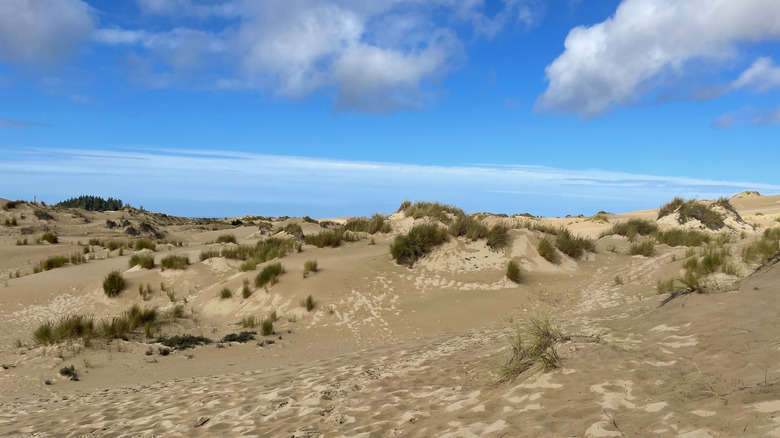
The majestic, 363-mile-long Oregon Coast features dramatic scenery, sandy beaches, small coastal towns, and an abundance of outdoor recreational opportunities. On its southern end, just past where the Umpqua River meets the Pacific Ocean, is the 42-mile-long Oregon Dunes National Recreation Area (ODNRA). It's the largest stretch of sand dunes in North America at more than 31,000 acres. Within this terrain, you'll find the dramatically scenic John Dellenback Dunes Trail, the lengthiest of its kind on the coast, and it culminates in a quiet beach.
The John Dellenback Dunes Trail extends for approximately 5 miles but is contained within the expansive Siuslaw National Forest. Given its trail length and the size of its dunes, multiple travel outlets call it the longest of its kind within the state. The pathway's original name was the Umpqua Dunes Trail prior to being renamed for former Oregon Congressman John Dellenback who led the efforts to establish ODNRA in 1972. While the greater ODNRA allows the use of recreational and all-terrain vehicles, they are not permitted here, emphasizing pedestrian access to this wildly scenic area of the state. The trail's picturesque landscapes are uniquely diverse and highlight what the Oregon Coast is known for — lush forests, coastal grasslands, tall dune mounds, and sandy beaches.
This year-round trail can be accessed from a day use area with a small parking lot, picnic area, and restrooms. Be prepared to pay the small entrance fee or use a Northwest Forest Pass or America the Beautiful annual pass. There are two options for hiking here: a shorter half mile interpretative trail, or the full moderately challenging route which rewards hikers with its conclusion at a secluded oceanfront known as "the ocean beach."
Exploring the John Dellenback Dunes trail to a serene beach
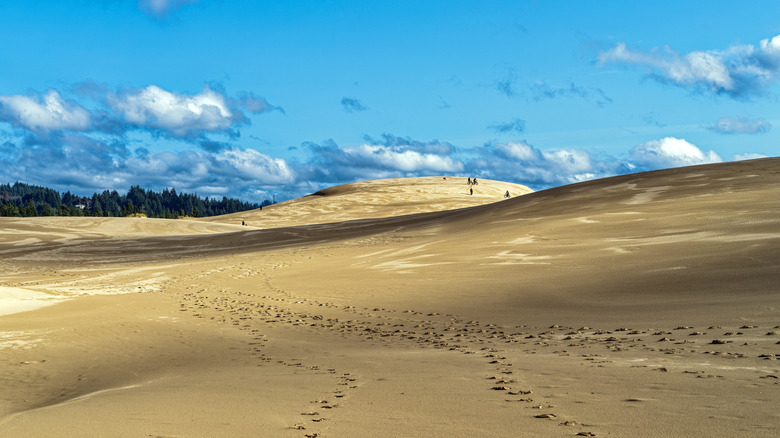
You can start the hike from two points. One goes from the trailhead of the same name here along Highway 101, which includes an additional half-mile interpretative section. The other departs from the Eel Creek Campground. Once you embark, there are colored markers on wooden posts which line the route. It's recommended to obtain a map ahead of time, and there is a downloadable one on the Forest Service website. The route's conclusion is along a wide stretch of a remote beach, devoid of the large crowds prevalent on other coastal beaches. You'll want to keep in mind that from March 15th to September 15th, beach access is limited to protect the nesting season for the western snowy plover bird. Though again, the beach is relatively crowd-free year-round thanks to the distance of the hike. Once you get there, you have the option to add an additional two-mile trek south to Tenmile Creek.
To further detail the dramatic landscapes you'll view along the way, there are three distinct ecosystems along the trail. The first half mile of the route consists of conifers including salal, evergreen huckleberry, rhododendron, Douglas firs, madrones, and manzanitas, according to Oregon Hikers Field Guide. This is followed by an approximately .7-mile section of swamps and marshlands which make up the "deflation plain," a lowland area of beach grass and plants which can fill up with water during heavy rains and is affected by the winds and human activity. The final stretch features the large, moving dunes known as oblique dunes, only found in Oregon, which rise 200 feet or more above the sea. For more outdoor adventure, head 12 miles away to Oregon's underrated coastal vacation haven for fishing, paddling, and camping, Tenmile Lake.
Tips for visiting and reviews about John Dellenback Dunes trail
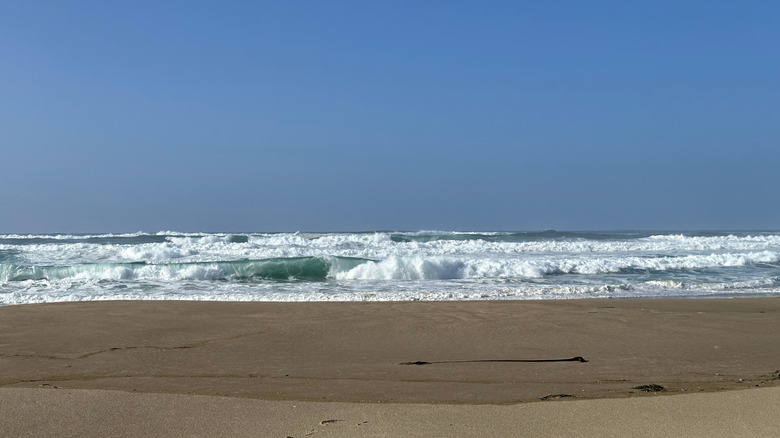
Before heading out on the trail, keep some advice in mind for a successful outing. The Forest Service website notes visitors should be aware of tide schedules and stick to the highest ground during times when the area is prone to flooding. On the Vanimals outdoor living blog, the authors recommend watching out for changing dune levels, potential for steep drop-offs on the dunes, and shifting winds and speeds. Ultimately, they call the trek "the best day hike on the Oregon Coast." The Weekend Sherpa outdoor blog cautions that varied conditions require some planning, but if timed right, find you enjoying the serenity of the quiet beach.
The pathway earns both a 4.7 rating on Google and a 4.7 rating on TripAdvisor, noted for the uniqueness of its experience and picturesque views. One TripAdvisor review shares, "If you like the Oregon Coast, you simply must hike this trail, or as much of it as you're able. I didn't know the Oregon Dunes were this tall and expansive before my visit. This was the perfect way to spend a 76-degree cloudless day in mid-October!" One Google reviewer says, "This is a true Oregon gem," while another review further states, "This trail is so much fun. You walk through the forest, it looks like typical western Oregon terrain and plants, then suddenly you're out on the dunes and there's mostly sand with some tree islands." For some more coastal exploration, head 12 miles south of Reedsport, the small gateway to the Oregon dunes and scenic basecamp for outdoor adventures, and 16 miles north of the underrated artsy city with natural beauty and serene beaches of Coos Bay.