
Unwritten Rules You Should Know Before Visiting Canada's Banff National Park
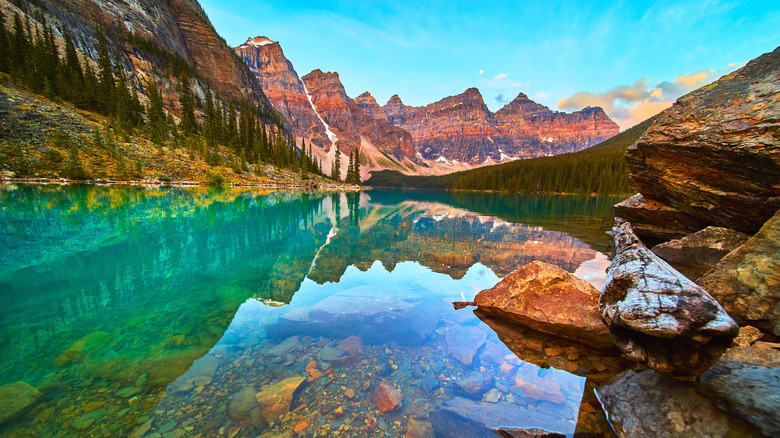
Banff is arguably one of the crown jewels of Canada's national parks system. It's also far and away the most popular, typically seeing more than four million visitors each year. And at more than 2,500 square miles, it encompasses towering mountains, diverse wildlife, historic lodges, charming towns, and even "Canada's most beautiful lake." But there are a few things to know before you go, especially tips and tricks that may not be explicitly written down but will help ensure you have a seamless, safe, and enjoyable visit.
Below, peruse 12 unwritten rules for visiting Banff National Park, many of which are very specific to this region and its climate. If you visit national parks often, you'll have some of these things down pat, such as booking lodging well in advance or getting the right passes. That said, the birthplace of Canada's national parks is unlike any other place in the world, and if you've never visited a Canadian national park before, you may learn a thing or two.
To arrive at this list, we consulted Parks Canada for information on specific practicalities, guidelines, and rules, as well as tips for making the most of a tour of Banff. We've also researched regional tourism sites, such as Banff.com and BanffJasperCollection.com, to ensure we're sharing the most up-to-date attractions and information. We've also consulted a number of blogs and Reddit discussions by people who have experienced Banff National Park in all seasons and in various styles. Read on to discover helpful unwritten rules for getting the most out of a visit to this spectacular Alberta destination.
Make reservations early
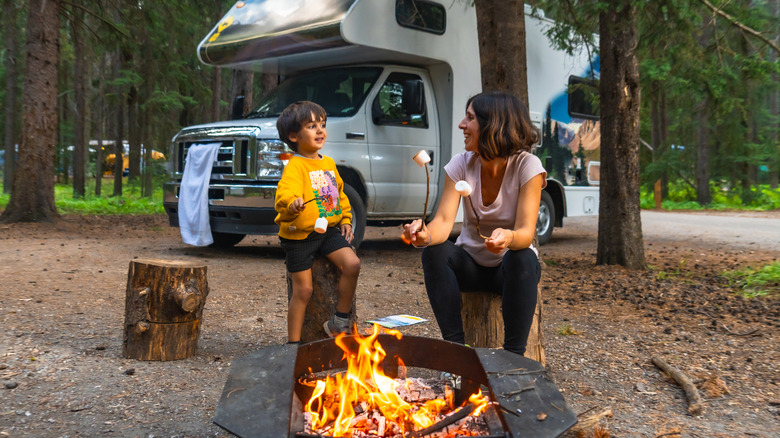
Since Banff National Park sees the highest number of visitors in the entire Canadian national parks system, reservations can be hard to get during the busiest times. This is especially worth noting because of Banff's northern location and high altitude, where the warm-weather window is relatively short. (More on that later.) Especially if you plan to visit in July, August, or September, when tourism in the area is at its highest, plan well in advance to secure the campsite or shuttle time you prefer, since spots book up very fast. Another thing to keep in mind is Parks Canada's summertime access initiative called the Canada Strong Pass. Between mid-June and early September, this incentive offers free admission and 25% off camping, so, as you might imagine, demand is even higher.
Banff requires reservations made through the park's official website for campgrounds and lodges, plus backcountry camping, shuttles to Lake Louise and Moraine Lake, entry to the Upper Hot Springs pool, and a guided hike to Consolation Lakes. There are also two popular gondola options for aerial sightseeing that require tickets, but those are purchased through their respective companies. The Banff Gondola departs from Mountain Avenue, south of downtown, and the Lake Louise Gondola is a summertime tradition at Lake Louise Ski Resort. These are typically available on the day, but making online reservations often means a discount off the window price.
Use public transportation to avoid parking headaches
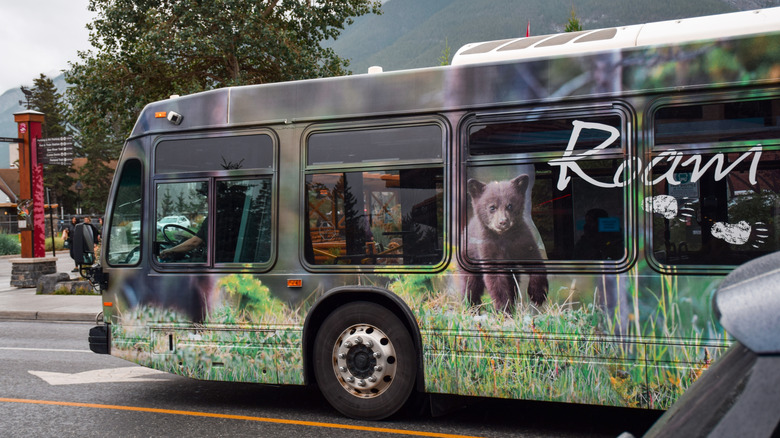
If you don't want to deal with limited parking, Roam Public Transit is a go-to option for bus transportation to and from the town of Banff and numerous other popular destinations within the park. There are five local and two regional routes that serve the inside of the park, plus three that serve Canmore to the southeast. You can also opt for public transit from further afield, such as the Brewster Express, which connects Calgary International Airport directly to Banff, plus Jasper, Canmore, and Lake Louise.
Parks Canada's shuttle to both the Lake Louise Lakeshore and Moraine Lake is the park's recommended way to access these very popular areas. Actually, the shuttle is now the only way to see Moraine Lake, as public parking is no longer available there, and Roam does not travel all the way to the lakeshore. In 2026, Roam will continue to serve the Lake Louise Lakeshore in addition to the village of Lake Louise.
It's worth driving home the point that booking shuttle seats in advance is the best way to secure a spot and access a broader range of departure times. Regular service begins at 6:30 a.m., but if you want to get to Moraine Lake as early as possible to maximize your time, there's an "Alpine Start" option that departs at 4 a.m. or 5 a.m. There are also authorized private companies, such as The Fairy Bus and Mountain Park Transportation, that offer shuttle service to the lakes.
Pick the season based on your preference
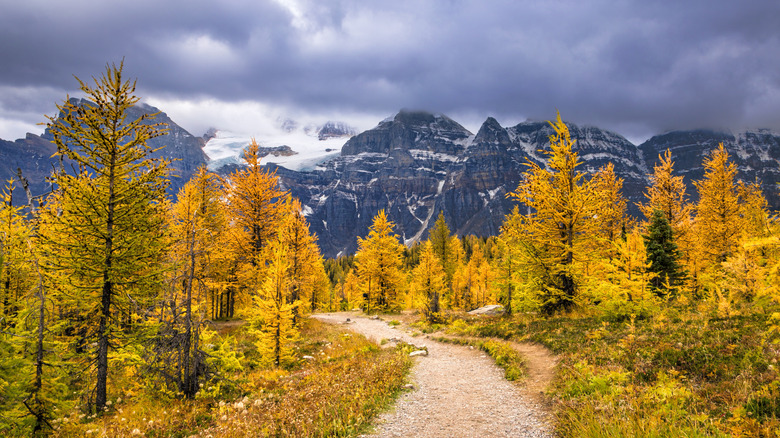
So far, we've only touched on how Banff National Park is most popular in the summer and early fall, as the milder temperatures make it more attractive for family-friendly camping, hiking, scenic gondola rides, and more. But just because the snow falls doesn't mean the park closes up! Quite the contrary, as Banff is open all year-round. When you go depends on what you're interested in and which services are available during different seasons.
Summer is naturally busy because it's mild, all the campgrounds are open, the waterfalls are bursting, and alpine meadows are sprinkled with wildflowers. July and August are the warmest and the busiest, then September and October see the slide into fall, when aspens and larches illuminate the valleys with their golden leaves.
From November into January, winter sets in and the crowds are lighter, although the ski and snowboard season is just beginning. February, March, and April are ideal for hitting the slopes but also relaxing in the area's mountain lodges, inns, and cabins, such as the luxuriously iconic Fairmont Banff Springs, Fairmont Lake Louise, Sunshine Mountain Lodge, and more. And May is when most seasonal attractions begin to operate, such as the vintage Open Top Touring cars and sightseeing gondolas.
Dress for changeable weather
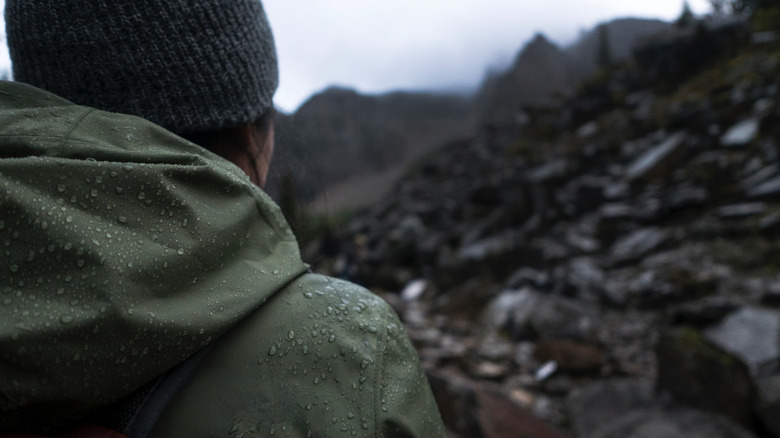
Perched at both a high altitude and a northern latitude, Banff National Park is prone to wayward weather no matter the season, so there are some common clothing mistakes to avoid. July and August see average high temperatures around 72 and 73 degrees Fahrenheit, respectively, but average lows can drop to 7 degrees in December and January. At lower elevations and in valleys, you'll likely find milder temperatures where wind exposure isn't as pronounced, but higher altitudes and more exposed areas will feel colder. For every 650-or-so feet of elevation gain, the temperature generally drops nearly 2 degrees Fahrenheit.
Wind chill is also something the park especially advises visitors to be aware of, and the variability in temperatures and precipitation across different times of day and areas of the park can sometimes feel dramatic. In the winter, expect to wear heavy coats, hats, and gloves. In the summer, you'll likely still need a sweatshirt and a jacket sometimes. Do yourself a favor and bring an extra layer or two just in case. You may need them on the trail or simply on a chillier-than-expected evening at the campground.
Get to the hot spots early
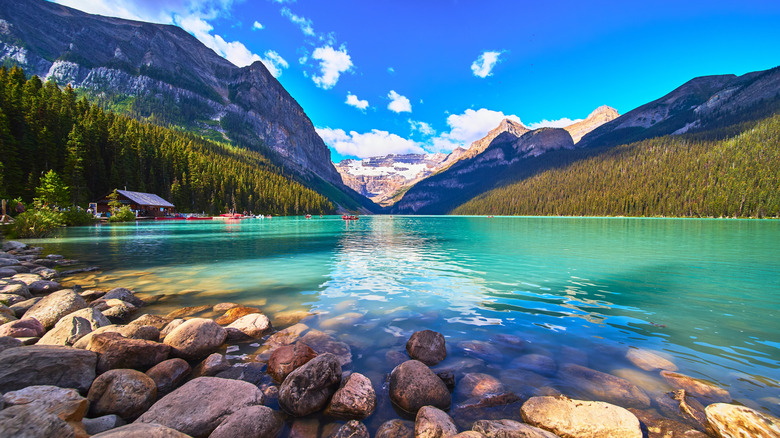
One of the best ways to avoid heavy crowds in any busy national park is to get an early start, and Banff is no exception. Some of its most popular attractions include the aforementioned Lake Louise and Moraine Lake, which are iconic for their turquoise waters and mountain backdrops. But there's also the striking Icefields Parkway for a scenic drive, the waterfalls and dramatic walls of Johnston Canyon, Lake Minnewanka, the Banff and Lake Louise Gondolas, and much more. It's a safe bet these places will be busy.
There are a couple of reasons that the early morning is a great time to avoid crowds. For one, people simply like to take it easy on vacation, and families may start motivating a little later in the day. Another goes back to the elements, as temperatures are often crisper in the morning, so some would rather wait for warmer temperatures before setting out for the day. But it also comes down to what you plan to accomplish.
If you head to Lake Louise to take on what's known endearingly as the Tea House Challenge, a round-trip hike that's a little more than nine miles and stops by the atmospheric Lake Agnes Teahouse and the Plain of Six Glaciers Teahouse, you'll want to make sure to give yourself ample time to complete the route.
Carry bear spray
Grizzly bears are right at home in the Rocky Mountains, and surprise encounters are not uncommon, even away from what the park deems the three "core areas." These include an area north of Lake Louise Village, Flint's Park north of the town of Banff, and around Bryant Creek in Middle Spray Valley, all of which are known breeding grounds for grizzlies and therefore protected. In other words, staying away from these areas, especially during periods of increased activity, is for both the bears' safety and yours.
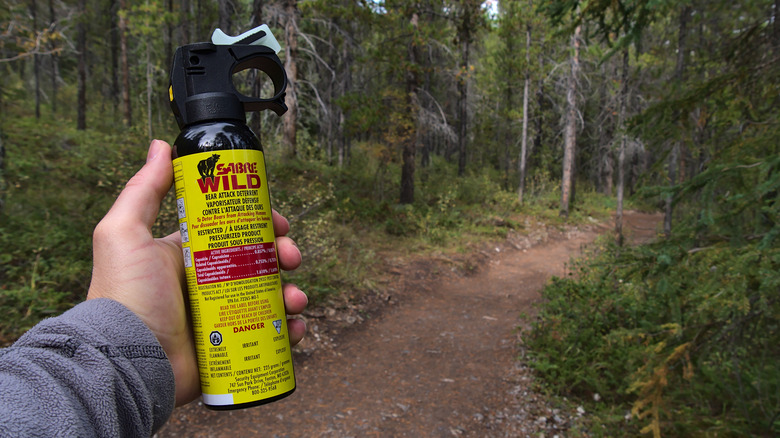
Carrying bear spray is highly recommended for those heading out on the trail, and it's best practice to keep it easily accessible in a holster at your waist or a similar location so you can grab it in an instant. The pressurized pepper spray can spread across a distance of about 30 feet, meaning that if a grizzly is within that distance from you, it could be the difference between life and death.
Bear spray causes the animal to experience a stinging discomfort that hopefully makes it retreat, but there's no guarantee. Spray should only be used if you've already tried to get away from the animal and made other loud noises to try to scare it off first. If it becomes aggressive, the spray should be viewed as something of a last defense. It's also a good way to ensure you're properly bear-proofing your campsite. Ideally, everyone carries their own can, but at least one per group is the suggested minimum.
Get a Parks Canada Discovery Pass for longer stays
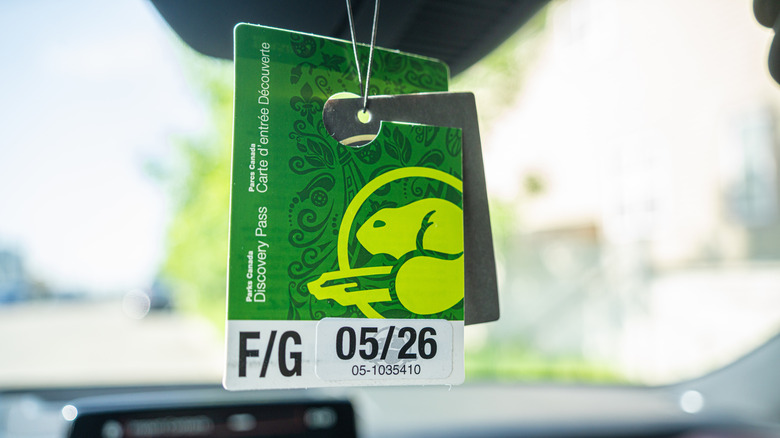
Banff's standard admission fee is CAD $12.25 per person per day, with a family or group of up to seven people in one vehicle at $24.50 per day. Seniors are $10.75, and visitors 17 and younger are free. A 1-day pass expires automatically at 4 p.m. the day after you purchase it, regardless of the time you enter the park. So, if you're making a single-day trip or a quick overnight from Calgary, for example, it's an easy option. Simply tell the ranger at the entrance station how many days you would like to stay. But if you plan to stay for several days or make return visits throughout the year, those day-by-day fees can add up really quickly.
That's where the Parks Canada Discovery Pass comes in, which, as of this writing, costs $83.50 for adults, $71.50 for visitors 65 and older, and $167.50 for families. Plus, they're good for not only an entire year but also for getting into any national park in the country — not just Banff! Essentially, even if a solo traveler wants to spend seven days or more in the park, even across different visits, you'll already have saved a couple of dollars by using the Discovery Pass.
Keep your budget in check by preparing your own food
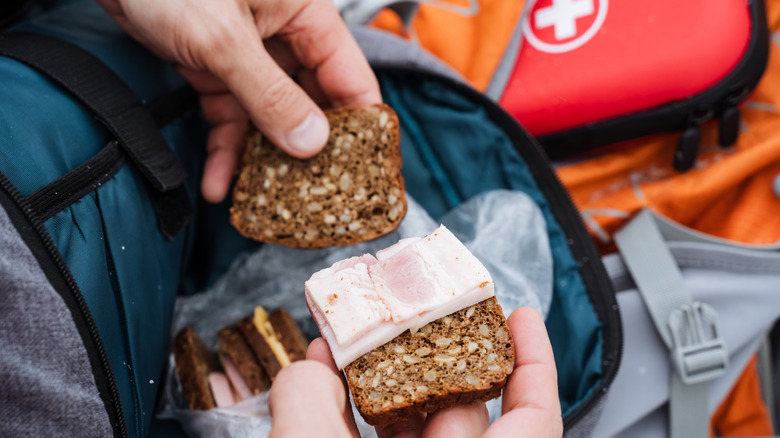
Within Banff National Park are two eminently popular communities brimming with great places to eat. Banff is larger and offers more to try, such as the upscale 1888 Chop House or Grizzly House Steak & Fondue, where you can sample bison and caribou. Lake Louise Village is home to the Lakeview Lounge & Summer Patio at the Fairmont, plus go-tos like Bill Peyto's Cafe and The Trailhead Cafe. You'll find coffee shops, pizza spots, international fare, bars, and, of course, poutine, not to mention shops with snacks to go. All that said, the cost of meals can add up quickly.
One of the best ways to budget for a trip to Banff National Park is to focus on preparing your own food, whether you're packing a picnic lunch at an overlook or making sure you have some good carbs primed for nibbling on the trail. Or perhaps you want to focus on the best foods to eat to fight altitude sickness. There are a couple of markets in downtown Banff, including an IGA and a locally owned place called Nesters Market. Lake Louise is also home to a small store called The Village Market. Chances are, due to the touristy location, prices will seem higher than what you might find at home, but making your own sandwiches and snacks will still be much cheaper than eating out all the time.
Pay attention to updates about access
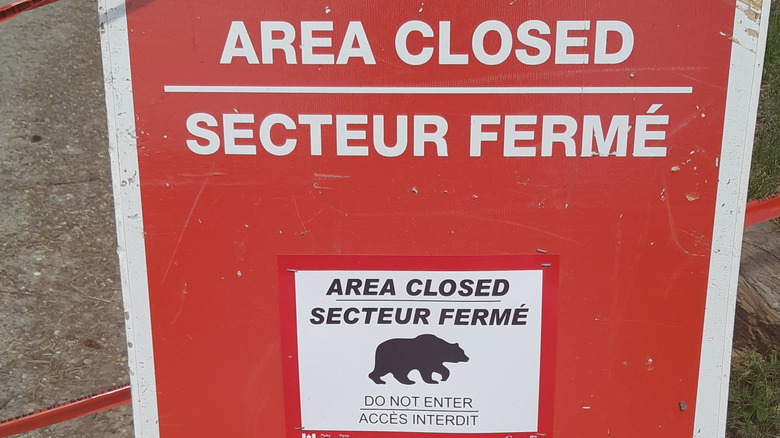
At specific times of the year, especially during the busiest seasons, Banff adjusts visitor access to certain areas or roads. Sometimes, regulations change from year to year, such as the recent updates mentioned earlier about public parking no longer being available at Moraine Lake. Other times, if there has been bear activity or the park needs to protect other vulnerable wildlife, trails may temporarily close. The Minnewanka Trail, for example, issues specific guidelines every year between July 10 and September 15, which require hikers to move in groups of at least four and always carry bear spray. Certain campgrounds may be restricted to those camping in larger groups or closed altogether.
Driving restrictions are also in place around the park, sometimes all year-round and sometimes only for specific periods. A lot is planned, so it's easy to find updates online before you travel or when you arrive, but occasionally, changes happen without advance notice. It's always important to follow posted guidance. Moraine Lake Road is always closed to private vehicles, for instance, while the Bow Valley Parkway (Highway 1A) is closed between March 1 and June 25 to protect wildlife during the critical spring months.
Always have a backup plan
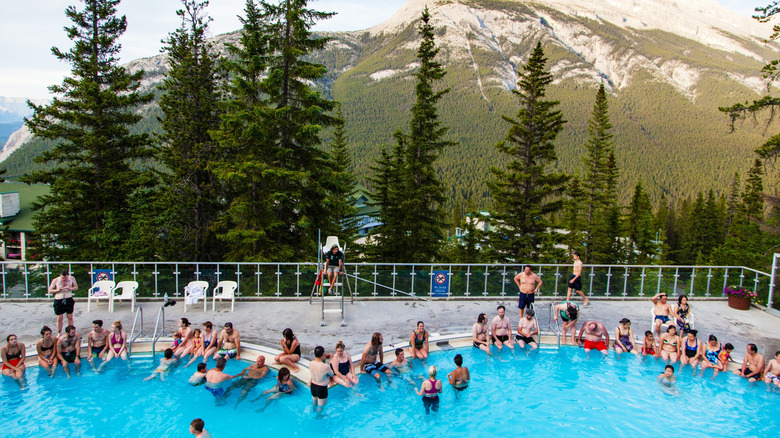
Banff's popular Upper Hot Springs pool is one of the most luxurious places to soak, with the best views — a historic spot to relax in a naturally warm geothermal pool. It's been an attraction in the park since 1886, and visitors still flock to the high-elevation scenic perch for a dip in waters ranging from about 98 to 104 degrees. For better or worse, it's not possible to reserve entry to the pool in advance, so you may not be able to get in when you want. It's a great example of why it's always good to have a "plan B" if something you want to do is currently too crowded, temporarily closed, the weather changes, or anything else comes up.
One trick, which requires just a bit of consideration before setting out for the day's adventures, is to consult the park map and identify your priorities. Make a note, or even a list, of your top two or three choices for things to do. If you head to one of the popular gondolas, for instance, and you only have a short window of time but the rides are all booked up, at least you can fall back on a different type of scenic ride, such as touring the Lake Minnewanka Loop or part of the Icefields Parkway.
Always plan ahead when heading into the wilderness
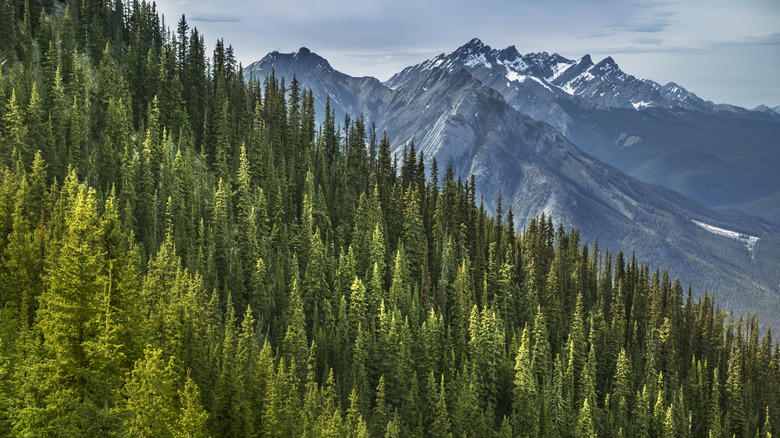
It might seem like common sense to check your route ahead of time, but it's important to plan for altitude, weather, your fitness level, and enough food and water for the length of your trip. This is especially important at a place as rugged and expansive as Banff National Park, where the conveniences and luxuries of downtown Banff are a world away from the forests and peaks all around it. Parks Canada will occasionally issue advisories about grizzly bear activity, but wildlife isn't the only thing to watch out for.
According to the CBC, in May 2026, an American tourist leaped into the water at Johnston Canyon, where visitors commonly flock to see the beautiful waterfalls. While the pool may have looked inviting, its currents are deceivingly strong, and the water is very cold, and the would-be swimmer did not survive. Wherever you are in the park, but especially in the remote backcountry where help may be hard to find or search and rescue services may take a long time to reach you, common sense and safety should be at the forefront of your mind. Dress appropriately for your activity, let people know your timeline and where you're going, and for extra peace of mind, carry a personal locator beacon, or PLB, which can communicate via satellite to get help if you need it.
Don't discount winter
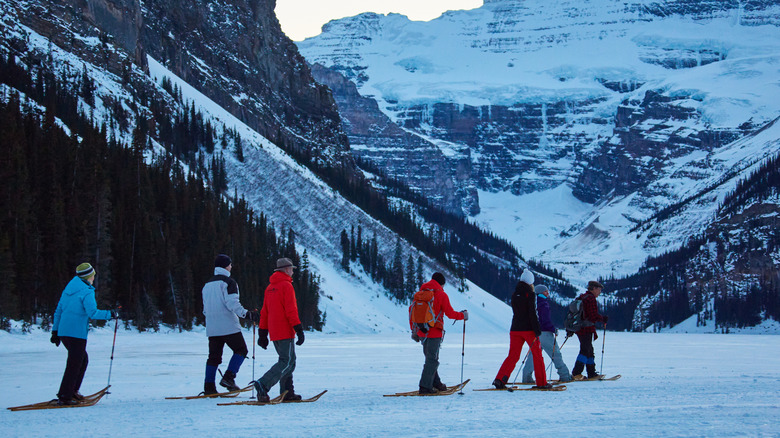
Banff National Park is open year-round, and even though its prime season runs from July through September, there's still plenty to experience at other times of the year. Not least of these reasons is that the area is much less crowded. That said, tens of thousands of visitors still turn out to see the mountains capped with snow and take advantage of winter sports at one of three ski resorts within the park: Mt. Norquay, Lake Louise, and Sunshine Village. Collectively, they can all be accessed via the SkiBig3 lift ticket.
Even if you don't ski or snowboard, there's plenty to do around the park that will entice the whole family. Take a horse-drawn sleigh ride from Banff Trail Riders, call "mush!" on a dogsledding tour, snowshoeing, cross-country skiing, or simply cozy up with a drink or a hot chocolate in front of a fireplace at one of the lodges or a cabin. Ice skating is also a popular pastime in the town of Banff, where there's an outdoor ice-coated pathway and a rink on the Banff Recreation Grounds, plus an indoor rink at Fenlands Recreation Centre. You can also take to the ice on the legendary Lake Louise for a truly memorable experience.