
Virginia's High Elevation Lake Escape Offers Secluded Paddling, Fishing And Wildlife-Filled Hikes
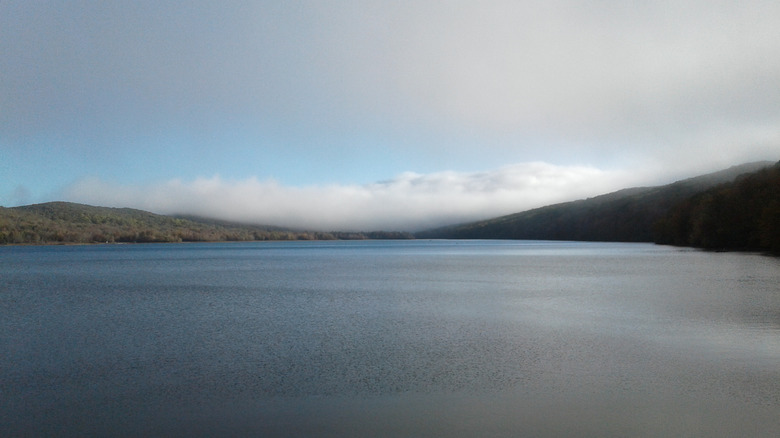
Virginia is dotted with 47 wildlife management areas, their nearly 225,000 acres set aside as sanctuaries for the animals and plants that call them home. One of them, the Clinch Mountain Wildlife Management Area, is home to the peaceful Laurel Bed Lake that sits high above sea level, and it's the ideal spot for some secluded hiking, fishing, or paddling.
Southwest Virginia is a vast area that's full of untouched land in the Appalachian Mountains. Massive parts of its nearly 9,000 square miles are covered with both national parks and national forests. More than 25,000 acres were also preserved as the Clinch Mountain Wildlife Management Area, the second-largest WMA in the Old Dominion. It's the most biologically diverse WMA in the state, largely due to its significant changes in elevation — rising quickly from the valley along Big Tumbling Creek up to the top of Beartown Mountain, it features a wide range of ecosystems for animals to inhabit.
Clinch Mountain might not be the highest peak in the Clinch Mountain WMA, but it could be the most impressive. The ridge is both high (4,18 feet) and long (150 miles). It's also where you'll find Laurel Bed Lake. This body of water was formed when Big Tumbling Creek was dammed, and it's now a 330-acre lake nestled 3,674 feet above sea level. Birdwatchers recently sighted red-breasted mergansers and ring-necked ducks on trips to the lake, making it a relaxing spot for not just hiking and boating, but also wildlife viewing.
Take a boat or kayak out on Laurel Bed Lake
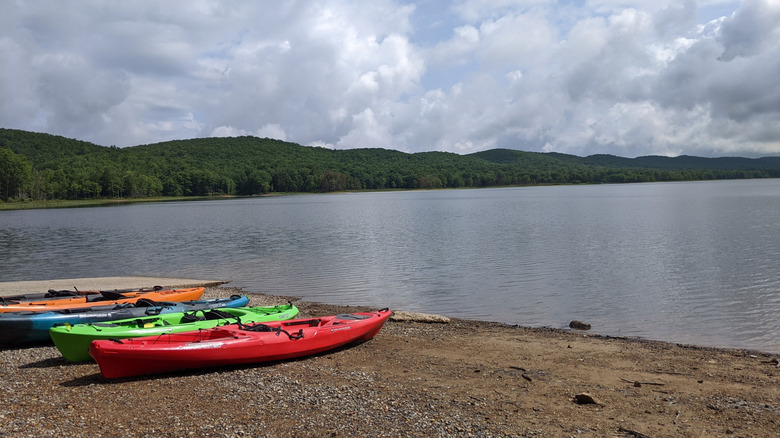
The more you learn about this hidden lake, the more you're determined to see it. But you have to get there first. There's a 7-mile dirt road that follows the curves of Laurel Bed Creek, though you should be prepared for a rough ride as the narrow, rocky road twists up the mountain. Once you reach the top, you'll find parking lots with two boat ramps, one on the lake's north shore and the other near its southwestern tip. Both boats (with gas motors up to 9.9 horsepower) and human-powered vessels (canoes and kayaks) are allowed in the water.
Laurel Bed Lake is a unique fishing spot. Several decades ago, it was filled with brook trout. Then, rock and smallmouth bass were introduced to the lake. You can now catch all three species, as well as bluegill, rainbow trout, and sunfish. Since there are limits and restrictions regarding certain species, pay attention to the posted regulations before you start casting.
To visit a Virginia Wildlife Management Area, including the Clinch Mountain Wildlife Management Area, you must purchase either a daily or an annual access permit from the Virginia Department of Wildlife Resources. If you plan on fishing on Laurel Bed Lake, you'll need to obtain a freshwater fishing license. Both access permits and licenses can be purchased online, in advance of your visit. Just be aware that neither swimming nor camping is allowed on this lake.
Go hiking around Laurel Bed Lake
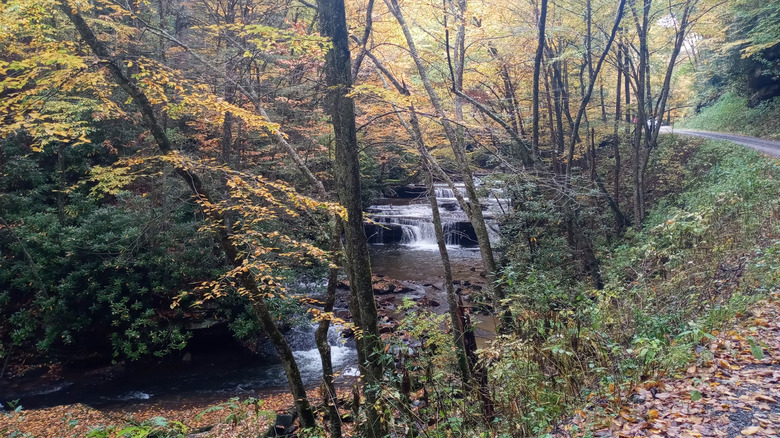
In addition to boating, fishing, and paddling, Laurel Bed Lake is a scenic spot for hiking. Instead of fully driving up Laurel Bed Lake Road, you can hike it on the Laurel Bed Lake Trail. The easy, one-way trail passes the Laurel Bed Dam en route to the lake. It's 3 miles long and takes about an hour and a half to complete.
If you're looking for a more challenging hike, consider the Laurel Bed Lake to Peak Trail. The 11-mile, out-and-back trail starts on the lake's western edge and rises through switchbacks as it gains elevation. It's a quiet, secluded trail where it's unlikely that you'll see other hikers. You won't be completely alone, though. Keep an eye out for white-tailed deer, red foxes, and even black bears as you move through the woods. Colorful wildflowers are also beautiful in the spring. For additional hiking, check out the nearby Channels Natural Area Preserve, a slot canyon hidden in the Blue Ridge Mountains.
After enjoying a peaceful day at Laurel Bed Lake, you probably won't be rushing back to civilization. That makes nearby Rosedale, a quiet town with a secret natural sandstone maze, nature preserves, and peaceful views, the perfect spot to visit when you descend from the mountain. From Rosedale, it's then about an hour south across the Tennessee border to Blountville, home to misty lake mornings and a historic inn. It's also home to the Tri-Cities Airport (TRI), which receives nonstop flights from a number of major hubs around the country.