
Not Chicago, Not St. Louis: This City Ranks The Highest For Healthy Living In The Midwest
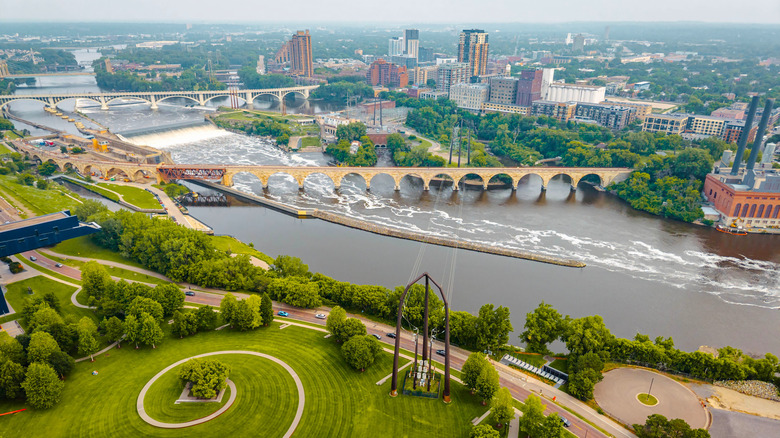
Healthy living is more than just eating your fruits and vegetables. In a world that's becoming increasingly stressful, demanding, and disconnected from our bodies, a healthy life offers a balance between good food, medical care, green spaces, and physical activity. In many cities, it can be hard to find a combination of these things, but there's one Midwestern hub that offers them all: Minneapolis.
It's no secret that Minneapolis has one of America's best park systems, which is one of the reasons WalletHub ranked it as the 13th healthiest city in the U.S. in 2026. Chicago came in at No. 20 and St. Louis at No. 30, which makes Minneapolis — despite being the home of the Juicy Lucy burger — the highest-ranked healthy city in the Midwest. This list was determined based on four categories: health care, food, fitness, and green space. Perhaps you might expect Minneapolis' ranking to be highest in green spaces, but its best score is in health care. This includes the number of doctors per capita, the cost of medical visits and medicine, mental health care resources, and the quality of public hospitals. Nationwide, Minneapolis was No. 10 in the health care category, while Chicago came in at No. 91 and St. Louis at No. 104.
This availability of healthy living makes Minneapolis one of the happiest cities in the world, too. The 2026 Happy City Index put it at No. 210 in the world and named it one of 31 Gold Cities, highlighted for their social policies. It was the only U.S. city to be included (besides New York), thanks to its focus on health, education, and outdoor spaces.
Green spaces and a good life in Minneapolis
Arguably, Minneapolis' offering of a balanced life goes back to the city's Nordic roots. In the 1800s, Scandinavian immigrants brought a heritage of outdoor and winter activities, socialist practices of well-funded public spaces, and a focus on the well-being of the community. Although, it was a Swiss person who transformed Minneapolis into a green haven. Theodore Wirth became superintendent of the Minneapolis Park Board in 1904 and was determined to put a park within six blocks of every resident.
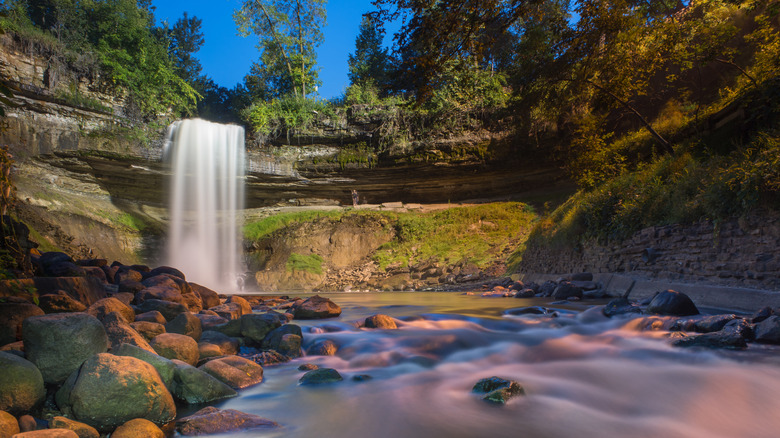
Thanks to his efforts, Minneapolis now has 5,378 acres, or 16% of the city, dedicated to 305 parks. For comparison, Chicago has twice as many acres for parks, like the world's first floating eco-park, but they're just 9% of the city's total area. St. Louis, meanwhile, has 3,600 acres, which is also just 9% of the city's total land, so Minneapolis clearly shines in this category. Theodore Wirth Regional Park is the city's largest, with 740 acres of land with excellent biking trails. Meanwhile, the Minneapolis Sculpture Garden at the Walker Art Center is the biggest urban sculpture garden in the U.S. It's free and features work by artists like Claes Oldenburg, Coosje van Bruggen, and Angela Two Stars. There's also Minnehaha Regional Park, one of the country's first state parks, which is famous for its 53-foot waterfall.
According to the Trust for Public Land (TPL), 99% of Minneapolis' residents live within a half mile of a park, although the number of parks varies based on a neighborhood's racial and economic makeup. This is partly why TPL ranked it third in the country for its ParkScore in 2026 (Chicago is No. 10), in addition to how much it spends each year on parks and recreation per capita: $346, compared to Chicago's $275, St. Louis' $159, and the national average of $154.
Fitness, food, and freedom (to live well)
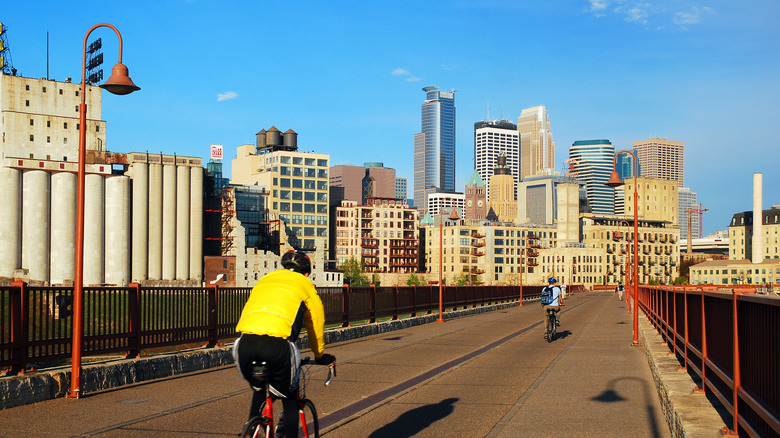
With fitness, Minneapolis doesn't rank as high as Chicago (No. 20) or St. Louis (No. 4), as it comes in at No. 37. WalletHub determined fitness based on the cost of memberships, the number of fitness centers per capita, and the number of adults who engage in physical activity, among other factors. But that's not to say Minneapolis sleeps on fitness; it's just in the outdoors where it thrives. It may not be one of the most bike-friendly cities in the world, but it often ranks as one of the best U.S. cities to bike in. Train tracks have been converted into paths for biking and hiking, which many use to commute. Cruise the 51-mile Minneapolis Grand Rounds Scenic Byway, the 5.5-mile Greenway in south Minneapolis, or the 19th-century Stone Arch Bridge that crosses the Mississippi River.
Minneapolis has a wide range of healthy culinary options that puts it at No. 28 for food on WalletHub's list (not surprisingly, gastronomy-focused Chicago is higher at No. 16, while St. Louis is No. 37). WalletHub's food metrics include farmers markets per capita, access to specialty stores, and healthy restaurants per capita. Try the city's unique, award-winning Hmong restaurants or Indígena by Owamni. Owamni won a James Beard Award in 2022 for Best New Restaurant for its Indigenous and decolonized menu, and Indígena is its new, bigger space.
If you feel like cooking, explore one of Minneapolis' 20 farmers markets, such as the Four Sisters Farmers Market, an Indigenous-run market that operates from June through October. There's also the year-round Saturday Mill City Farmers Market, which features live music and yoga on the Mississippi. The city has great specialty shops, too, like the Herbivorous Butcher, the U.S.' first vegan butcher shop that's the definition of a (delicious) oxymoron.