
5 Italian Coffee Bar Rules American Tourists Break Within The First 10 Minutes
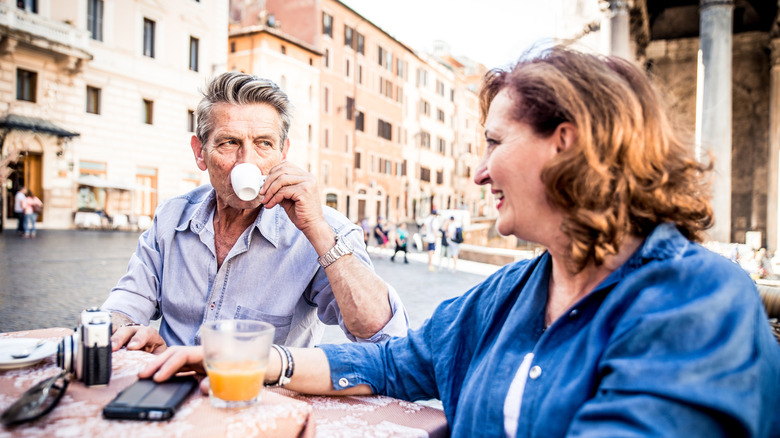
As tourists, we all want to blend in and do as the locals do, but no matter how hard we try, there are certain things that make American tourists stand out. Picture this: You're on a trip to Italy and as you're meandering through the ancient streets of Rome late one morning, the scent of strong espresso suddenly hits your nostrils. Since you haven't had your coffee yet, you pop into the café, confidently stroll right up to the bar, and say, "Buongiorno! Un cappuccino, per favore" (Good morning! A cappuccino, please). The barista cocks an eyebrow while staring at you as you wonder if you've made a mistake. Unbeknownst to you, you've innocently just broken some of the sacred Italian coffee bar rules that American tourists break within the first 10 minutes of stepping inside.
Knowing how to order a coffee, what time of day certain coffees should be consumed, where to stand to pay, or how long to linger at the counter, can help you avoid some early morning stress before you've been caffeinated. You may be wondering, "why are there so many rules to ordering and drinking a coffee?" If there's one thing Italians take more seriously than their pizza, it's their coffee culture. Just as it's considered sacrilegious to order pineapple as a pizza topping, in Italian coffee bars, don't you dare think about ordering a cappuccino after 11 a.m. But, just as easy as it is to make these innocent mistakes when walking into a busy Italian café, these tips will can you master your next Italian coffee outing without any hiccups, or an unimpressed eye-roll from the barista.
Ordering a milky coffee after 11 a.m.
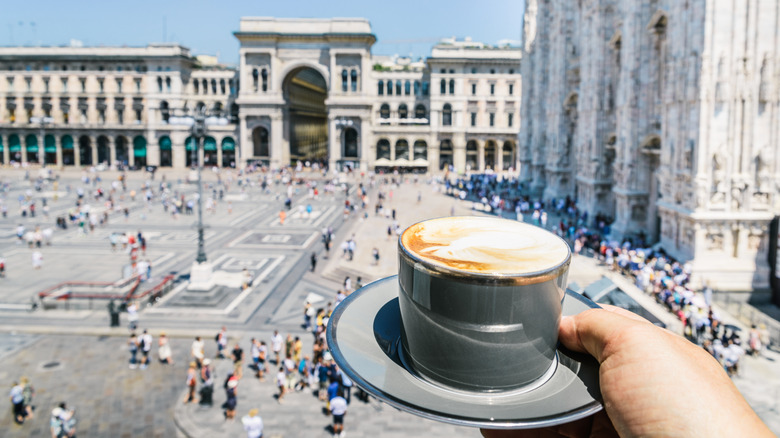
There are a few unwritten rules you should know before visiting Italy, especially when it comes to coffee. If there's one thing that instantly gives you away as an American tourist in Italy, it's ordering a cappuccino, caffè latte, or latte macchiato after 11 a.m. Italians adore a silky cappuccino in the morning. Pair it with a flaky pistachio cornetto or a chocolate-filled pastry, and you've got the quintessential Italian breakfast.
Order that same cappuccino after 11 a.m., though, and you'll probably get a few raised eyebrows. Sure, the barista will make it for you, but they'll know you're not a local since Italians have a different philosophy when it comes to the famous frothy favorite. In Italy, milky coffees are considered strictly a breakfast drink and are almost never enjoyed after a meal due to the heaviness of the milk. Many believe drinking milk after 11 a.m. can interfere with digestion and even contribute to liver problems. Regardless of scientific validity, it's one of those long-standing traditions that has been passed down through generations, probably with a little encouragement from someone's nonna.
Not understanding the difference between sitting and standing at a coffee bar
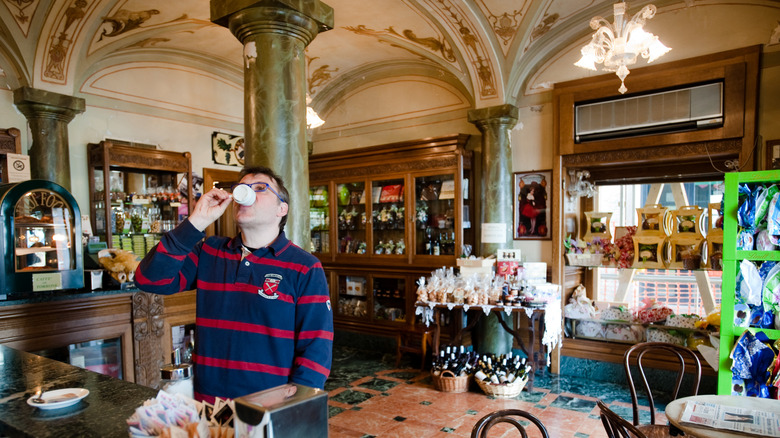
To sit or to stand, that is the question. Even something as simple as knowing when to stand at the bar versus sitting at a table can make the difference between blending in and looking like a tourist. While Americans are accustomed to drive-throughs for grabbing coffee on the go, Italians start their mornings a little differently. Instead, locals gather at the bar for a quick fix. No, not a shot of grappa at 8 a.m., but a shot of espresso. It's fast, simple, and down the hatch in a few sips. Italian coffee bars buzz with regulars, many of whom have been visiting the same neighborhood spot for years. The bar serves as a lively social hub where conversation is just as important as the coffee. For many American visitors, this tradition can feel a bit unfamiliar and maybe a little chaotic.
In most Italian coffee bars, locals line up along the bar while slinging back espresso, sharing a few bits of daily gossip before heading out the door to carry on their day. American tourists may be tempted to see the crowded bar and take a seat at a table instead. Little do they know their €1.50 espresso is about to cost them double the price. Opting to grab a seat at a table (al tavalo) rather than at the bar (al banco) will typically add a "coperto," essentially an additional surprise charge per person for table service. If you don't want any sticker shock, or to look like a tourist, just have your espresso at the bar with the locals. Not only will it be cheaper, but it's also a perfect opportunity to practice your Italian.
Thinking that coffee types are the same in Italy as they are in America
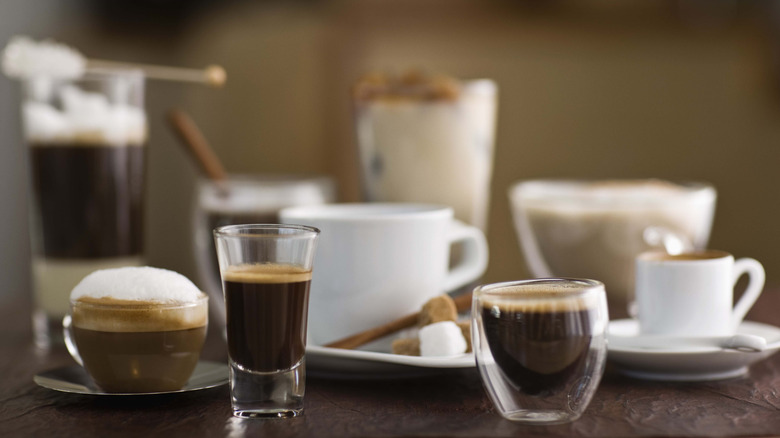
There are plenty of top-tier hacks tourists will need to know for a vacation to Italy. Knowing your coffee order is one of them. Without a doubt, there are numerous ways to get your coffee in an American coffee shop — an extra pump of caramel, light foam, extra foam, extra hot, and the list goes on. In an Italian coffee bar, things are a lot more simple. You've got the frothy cappuccino, a strong shot of espresso, or a caffè macchiato. But as an American tourist, if you walk up to the coffee bar without taking a glance at the posted menu and order up a latte, you're going to get a glass of milk. As one traveler on Reddit said, "Don't order a latte, they will look at you funny and hand you a cup of steamed milk. It is a [caffè] latte."
If you're looking to order an espresso, using the word caffè is the correct term. This will get you a single shot of espresso in a teeny tiny cup. If you want a double espresso, ask for a caffè doppio. Feeling a bit cheeky later in the day? Order a caffè corretto, which translates to "corrected coffee," and is a shot of espresso served with a splash of sambuca or grappa. And yes, the coffee you order only comes in the specific cup size given to you by the barista. No large, medium, or extra large, which is another surefire way to stick out as a tourist if you request a bigger size.
Not realizing you need to pay before receiving your coffee
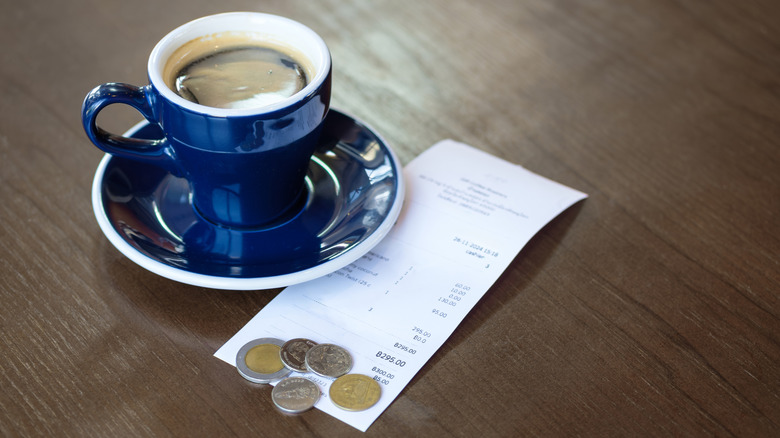
In many Italian coffee bars, you'll need to pay before you get your coffee. That might seem a little unusual if you're used to the American way of doing things. Back home, you'll typically tell the cashier what you want, what size, and every milk, syrup, or extra you'd like before paying. In an Italian coffee bar, the process is much simpler. You'll walk up to the cashier, order your coffee, pay, and receive a receipt. Whatever you do, don't lose that receipt. It's not just proof of payment — it also tells the barista which coffee you've ordered.
With receipt in hand, simply move down the counter and place it in front of the barista. They'll take a quick look, make your coffee, and serve it to you. There's no fuss, no confusion, and no names being shouted across the café telling you your drink is ready. Like a well-oiled machine, it's fast, efficient, and it just works. It's been a part of traditional Italian coffee bar culture for decades, and as the old saying goes, if it ain't broke, don't fix it.
Bringing a laptop and lingering for hours
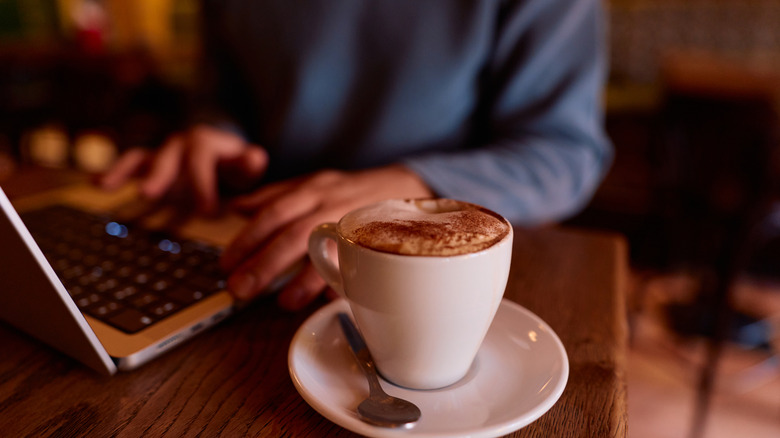
Walk into almost any American coffee shop and you're likely to spot people settled into cozy corners, nursing a cup of coffee while staring at their laptop screens. That scene couldn't be more different from what you'll encounter in an Italian coffee bar. Keep your laptop back at the hotel. In Italy, the coffee bar is a place to enjoy a quick espresso and have a brief chat with a friend, not answer emails, take Zoom calls, or work through your to-do list.
While you shouldn't expect a quick dinner while on vacation in Italy, a visit to the coffee bar is the exact opposite. Italians order their drink, enjoy it in just a few minutes, and move on with their day. Coffee bars are lively, fast-paced, and designed for short visits rather than long work sessions. They're designed for efficiency and conversation, not hours of remote work. Italy is one of the best European countries to experience café culture, and spending hours camped out with a laptop is one of the quickest ways to identify yourself as an American tourist.