
Forget Yellowstone — Visit Montana's Underrated National Monument With A Network Of Trails And River Views
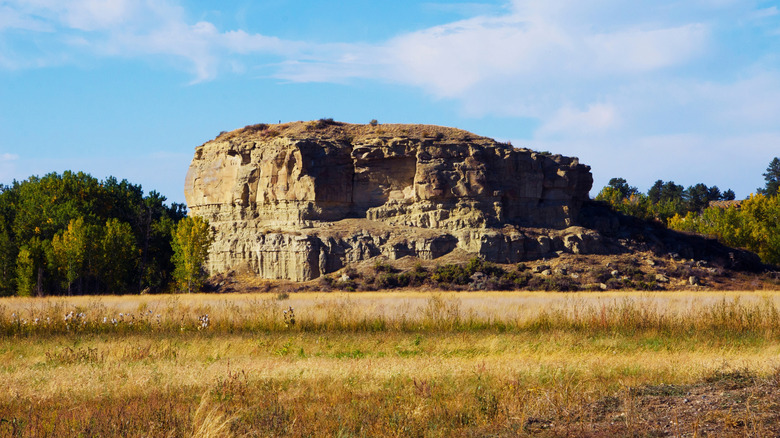
Yellowstone National Park might be one of the most popular national parks in the U.S., but with nearly 5 million people visiting in 2025, it can often feel crowded. Want to explore an iconic landscape but don't fancy battling the hordes? Then consider heading further along the Yellowstone River into Montana, where the underrated Pompeys Pillar National Monument offers scenic trails and river views at a rocky sandstone outcrop steeped in history.
In contrast to Yellowstone, Pompeys Pillar received nearly 31,000 visitors in 2024, and that was a "remarkably busy year" according to a report by the Bureau of Land Management. So, if you're looking for a quieter alternative to the world-famous national park, this lesser-visited monument in Montana is a worthy contender, according to reviews. As one visitor to Pompeys Pillar notes on Tripadvisor, "Sometimes the most interesting places to visit are the ones that fly under the radar."
Pompeys Pillar National Monument may be one of the smallest national monuments in the country, but according to another comment on Tripadvisor, it's "a hidden gem of history." This ancient rock became a National Historic Landmark in 1965, and was later included as a significant waypoint on the Lewis and Clark National Historic Trail, before finally being designated a National Monument in 2001. Considering Pompeys Pillar is such an important heritage site, it is perhaps surprising to discover it doesn't receive more visitors. It's open from May to September and is closed on Tuesdays. If you visit outside those times, the facilities will be shut, but you can still park outside the gates and walk in to see the monument.
What is Pompeys Pillar National Monument?
Located beside a natural ford in the Yellowstone River around 30 miles northeast of Billings, Pompeys Pillar National Monument stretches across 51 acres on the river's south bank. This prominent 120-foot sandstone outcrop has long been a key landmark for travelers and pioneers, as it made an excellent observation point and campground. The area was used by Native American tribes, settlers, railroad workers, fur trappers, and military groups as a convenient waypoint during their journeys. Today, visiting Pompeys Pillar is one of the best things to do in Montana if you're into history, short hikes, and panoramic river views.
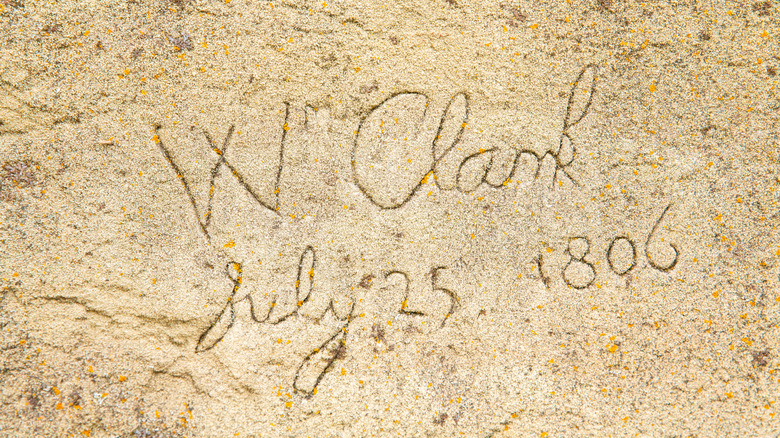
People have been leaving their marks on Pompeys Pillar for over 11,000 years, and now there are more than 5,000 historic carvings in the stone. From animal etchings and petroglyphs made by the Crow People to more modern 19th-century graffiti, the rock is a canvas that charts life in the American West through the centuries. The most famous mark is the signature of explorer Captain William Clark who, in 1806, carved his name beside the existing engravings during the famous Lewis and Clark Corps of Discovery expedition. Seeing this iconic signature up close is a highlight of the main trail at Pompeys Pillar.
Clark named the rock "Pompy's Tower" after the son of expedition team member Sacagawea, a Shoshone interpreter who carried her infant, nicknamed "Pomp," with her during the journey. To discover more landmarks on the Lewis and Clark trail, visit the riverfront island of Pirogue Island State Park or check out the Lewis and Clark Bridge in Washington's Longview.
Exploring the trails at Pompeys Pillar
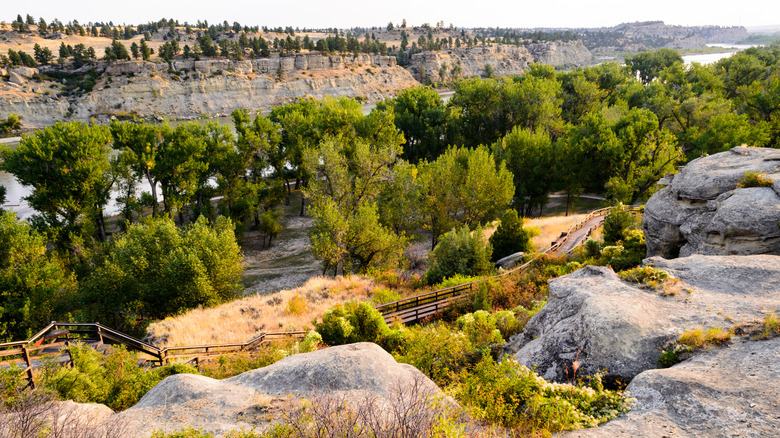
While Pompeys Pillar is "not exactly on the beaten path" there are "great views from the top" that make it worth the drive, as one Tripadvisor review comments. You'll find a handful of short trails at the National Monument, taking in prairie grassland, river scenes, and of course, the rock itself. Starting at the parking lot, the Riverwalk is a winding concrete trail that signifies the Yellowstone River. It takes you to the bottom of the outcrop, with signage detailing some of Clark's Yellowstone journal entries along the way.
Next up is the main event — the boardwalk trail to the top of the rock. There are around 200 steps, but don't worry, a report on Tripadvisor mentions that "the step climb was not as strenuous as I thought." About halfway up, you'll see the rock inscriptions, including Clark's signature. As you continue your ascent, see if you can spot the Turtle Rock — named for its shape – just to the right of the trail.
Your reward for reaching the summit and conquering those steps is sweeping views of the Yellowstone River. As Clark himself noted in his journal, the rock "from its top had a most extensive view in every direction." From this commanding vantage point, you'll see the Beartooth Mountains, the Bighorn Mountains, and the Bull Mountains. Back down on the ground, there's a further trail to the north of Pompeys Pillar that circles around the riparian area, leading to another scenic viewpoint overlooking the Yellowstone River. Before you leave, pop into the Interpretive Center to find out more about the Lewis and Clark expedition or enjoy a picnic near the river.