
Forget Yellowstone, Here Are 10 Spots Where You Can See Bison Roam Wild In The Midwest
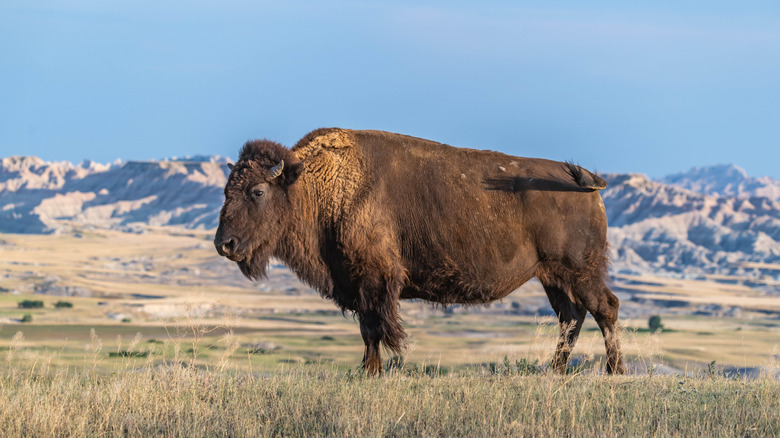
Yellowstone National Park is world-famous for its geysers, mountains, and (recently) TV cinematic presence. Among wildlife lovers, however, Yellowstone's most famous feature, alongside its wolves and bears, may be its massive herds of American bison. Bison are simultaneously one of America's most iconic symbols, a historical ecological tragedy, and a modern-day conservation success story. While Yellowstone's bison are a major draw, it's far from the only place where you can see bison in the wild. Thanks to recent reintroduction projects and dedicated conservation efforts, bison can now be seen in some of their historic ranges across the American Midwest.
It may be a once-in-a-lifetime destination, but Yellowstone is both remote and, paradoxically, a bit crowded. Getting all the way there and navigating the park's expansive area, plus the crowds, to find the bison may not be feasible for everyone. Luckily, Midwestern bison-viewing sites are rarely as large or as bison-heavy as massive national parks like Yellowstone, but they are often more convenient to get to. And even though they lack Yellowstone's dramatic national park vistas, these preserves often do feature surprisingly beautiful natural settings. From an ecological perspective, these parks are also quite significant for preserving not just bison but also the native ecosystems where bison once thrived — ecosystems threatened to near extinction by human development, agriculture, and infrastructure.
If you're located in or around the American Midwest, parks like the Fort Niobrara National Wildlife Refuge and Kankakee Sands Nature Preserve made our list because they have viewable populations of American bison in authentic Midwest prairie habitats, and might be much closer to home than the distant herds of Yellowstone National Park.
Midewin National Tallgrass Prairie
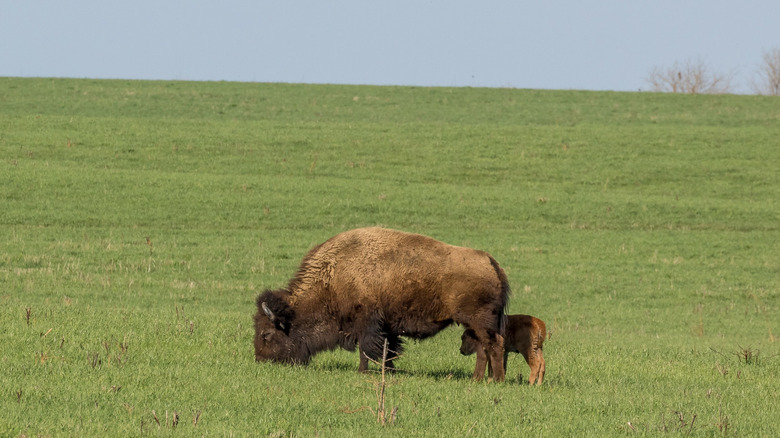
The 20,000-acre Midewin National Tallgrass Prairie is about as far from the skyscrapers of Chicago as you can get, even though the park is just 60 miles away. Midewin represents a successful effort to restore Illinois' farms and industrial spaces to tallgrass prairies — an effort that included the reintroduction of bison.
The bison introduced in 2015 are more than a novelty — they're quite important for the preservation of the ecosystem. Today, half of Midewin is open to the public, with 34 miles of Midewin National Tallgrass Prairie trails where visitors may be able to see the resident bison.
Fort Niobrara National Wildlife Refuge
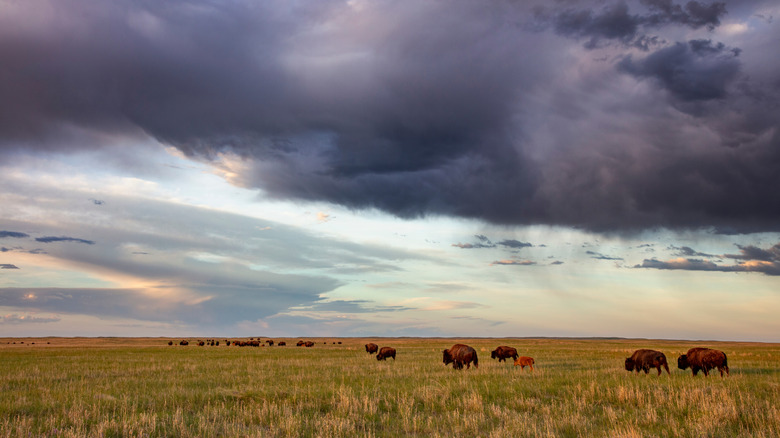
Nebraska's Fort Niobrara National Wildlife Refuge takes advantage of the open grasslands of Nebraska's Great Plains by reintroducing native bison into an ongoing Midwest conservation project. Once the site of a military base, Fort Niobrara has been transformed back into a biodiverse collection of prairies, rivers, and forests.
The park's roughly 350 bison thrive among populations of elk, deer, and countless native birds. Given the wide, open spaces of the Nebraska prairies, Fort Niobrara's bison are often visible from the park's roads, where visitors can view them from a safe distance inside their vehicles.
Battelle Darby Creek Metro Park
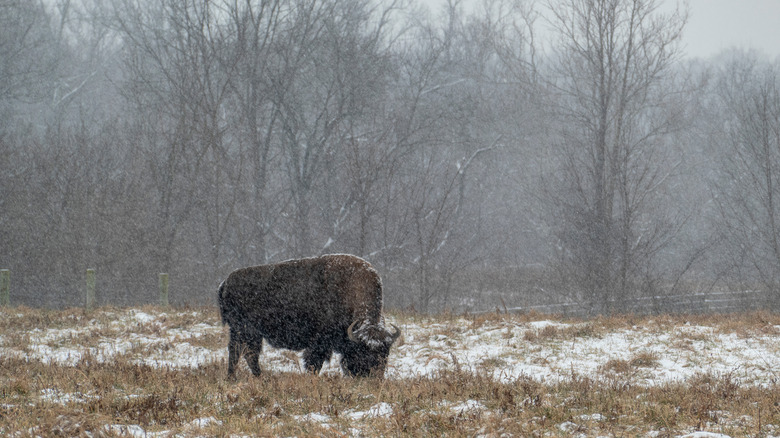
Bison are so consistently associated with monumental national destinations like Yellowstone that few would believe they can be found in a humble municipal park. Remarkably, the bison at Columbus' peaceful Battelle Darby Creek Metro Park roam freely among scenic trails and outdoor scenery, all near Ohio's capital city.
Battelle Darby Creek Metro Park has more than 7,000 acres of Columbus-area prairies, wetlands, and forests along the Big and Little Darby creeks. The park's bison herd has two large, designated pastures where they can be (safely) viewed, while visitors can also enjoy a nature center and scenic trails.
Kankakee Sands Nature Preserve
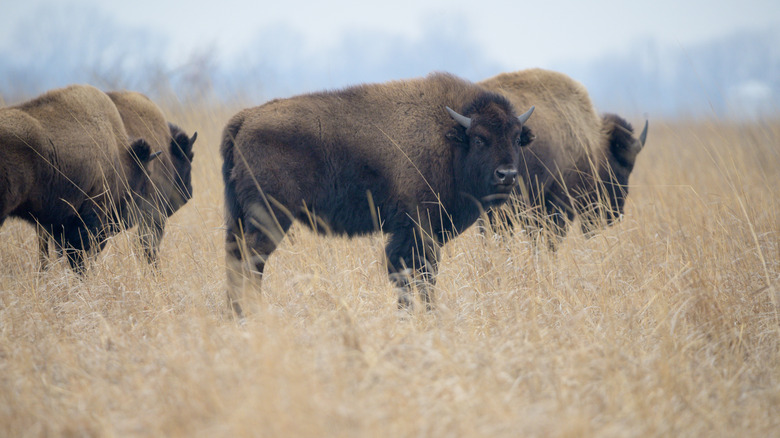
Indiana's Kankakee Sands Nature Preserve protects the state's critical Efroymson Prairie, a large cluster of meadows, wetlands, and savannahs about 90 minutes south of Chicago. Following the reintroduction of bison in 2016, Kankakee Sands is home to a herd that roams freely across the preserve, which is 8,400 acres in total.
Kankakee Sands includes a designated viewing and interpretive area near the bison prairies, where visitors can see these remarkable animals without getting too close. The remaining 8,400 acres consist of wetlands, meadows, and forest systems that visitors can explore on easy trails like the 2.9-mile Woods Walk.
Maxwell Wildlife Refuge
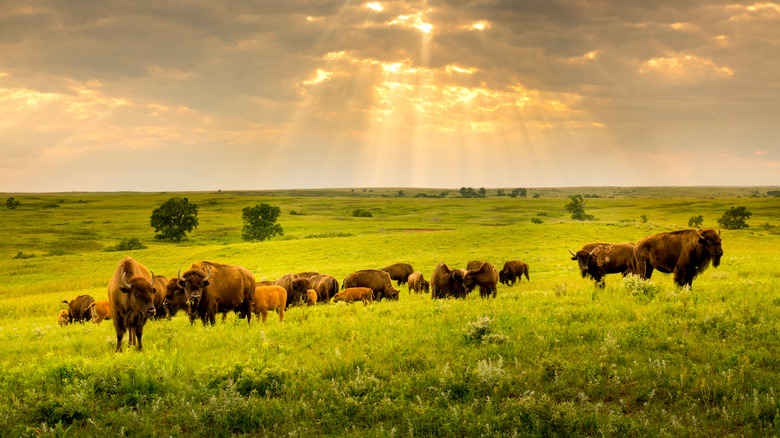
The Maxwell Wildlife Refuge is one of the best remaining preserves of authentic native tallgrass prairie ecosystems in Kansas, with all the essential wildlife needed to keep such an ecosystem running. Maxwell Wildlife Refuge's bison thrive alongside equally impressive populations of Rocky Mountain elk.
The bison herd currently contains about 200 individual bison, large enough to create a striking spectacle when seen against the rolling prairies of Kansas' Smoky Hills region (via Travelks). Unique among Midwest bison destinations, the Maxwell Wildlife Refuge offers fun and educational bison-viewing tram tours across the park's prairie landscape.
Nachusa Grasslands
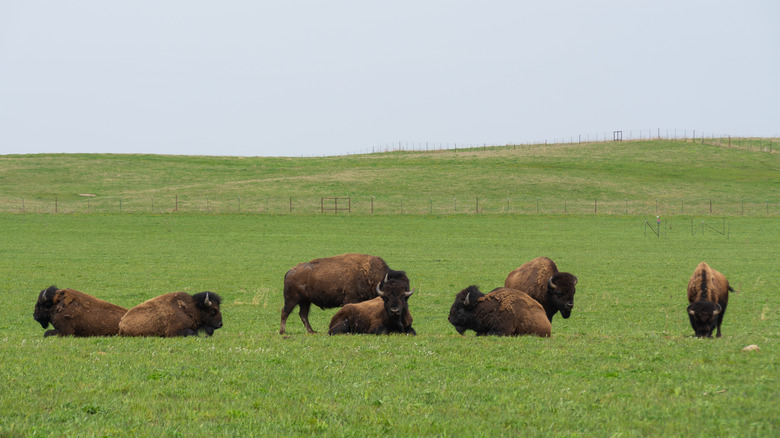
The Nachusa Grasslands are among Illinois' top nature preserves for restoring threatened native prairie ecosystems. Nachusa Grasslands' 4,100 acres blend Midwest prairie ecosystems with wetlands and forests to create one of the region's most biodiverse grassland environments.
The park's resident bison originated from a herd brought in from South Dakota's Wind Cave National Park, which is known as one of America's oldest national parks and a haven for wild bison, per Nature Conservancy. Today, the Nachusa Grasslands' bison have access to 1,500 acres of prairies, and may (but not always) be visible from the park's visitor center or public roads.
Prairie State Park
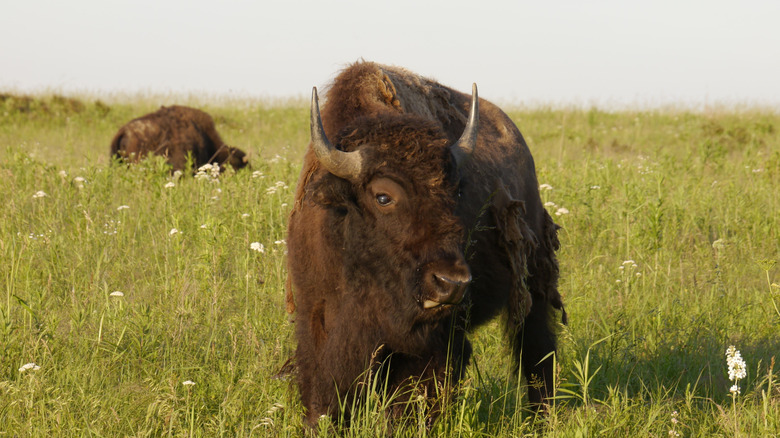
True to its name, Missouri's Prairie State Park is a dedicated preserve of the tallgrass prairie ecosystem that once blanketed the land that would become Missouri. As Missouri's largest tallgrass prairie preserve, Prairie State Park is an obvious choice for the reintroduction of bison herds within the state.
Today, about 100 bison roam the park's titular prairies, where they are often seen alongside elk, birds, and some of the best and most diverse wildflower displays in the Midwest (via Washington University in St. Louis). Prairie State Park also features scenic trails and guided nature tours through this essential ecosystem.
Blue Mounds State Park
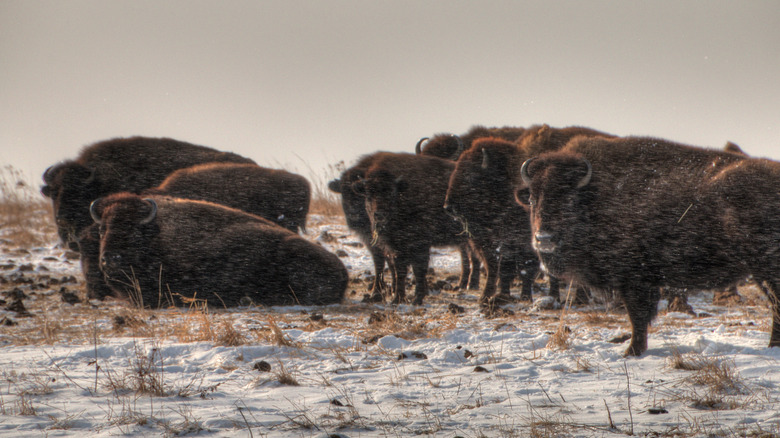
Blue Mounds State Park is one of Minnesota's top ecological and geological wonders rolled into one. The "blue mounds" of the park's name refer to a prominent cliff made up of Sioux quartzite that (despite its name) takes on a variety of shades of red, pink, purple, and white.
Blue Mounds' native Minnesota grasslands support a herd of 80 to 90 bison, who often graze among the park's prairies and quartzite cliffs (via Department of Natural Resources). Visitors can see these amazing animals while safely behind a fence, but the park also offers 90-minute prairie and bison tours on an open-air vehicle.
Theodore Roosevelt National Park
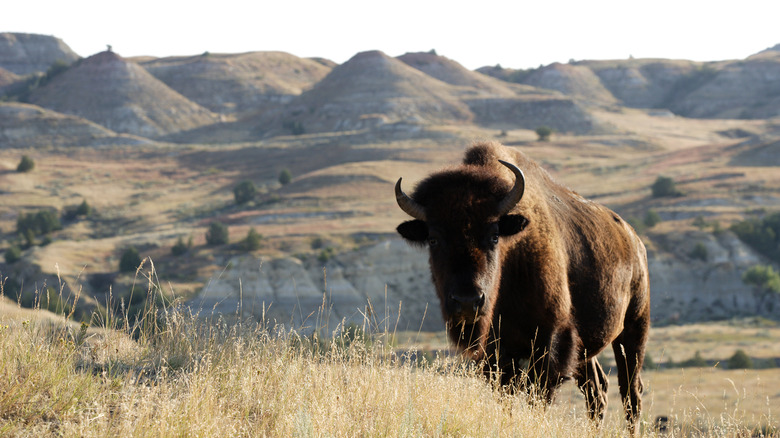
North Dakota's Theodore Roosevelt National Park represents one of the region's most rugged and wild blends of landscape and animal life. In the spirit of the president after which it was named, Theodore Roosevelt National Park is a wonder of American conservation, with badlands, buttes, prairies, and plenty of bison.
The National Park Service estimates that the park's bison herds currently number several hundred across the park's separate units, and are often visible from public areas. Visitors can sometimes see them from popular picturesque spots like the easy, scenic, and underrated Boicourt Trail across the scenic North Dakota Badlands.
Badlands National Park
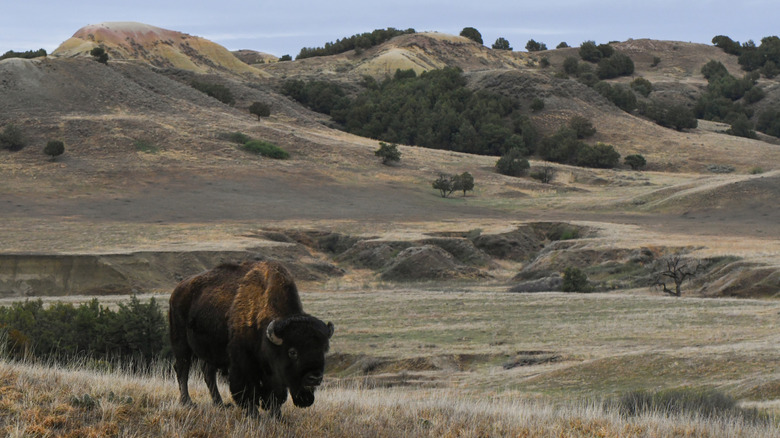
Badlands are nearly as synonymous with "rugged Americana" as bison, and South Dakota's Badlands National Park dutifully brings the two together. The heavily eroded and sparsely vegetated rock formations of the namesake badlands are the ideal backdrop for the approximately 1,200 bison in Badlands National Park (via National Park Service).
For bison, though, these lands are far from "bad." The park's diverse prairie ecology supports not only bison, but many other native Midwest species that have been extirpated elsewhere. With over 1,000 bison, Badlands rivals Yellowstone for bison viewing opportunities on its many trails, scenic drives, and wildlife observation areas.