
Forget Lake Tahoe, Visit California's Gorgeous Mountain Gem With Refreshing Waters, Trails, And Fewer Crowds
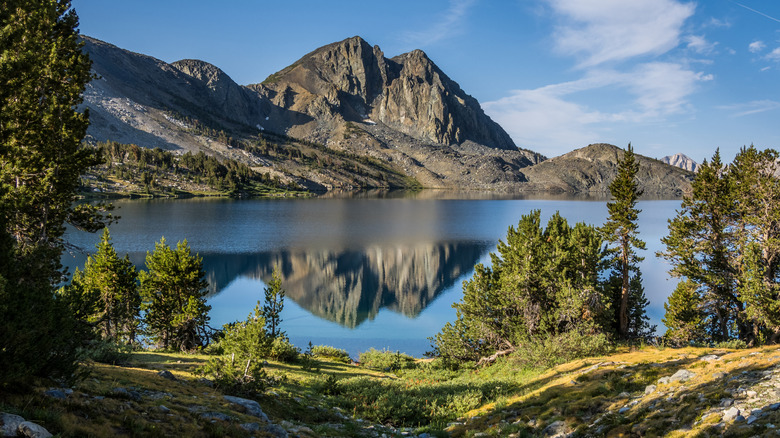
Without question, Lake Tahoe is a premier travel destination, attracting more than 2 million annual visitors to its shores, per Visit Lake Tahoe. After all, it is the largest alpine lake in North America, with an abundance of outdoor recreation and stunning scenery to enjoy. As popular and picturesque as it is, not every traveler wants to put up with the crowds. One alternative is Duck Lake, another breathtaking mountain gem with crystal-clear waters, hiking, and a less-touched landscape.
The remote 222-acre lake is located inside the 650,000-acre John Muir Wilderness Area and expansive Inyo National Forest. Sitting at over 10,000 feet of elevation just below Duck Pass in the Eastern Sierras, it's characterized by 11,000-foot-high rocky peaks jutting from the top. It's one of the largest natural lakes in the upper Mammoth Lakes basin region, formed by glacier activities, can only be reached on foot, and is managed by the U.S. Forest Service. The 11,030-foot-high Mammoth Mountain is visible from the lake's surface, making for a scenic experience.
According to the U.S. Forest Service, the greater John Muir Wilderness area is a "heavily visited" destination, but reaching remote Duck Lake requires a sense of adventure and an alpine hike with an approximate 1,700-foot elevation gain. With no direct vehicle access, fewer people attempt to visit it than its larger counterpart, Lake Tahoe. Exact numbers aren't tracked by the Forest Service, but for those who make the trek, spectacular views, alpine trails, and cooler waters await.
Hike into Duck Lake and hit other trails
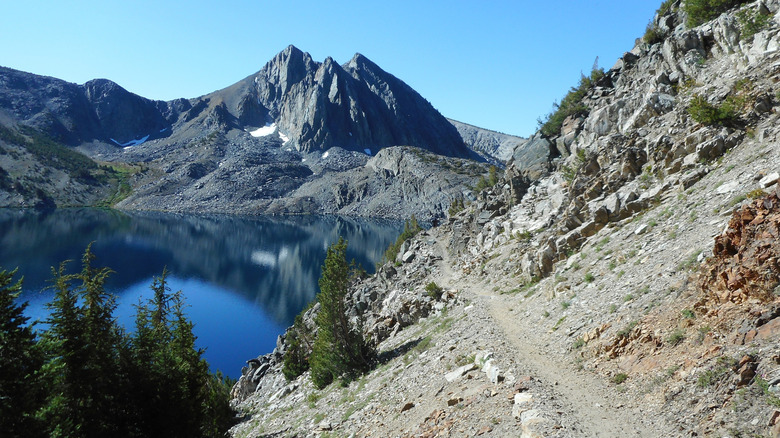
To reach Duck Lake, you'll need to hike along Duck Pass Trail, which leaves from the Coldwater Creek Campground in the Mammoth Lakes Basin trail system. The trailhead begins at 9,128 feet, climbing to the summit at 10,800 feet. The entire trek is 10.4 miles long, round-trip, with the lake at approximately 4.5 miles in. The route is rated hard on AllTrails, with challenging switchbacks, and is considered seasonal from June through October as the area is prone to extreme winter weather. Trekkers and backpackers on this route should be experienced, carrying the proper gear and water, and practice "leave no trace principles" to keep the pristine area protected.
From the main route, you can spur off to reach mile-long Pika Lake, which sits behind Duck Lake. Another option is to continue on to Purple Lake, which makes the total round trip 15.7 miles. You can also take side trails to several other alpine lakes. Hikers will want a detailed trail map. One AllTrails user says this: "The views! Oh my goodness. Definitely go all the way to Pika Lake. The meadow and wildflowers are stunning."
Day-use only parking is available at the trailhead for free, but for those doing extended backcountry and overnight excursions, you'll need a proper Wilderness permit issued by the Forest Service. They can be reserved online at Recreation.gov, and information on quota numbers and the booking process is available on the Forest Service website. Given that Duck Lake is only about 7 miles away, as the bird flies, from the low-key, affordable California mountain resort town of Mammoth Lakes, there's even more outdoor fun to be had while avoiding Lake Tahoe's crowds.
Explore Duck Lake's cool waters and other activities
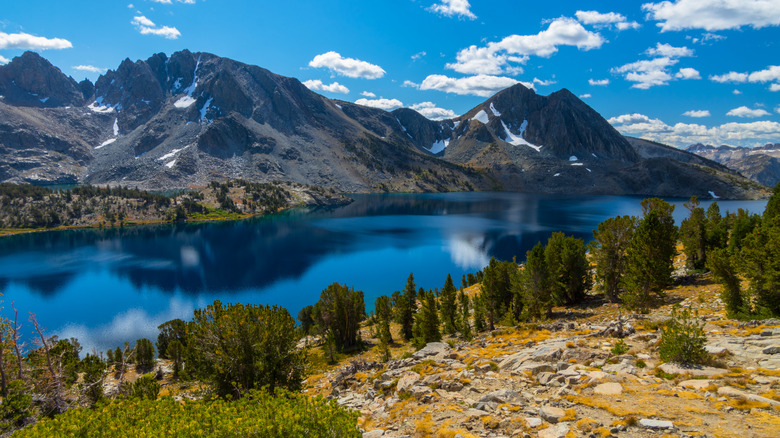
For those who reach it, Duck Lake is known for its breathtaking and sapphire blue refreshing waters, which tend to be on the cooler side given its elevation. Depending on the season, water temperatures vary but average 45 degrees Fahrenheit with a low of 32 to a high of around 60, typically remaining in the low-to-mid 50s even during the warmer summer months. Swimming is possible and permitted; you might consider a wetsuit due to the more frigid water temperatures from snow melt, making it a quick dip post-hike. You'll also want to have some bug spray along to stave off the mosquitoes.
Since it's located within a protected wilderness and national forest, no motorized boating is allowed, and there is no boat launch or road access. If you wish to paddleboard or kayak, you will have to carry in the watercraft on foot. It's also a well-regarded spot for fishing for those who hike in with their supplies. According to OnWater, the 27-foot depth makes for a supply of rainbow, brown, and brook trout species.
For those looking for some backcountry camping, be advised that you will need to trek at least 300 feet away to find a spot, no campfires are permitted, and plan for a bear-proof container for food and trash. There are plenty of other Tahoe alternatives. For some lake fun, check out Wrights Lake, with its refreshing waters and mountain trails, and Loch Levens Lake, a trio of lakes offering peaceful scenic views, camping, and fishing.