
New York's Second Highest Mountain Peak Is A Strenuous Adirondack Hike Near Lake Placid Offering Ethereal Views
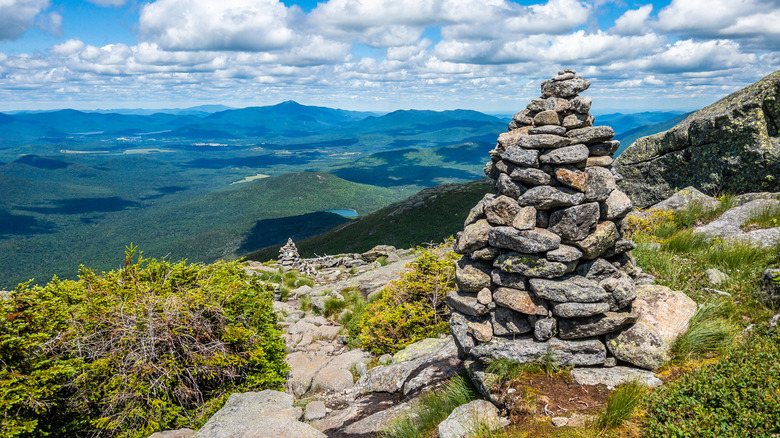
New York's Lake Placid is a year-round vacation hotspot for a reason. Not only is the town's namesake lake one of the most beautiful in the Northeast, but the surrounding expanse of New York's heavenly Adirondack Mountains offers countless mountain trails to escape from the stresses of daily life. For hikers, mountaineers, and outdoor lovers of all kinds, Lake Placid's biggest draw may be just how close many of Adirondack Park's most daring summits are to the town's urban core. Case in point, a mere eight miles from Lake Placid stands one of the titans of New York's mountain canopy. With a sky-high summit that dwarfs even the mighty skyscrapers of Manhattan, and with connections to many of the most challenging Adirondack Trails, the lofty Algonquin Peak is the high point of the Lake Placid area, and an unmissable destination for anyone looking to challenge themselves in the soaring terrain of Adirondack Park.
Algonquin Peak is the second-highest mountain in both the Adirondack Range and in all of New York State, so the trails to and around the Algonquin Peak summit are some of the most strenuous in Adirondack Park, but also some of the most rewarding. Also, Algonquin Peak's summit offers a panorama of many of the best views anywhere in New York. A trek to the top of Algonquin Peak isn't for everyone, but those who have the skill, experience, and resources to make the challenging summit hike can be rewarded with some great mountaineering and spectacular scenery.
New York's second-highest mountain may be its most spectacular
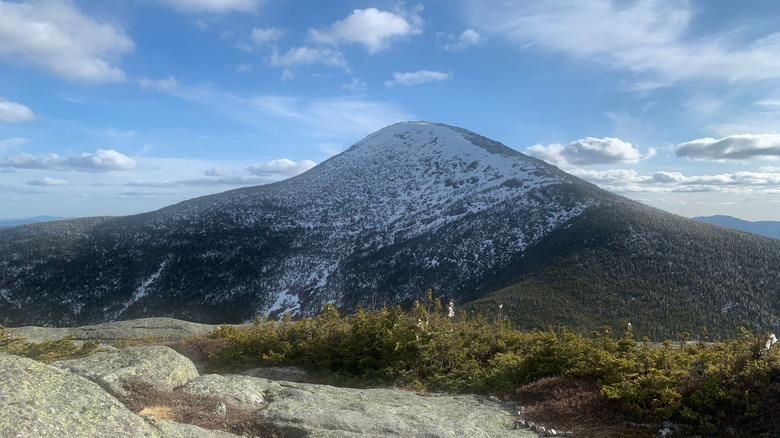
New York's Adirondack skyline is usually defined by Mount Marcy. At 5,344 feet high, Mount Marcy is both New York's highest peak and a hiking challenge with jaw-dropping views. Algonquin Peak, however, is a close competitor, in terms of both altitude and scenery. Algonquin Peak hits an elevation of 5,114 feet, but altitude alone rarely makes a mountain an unmissable destination, and Algonquin Peak's surrounding scenery has few parallels in the Adirondacks. Algonquin Peak is part of the sprawling Adirondacks escape of the High Peaks Wilderness Complex, which, true to its name, contains many of the range's highest mountains (36, to be exact).
Algonquin Peak is part of the Adirondacks' MacIntyre Range, which dominates the skyline to the west of Mount Marcy. As the highest summit in the MacIntyre Range, Algonquin Peak forges quite an impressive profile from a distance. In some ways, Algonquin Peak is even steeper and rockier than the taller Mount Marcy, which arguably creates a more distinctive silhouette than the comparatively "smooth" and less technical Mount Marcy. Algonquin Peak's lower elevations feature beautiful hardwood and evergreen forests and stunning waterfalls.
However, Algonquin Peak's best feature may be the summit views of the vast Adirondack wilderness stretching in all directions. Since Algonquin Peak is so much taller than its immediate neighbors, climbers can get a peek of the other Adirondack summits like the 4,840-foot Iroquois Peak, the 4,867-foot Whiteface Mountain, and even Mount Marcy in the distance.
The challenging — and unforgettable — hike to Algonquin Peak's summit
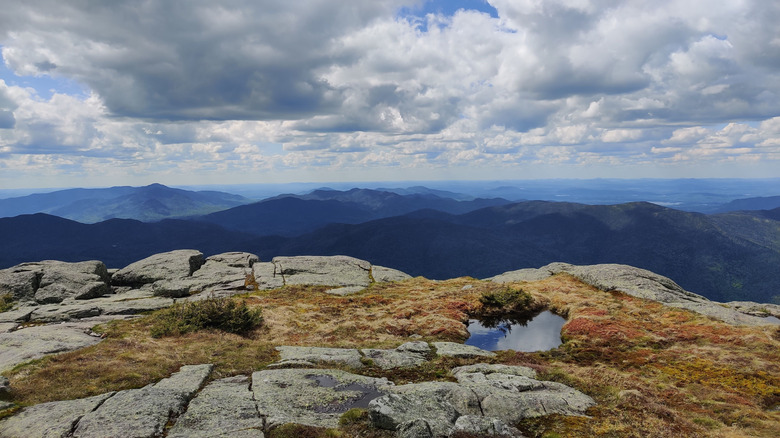
The most direct route to the Algonquin Peak summit is about 8.6 miles round-trip. Compared to the Mount Marcy summit hike, Algonquin Peak is shorter. However, it involves much more strenuous ascents up near-vertical slopes and uneven terrain. Notably, Algonquin Peak's challenges get harder the higher you go, particularly in the last mile when the open terrain above the tree line provides little protection from the elements.
The main Algonquin Peak Trail begins from Adirondack Loj Road at the Heart Lake Wilderness Campground, and follows a course southwards into the High Peaks Wilderness. The trailhead itself is worth a visit, as Heart Lake is a top Adirondack spot for camping and hiking — particularly in winter. From here, the Algonquin Peak summit route follows the Van Hoevenberg Trail for one mile before diverging onto the yellow-blazed Algonquin Peak Trail. After 2.6 miles, you'll pass the picturesque MacIntyre Falls, which is a great spot to stop for a break (and some photos).
Further on, you'll hit a junction with a spur trail leading to the neighboring Wright Peak summit, if you want to add a quick side-quest to your Algonquin Peak adventure. Otherwise, the Algonquin Peak summit is just a short (but strenuous) distance away. Some daring hikers attempt longer itineraries that combine Algonquin Peak (and Wright Peak) with Iroquois Peak, or go ever further and try the 20-mile Mount Skylight Trail. Whatever your preference, you can reward yourself for conquering Mount Marcy with a well-deserved night's sleep at one of Lake Placid's many hotels or mountain resorts.