
Not Florida, Not Vermont — This Surprising State Has The Cleanest Air On The East Coast In 2026
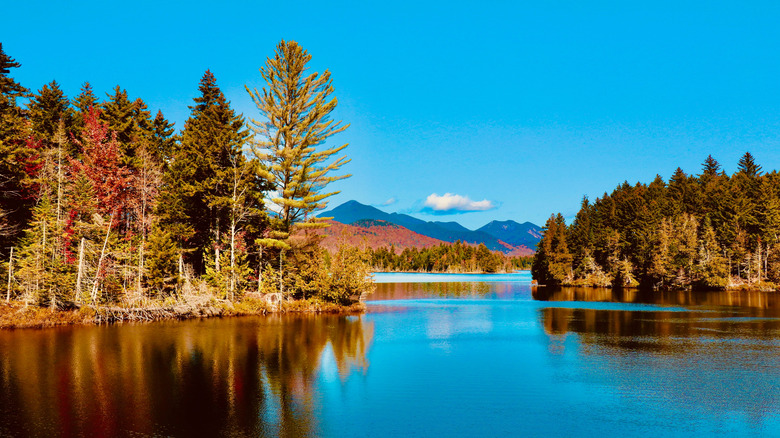
When you picture New York, you might imagine yellow taxis zooming up bustling avenues and skyscrapers for miles — not a symbol of pristine air. Yet, a 2026 report from price comparison website Compare the Market found that New York State has the cleanest air on the East Coast. The report, called the Global Air Quality and Respiratory Health Ranking, puts New York ahead of states like Florida and Vermont, showing that the East Coast's cleanest air isn't confined to New England forests and tropical beaches. Although the state is synonymous with Manhattan for many travelers, the report is a reminder that a large portion of New York is covered by mountains, farmland, forests, and lakes. For anyone planning an outdoor escape on the East Coast, New York's clean air is just another reason to put picturesque destinations like the Adirondack Mountains or the Hudson Valley at the top of your list.
The report takes four key metrics into account for its final scoring: fine air pollution, industrial toxins, asthma prevalence, and respiratory deaths. The data is obtained from the National Institutes of Health, Statista, the Centers for Disease Control and Prevention, and various studies. In addition to air quality, the ranking analyzes the respiratory health of residents in each state. New York landed in fourth place, with an overall score of 75.50 out of 100. The state with the cleanest air is Hawaii, followed by South Dakota, Nebraska, and New Jersey in fifth place.
Why New York has the East Coast's cleanest air
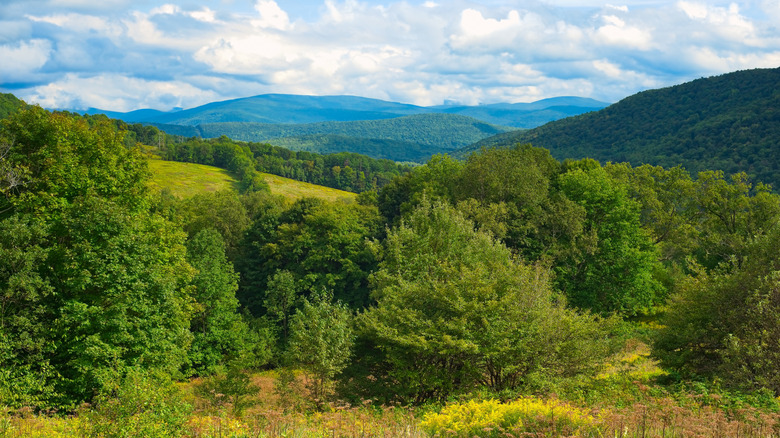
New York's clean air isn't simply a result of the state's natural landscapes. Over several decades, the state has worked to both protect its air-filtering forests and to reduce air pollution. For example, the statewide Community Air Monitoring Initiative tracks air quality in disadvantaged communities and develops strategies to improve it. It is the largest air monitoring program in the state's history, according to the New York State Department of Environmental Conservation (DEC). The initiative led to new regulations for idling trucks and vehicles, a major source of air pollution, per the DEC.
A significant part of New York's air quality also comes from the sheer amount of forests the state has worked to preserve. As the DEC notes, forests are more than a scenic backdrop for hiking; they're natural purifiers, absorbing air pollution and trapping carbon. Around 63% of New York is forested, according to the DEC, but that wasn't always the case. Forest cover dropped to less than 25% in the late 1800s because of agriculture and logging. Today, nearly 5 million acres of forest are protected by the state. Combined with replanting efforts, these safeguarded natural areas allow locals and travelers to enjoy woodland trails, while breathing some of the cleanest air on the East Coast. Those qualities have also helped make New York attractive to retirees seeking a blend of healthy living and easy access to the outdoors.
Where to enjoy New York's clean air
For those looking to experience New York's clean air at its finest, few places compare to the Adirondack Mountains. At the heart of this region is Adirondack Park — spanning 6 million acres, it is the largest protected wilderness area in the contiguous United States. The park holds old-growth forests of spruce, birch, hemlock, and beech trees, providing habitats for an array of wildlife, from bears and moose to bobcats and minks. Cascade Mountain, one of the Adirondacks' High Peaks, is regularly named among the best hikes in New York State. The hike to the summit has some steep, rugged sections, but is considered moderately challenging overall, at 4.8 miles out and back. If you plan to stick around the area, be sure to visit the beautiful pair of lakes at the base of Cascade Mountain.
More clean air escapes can be found in New York's Finger Lakes region, which boasts 11 narrow lakes surrounded by hills, vineyards, gorges, and state parks. On the southern tip of Seneca Lake, check out Watkins Glen State Park, the most-visited state park in the U.S. It hosts 200-foot cliffs decked in over a dozen waterfalls, with gorge pathways that take you behind the falls.
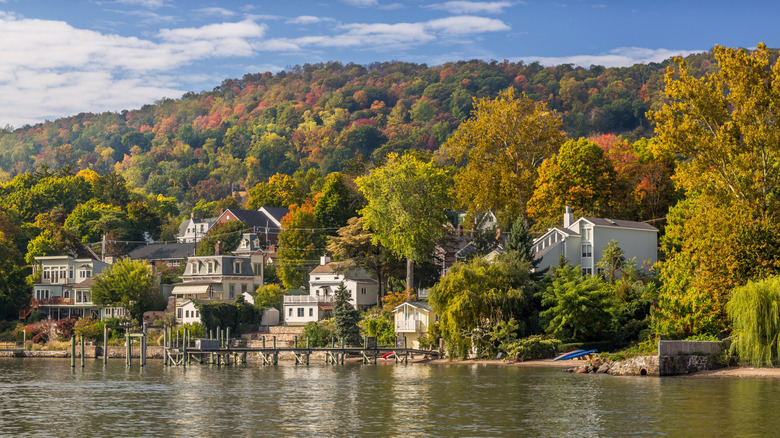
If you're looking for small towns to take in Upstate New York's riverside scenery, the Hudson Valley has them in spades. The region stretches along the Hudson River, which flows from the Catskill Mountains to New York City, making it a popular day trip destination from the city. Visitors can hike on historic carriage roads at the Mohonk Preserve outside of New Paltz, or tour the Gothic Lyndhurst Mansion in Tarrytown, a village in the Hudson Valley.