
Between Knoxville And Louisville Is A Scenic Natural Area With Canyon Views, Towering Rocks, And Wildlife
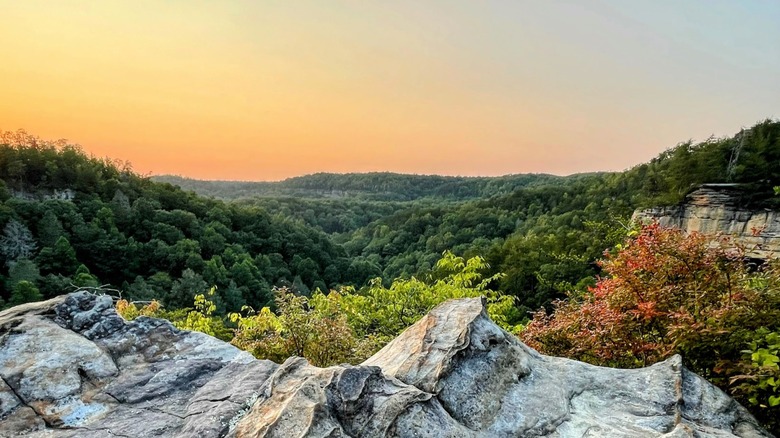
Tucked in a quiet area of northern Tennessee is a little-known park with beautiful scenes of colorful sandstone rock formations and a deep, forested canyon. These quiet trails guide visitors alongside gargantuan cliffs, through native plant and animal ecosystems, and up to overlooks with breathtaking views of the gorge. At Pogue Creek Canyon State Natural Area, just two hours from Knoxville, Tennessee, and a four-hour trip from Louisville, Kentucky, outdoor adventurers will find a serene destination of rugged paths and impressive scenery.
The views of Pogue Creek Canyon are the showpiece of the park. While many of the park's miles of trails provide glimpses down into the gorge, two distinct overlooks serve as viewpoints along the path. The Pogue Creek Canyon Overlook is reached via the Pogue Creek Canyon Overlook Trail, a 1.5-mile, round-trip hike from the main parking lot, and it provides sweeping views of tree-covered, sandstone bluffs jutting up into the distance. Across the park, the Mesa Top Overlook is reached by hiking the Mesa Top Trail, an out-and-back trail that is one mile each way and located off Highway 154. In addition to its expansive vistas, the Mesa Top Overlook features a huge rock on which visitors can rest as they gaze across the canyon.
Massive rock formations greet hikers along trails
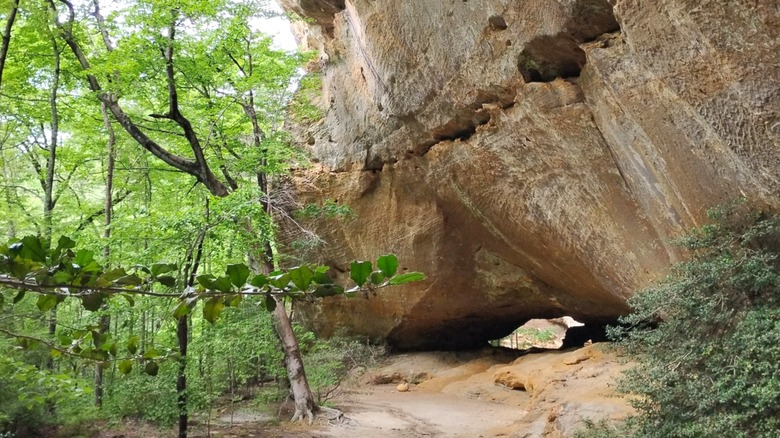
Pogue Creek Canyon's towering natural rock formations call to mind the arches of western states like Utah. The trails of the area are dotted with huge cliff faces and areas of loose sand, which have eroded from the local sandstone over time. Killdeer Arch, one of the most well-known rock features in the park, is located on the two-mile Upper Canyon Trail. Situated at the bottom of a massive rock wall, the arch is supposedly named for the killdeer bird shape seen when viewing the opening from a certain angle. Killdeer Arch is most easily accessed by hiking the Mesa Top Trail until it connects with the Upper Canyon Trail. It can also be reached by following the Overlook Trail until it connects with the Upper Canyon Trail, but that path requires visitors to trek a longer distance.
Other notable geologic features along the 1.6-mile Overlook Trail are the huge natural rockhouses. Archaeologists have found evidence that these giant rock overhangs have been used as shelter by indigenous people in the region for thousands of years, and by European-American settlers for a few hundred years. Turkey Roost Rockhouse, a formation with massive walls featuring layers of reddish sandstone, can be seen via a relatively quick hike on the Overlook Trail.
Pogue Creek Offers Wildlife Watching and a Dark Night Sky
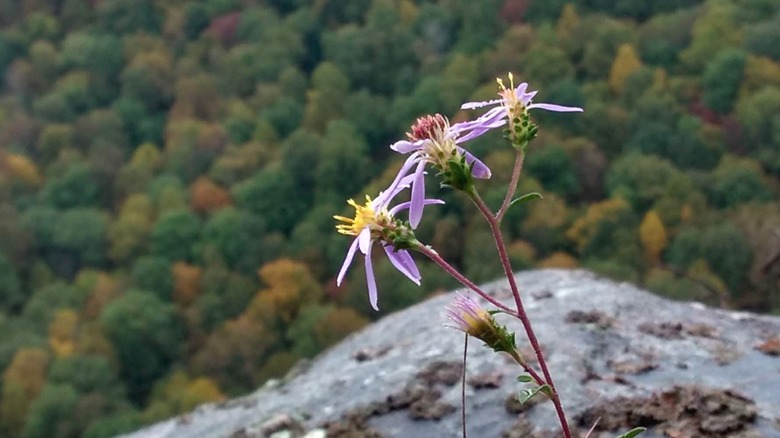
Travelers often think of national parks as the best places to spot rare and endangered wildlife, but Pogue Creek Canyon is host to several rare species. One prominent example is the Cumberland Sandwort, a tiny plant that was listed as endangered until just a few years ago. In addition to over 300 native plants, the area is also home to bald eagles, as well as reptiles and amphibians like the Eastern slender glass lizard and green salamander. A few visitors even mention encountering bears on park trails.
Most of Pogue Creek Canyon State Natural Area is open to the public from dawn to dusk, although the Astronomy Field by the parking lot welcomes nighttime visitors eager to take advantage of the park's Dark Sky status. Leashed dogs are allowed at the park, but it's generally recommended to leave pets at home due to the trail's steep drop-offs and ladder descents. There are no water or bathroom facilities, so visitors should bring plenty of water for their hike. For lodging, head to the cabins up the road at Pickett Civilian Conservation Corps Memorial State Park, which is part of the same Dark Sky area and has miles of scenic trails.