
This Popular East Coast City Known For Its Harbor And Seafood Wasn't Always In 'Best Of' Lists
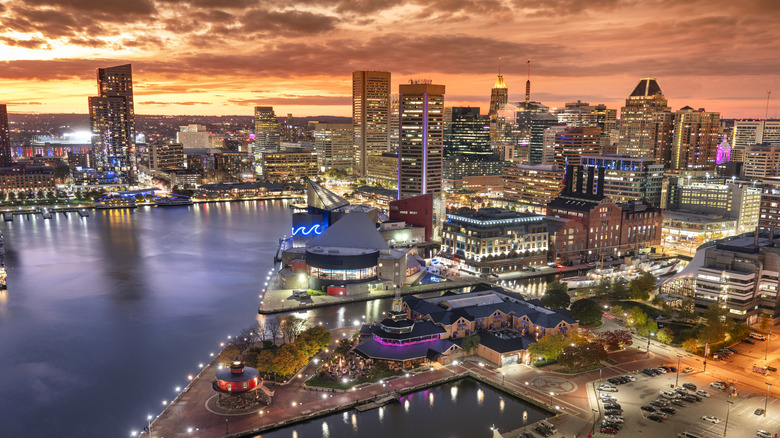
When travelers think of Baltimore, they often picture fresh Maryland blue crabs, the bustling Inner Harbor, and historic waterfront neighborhoods lined with brick rowhouses. Today, Maryland's largest city is once again earning recognition as a worthwhile East Coast getaway — blending maritime history with acclaimed museums, thriving food halls, and a growing arts scene. However, Baltimore wasn't always appearing on "best of" travel lists. Like many former industrial port cities, it spent decades working to overcome economic decline and a struggling downtown.
Founded in 1729 as a tobacco shipping port, Baltimore quickly became one of the nation's busiest harbors. By the 19th century, its location on the Chesapeake Bay and connections to the Baltimore & Ohio Railroad helped transform it into a major manufacturing and shipping hub. Landmarks like Fort McHenry — where the blazing lights from a British bombardment on U.S. forces inspired Francis Scott Key to write the Star-Spangled Banner during the War of 1812 — drew visitors long before the modern waterfront existed. Today, Baltimore is home to nearly 570,000 residents, while over 28 million visitors came here in 2025 to explore its museums, waterfront attractions, and food scene.
The city faced significant challenges during the second half of the 20th century. Manufacturing jobs disappeared, neighborhoods struggled with disinvestment, and crime rates rose. However, in recent decades, the city has steadily reinvented itself. Large-scale waterfront redevelopment, expanded cultural attractions, and investments in tourism have reshaped the East Coast's city by the bay into a world-class destination.
Baltimore's industrial decline and waterfront revival
Baltimore's harbor fueled centuries of prosperity with everything from tobacco and grain to steel and shipbuilding. By the mid-20th century, however, container shipping moved much of the maritime industry elsewhere, manufacturing declined, and people left the city in droves. Vacant warehouses and dilapidated industrial sites inhabited much of the once thriving waterfront.
The city's reputation became increasingly tied to crime during the 1980s through the early 2000s, and television series such as "The Wire" further cemented that image in the public eye. Baltimore has also experienced periods of civil unrest, like the widely publicized protests in 2015 following Freddie Gray's death. Crime remains an ongoing challenge in some neighborhoods, but Baltimore has made measurable progress in recent years. The city is continuing one of its largest multi-year reductions in violent crime in decades and recorded a significant decline in homicides and nonfatal shootings from 2023 through the time of writing.
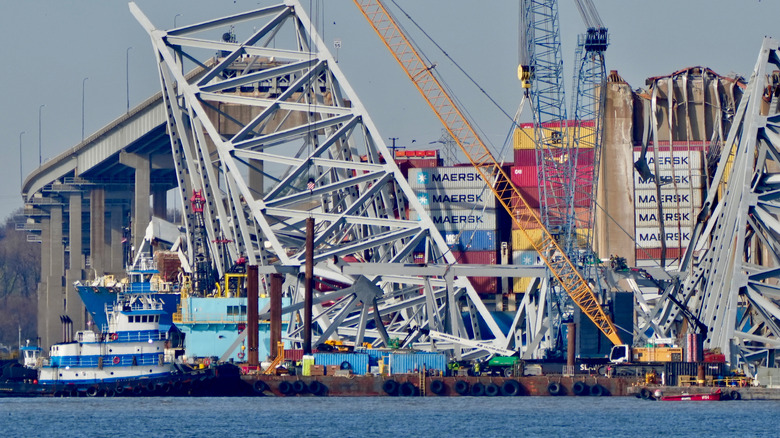
The transformation of Baltimore's Inner Harbor — which accelerated during the 1970s and 1980s — converted former shipping piers into a destination filled with museums, a promenade, restaurants, and public spaces. Baltimore's historic harbor once again became a central part of city life, and the redevelopment became a model copied by waterfront cities across the globe. However, on March 26 of 2024, the harbor experienced one of its biggest tragedies in decades when a container ship crashed into the Francis Scott Key Bridge and six people were killed in the crash. Despite the tragedy, the city set its sights on a new Key Bridge, which is set to span the river crossing in 2028.
A visit to Baltimore today
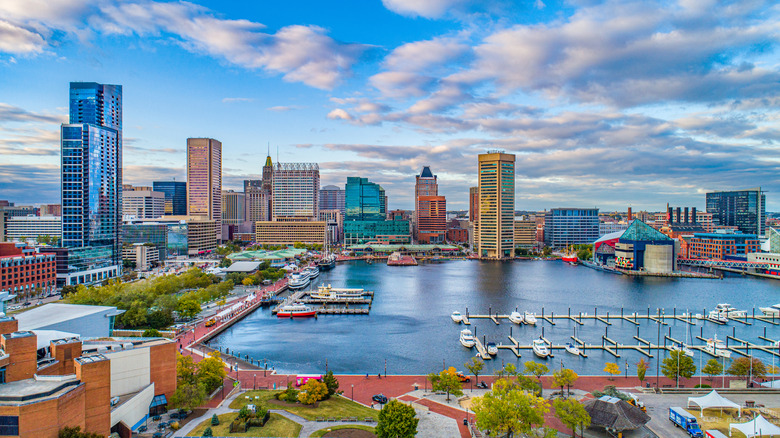
Today, Baltimore's Inner Harbor remains the city's centerpiece, where visitors can stroll the waterfront promenade, tour historic ships, and visit attractions like the National Aquarium — one of the best in America. Enjoy the view from the water by renting a paddleboat or motorboat, chartering a sailboat or small yacht, or taking a guided boat tour. Just beyond the harbor, the historic neighborhoods of Fells Point and Federal Hill showcase independent boutiques, lively pubs, and waterfront parks, while Remington is an underrated artsy neighborhood with quirky charm. Nearby Camden Yards is home to the Baltimore Orioles and celebrated as one of Major League Baseball's most influential ballparks.
No visit is complete without indulging in Baltimore's seafood. Maryland blue crabs are a local icon, whether steamed and coated in Old Bay seasoning or served as jumbo lump crab cakes at longtime institutions and neighborhood seafood houses. Lexington Market — one of America's oldest continuously operating public markets — showcases the diversity of Baltimore itself with vendors selling everything from fresh oysters to the famous Berger cookies at Market Bakery. At Cross Street Market and Broadway Market, you'll discover a taste of the city's evolving food scene with local vendors and chefs alike.
Baltimore's maritime identity never disappeared — it evolved. Visitors can spend the morning exploring Fort McHenry, the afternoon wandering world-class museums like the American Visionary Art Museum or the Walters Art Museum, and the evening watching boats drift across the harbor over a plate of fresh seafood dusted in Old Bay. Baltimore is even home to one of the most charming cobblestone streets in America, the lively Thames Street, where you'll find The Horse You Came In On Saloon, the country's oldest, dating back to 1775. The city that was once shrouded by its industrial past is now a destination where history, waterfront charm, and local flavor unite.