
5 Thai Restaurant Rules American Tourists Break Without Even Realizing It
From fan-favorite drunken noodles to spicy papaya salads and creamy curries, Thailand's cuisine entices visitors from around the world. While over 17,400 Thai restaurants can be found internationally, eating pad Thai, fragrant coconut soups, and other punchy dishes in the "Land of Smiles" is a bucket list topper for many American travelers. However, dining in a Thai restaurant in Thailand comes with a variety of rules and expectations that many Americans break without ever being the wiser.
The following restaurant rules are based on my experience living in Thailand. I've split my time between Thailand and the U.S. for over 12 years, and studied Thai Language and Culture at Chiang Mai University for four years. Although I speak Thai well and have lived in multiple provinces, I turned to Thai cultural expert Wasina Rukvichai to provide a uniquely Thai perspective and fill in gaps in my own knowledge. Rukvichai is a Thai-language educator in Northern Thailand, well known for offering cultural classes geared towards expats through her company Learn Thai With Mind.
Piling your plate high with food
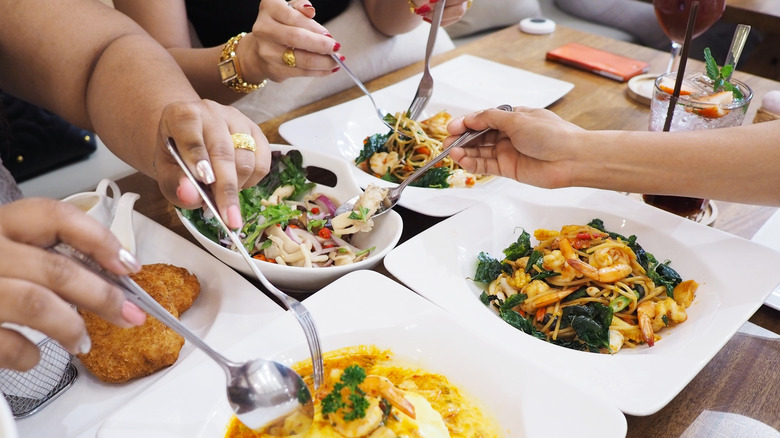
Thai people often eat together, sharing a few dishes, a soup, and a large bowl of rice. While this style is outwardly similar to how many Americans break bread, most Thai people only serve themselves small portions at a time. Instead of piling your plate high with food, plate a little rice and a few spoonfuls of curry or stir-fried meat. Once you've finished, you can return for more. Although this rule might seem inconsequential at first, it cuts to the heart of Thai dining culture.
"Eating isn't just 'eat' in Thai culture," explains Rukvichai. "In our tradition, a dining table is a place where we gather with family and friends, chit-chatting and updating our lives." Phrases like "gin len" (to eat for fun) situate dining as a joyful pastime, while "greng-jai" (loosely translates to "to be considerate" or "to not disturb others") encompasses how one should behave in public spaces. Within this context, loading up on everything you plan to eat at once comes across as gluttonous and inconsiderate, as if you're eating only to fulfill a basic biological need, not to enjoy the experience or company.
That being said, there are glaring exceptions to this rule. If you're at a "moo-kata" restaurant, a type of all-you-can-eat barbecue buffet, it's acceptable to fill your plate to the brim. I've seen small families cover every inch of the tables with shrimp, pork, and all sorts of things from the buffet's pre-made food section, then eat almost everything.
Speaking loudly in a restaurant
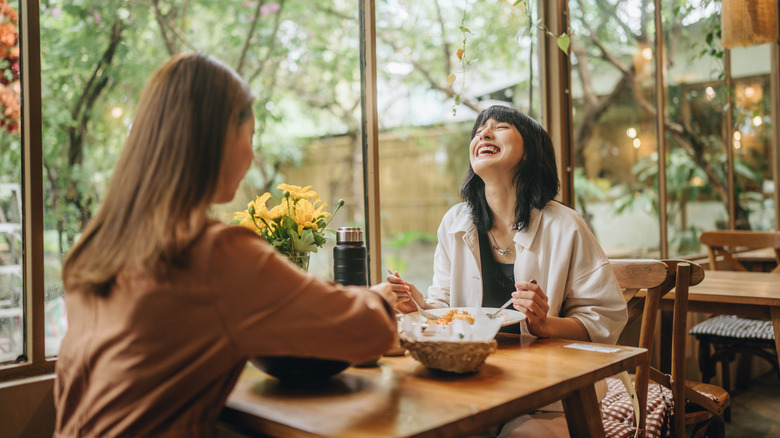
It's no secret that Americans are loud. From raucous post-Super Bowl celebrations to your average Thanksgiving feast, Americans possess the distinct ability to project their voices. While little research exists on exactly how much louder Americans speak than other nationalities, personal testimonials across TikTok, Reddit, and other platforms reveal a tendency toward non-indoor voices.
That being said, Thai people occupy the other side of the noise spectrum. In public spaces, including restaurants in cosmopolitan cities with world-class cuisine, like Bangkok, people generally speak in what Americans would consider hushed voices. "We don't want to bother or disturb other people who share the same area," shares Rukvichai. "If a person is being loud, Thais probably think, 'Oh, this person is being rude and is not so considerate.'"
While you don't have to whisper, keeping an eye (or, in this case, an ear) on your volume will help avoid accidentally offending other diners. This is especially important in small restaurants where noise travels. In my experience, Americans usually lose track of their volume when telling stories, greeting each other, or walking in groups. However, as with many cultural expectations in Thailand, there's room for some flexibility. If you know your party may struggle keeping the volume down, opt for outdoor restaurants that cater to large groups over romantic eateries or tiny cafes. In addition, if nearby diners seem unusually quiet, chances are you're talking too loud.
Taking the last bite from a sharing plate
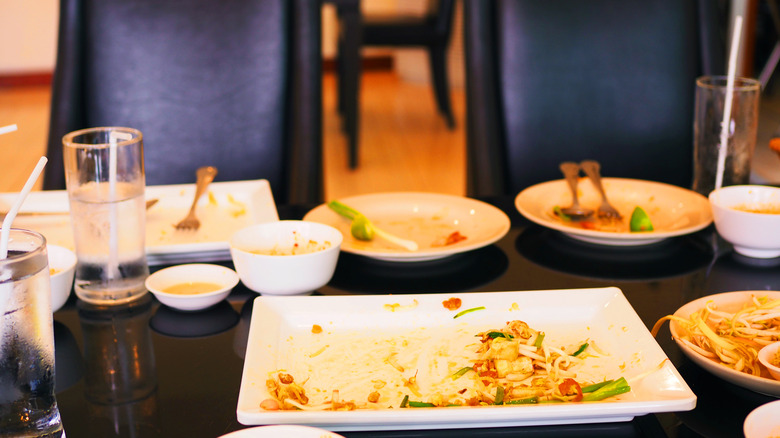
As the meal winds down, you may notice a small amount of food left on each serving plate. A clump of rice here, a pile of stir-fried vegetables there, or one small helping of soup. Instead of scraping off or asking who wants to finish the dregs, leave the food on the plate. "Leaving some small food on the plates displays a big thanks to the host that they provided an excessive amount of food that guests can't finish," says Rukvichai.
A restaurant meal may not have a host in the traditional sense, unless someone in your party is paying for others to dine — but this rule still has a purpose. It shows the rest of your party that you are fully satisfied with the meal and don't require any more food.
It's worth noting that this rule is evolving. When I first moved to Thailand over a decade ago, this rule held fast. However, Rukvichai says a shift is in progress: "Nowadays, younger generations have more concern regarding the waste of leftover food. So, they try to finish every single plate on the table." What does this mean for your Thai dining experience? When in doubt, follow the lead of local Thai people and don't be afraid to ask questions. By and large, Thai people take great pride in their culinary heritage and are happy to share what they know.
Putting your feet on the chair
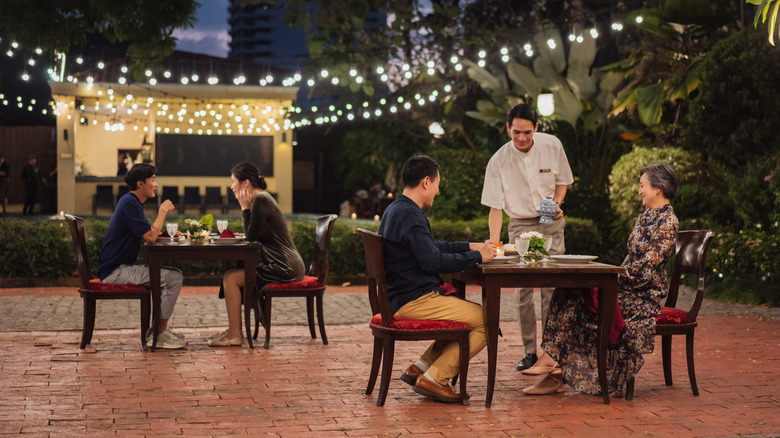
When you're getting comfortable at a Thai restaurant, never put your feet up on the chair across from you or otherwise place your feet on a seat. Rukvichai explains that this custom dates back to a time when people usually walked barefoot. However, this dining rule encompasses more than cleanliness. "Feet are also considered the lowest part of our body," says Rukvichai. "We won't point any of our feet in any case to a Buddha image and statue; that is the example of how Thais strongly perceive feet as the lowest and dirtiest part."
At Thai restaurants, especially cafes, I frequently see American tourists sitting cross-legged, which reveals the underside of their feet to others and exposes the chair to dirt. Rukvichai urges diners to keep their feet on the floor while eating. However, in practice, other sitting positions are acceptable as long as the bottoms of your feet aren't flagrantly exposed in all their pavement-treading glory.
In terms of removing footwear, it's usually acceptable to wear your shoes inside a restaurant. However, if you dine at someone's home, always take your shoes off at the door.
Scooping rice directly into a bowl of curry
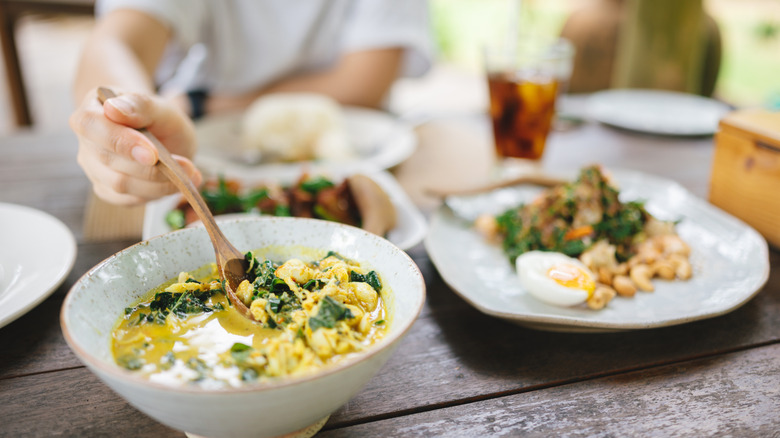
From mild green and yellow curries to cinnamon-infused massaman concoctions or southern Thailand's ultra-spicy recipes, coconut-based curries are a fan favorite among visitors. However, the way Americans dig into a bowl of tasty curry can seem strange to Thai people.
Instead of dumping a scoop of rice directly into your curry bowl, place a few spoonfuls of curry over your rice, and repeat the process. In Thailand, curry is a "gap khao" (with rice) dish, meaning it's meant to be eaten alongside rice. It's not a soup where rice takes a dip. In my experience, breaking this rule isn't as offensive as breaking some of Japan's strict etiquette rules (like being late), but may draw a few stares or out you as a tourist.
While Rukvichai doesn't touch on curry conundrums, she urges Americans to pay attention to how they eat. "We're mostly told to eat slowly and quietly, for example, close our mouth while eating and don't talk while chewing," she explains. These rules are also cornerstones of standard American dining etiquette, but serve as an important reminder to treat a Thai restaurant with the same respect as a dining establishment in your home country. To avoid committing other embarrassing dining faux pas, check out Mexican restaurant rules American tourists break.