
Gatlinburg And Pigeon Forge Are Too Crowded. Visit These Smoky Mountain Havens For A Quieter Getaway
We may receive a commission on purchases made from links.
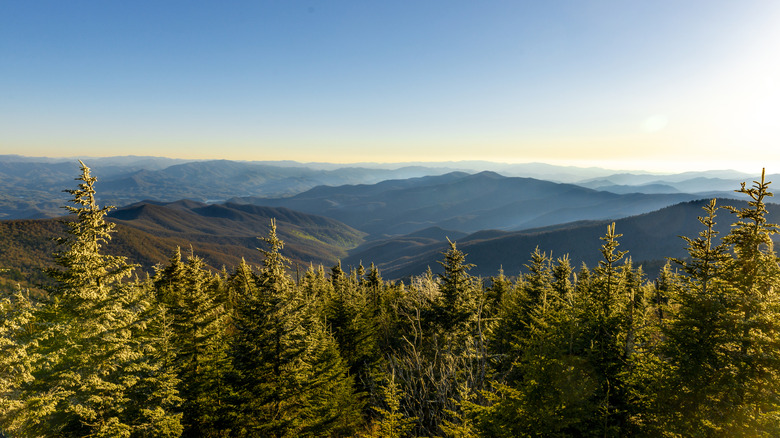
Great Smoky Mountains National Park is consistently the most visited national park in America, receiving more than 11 million visitors annually. Straddling the North Carolina-Tennessee border, the park is undeniably scenic, with its steep valleys, tumbling falls, and an iconic bluish haze that suffuses this part of the Southern Appalachian mountain chain. But it also owes its popularity to a convenient location, within a day's drive of more than half the U.S. population, meaning people don't have to schlep halfway across the continent to see nature in its most unmediated form. As a result, some of the park's gateway towns — Gatlinburg and Pigeon Forge, in particular — have become extremely crowded.
These two neighboring Tennessee towns on the doorstep of the park have a preponderance of accommodations, restaurants, and amenities. They are also loaded with attractions like mini golf, glass-bottom adventure boats, ziplines, and alpine coasters. This has turned both into run-of-the-mill resort towns that could be just about anywhere. With its neon-splashed strip, full of themed establishments and junk food, Gatlinburg has even been dubbed the "Vegas of the South", which is about as antithetical to the idea of a wilderness escape as you could get.
If you find that dispiriting, instead take refuge in one of the towns where a restful atmosphere has been preserved. You'll find such havens scattered along either side of the Smoky Mountains, including Bryson City and Maggie Valley in North Carolina, and Townsend and Cosby in Tennessee. You may have to forgo some conveniences, like lively nightlife venues and sprawling resort hotels, but isn't that what experiencing nature is all about?
Bryson City, North Carolina
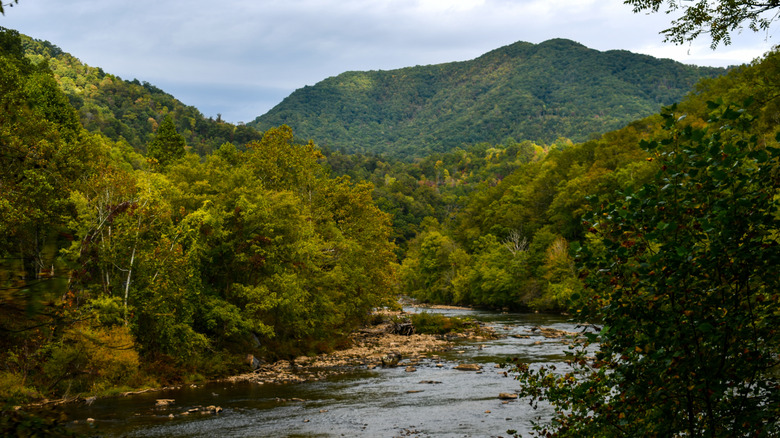
Bryson City in North Carolina is often described as the "Outdoor Adventure Capital of the Great Smoky Mountains" but that hasn't resulted in the kind of overcrowding seen in Gatlinburg and Pigeon Forge. Despite its name, Bryson City is actually a small town, with access to lake fishing, forest hikes, and whitewater rafting. It doesn't connect to other park roads or offer easy access to other park regions, but this has contributed to its seclusion. To feel even more off-the-grid, stay in one of Bryson's mountainside cabins, the most premium of which have fireplaces and hot tubs with views.
Bryson was built on the banks of the Tuckasegee River, which today is used by tubers and paddleboarders. Check out Bryson City Tubing for tube rentals or Nantahala Gear Xchange for secondhand boats and outdoor gear. There are more water-bound adventures to be had on Fontana Lake. The lake, created following the construction of a gargantuan dam in the 1940s, sits 25 miles west of town. Take a sunset cruise, paddle around Cable Cove, fish for trout, crappie, catfish, or steelhead (Hazel Creek might be the best fishing stream in the entire national park), and do it all while surrounded by the Smokies rising in every direction.
From Bryson you can join the Deep Creek Trail, a popular, 2.5-mile hike taking you past a series of waterfalls with curious names: Juney Whank, Tom Branch, and Indian Creek. Some people tube here in summer, but the National Park Service advises against it as unpredictable weather conditions can cause rivers to rise rapidly, resulting in serious injuries. If you'd rather admire the views from a stationary position, board a Great Smoky Mountains Railroad steam train at Bryson City depot. Excursions travel along Nantahala Gorge and the Tuckasegee River.
Townsend, Tennessee
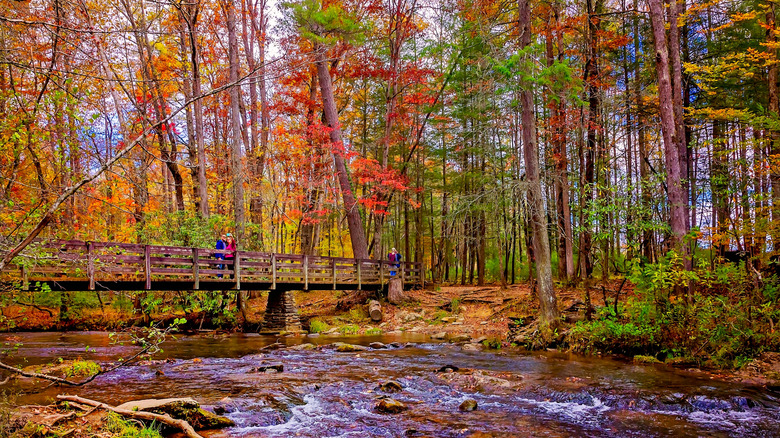
Another laidback, less touristy gateway to the Smoky Mountains is Townsend, Tennessee. It's only 30 minutes west of Pigeon Forge, but you wouldn't know it. A town of fewer than 700 people, Townsend has long billed itself as the "Peaceful Side of the Smokies." It's the gateway to the beautiful Cades Cove, and offers secluded hiking, cycling, camping, and fishing opportunities. It's also got cozy restaurants and is perhaps at its peak in fall, when the mountains are dressed in autumnal colors. No wonder AFAR placed Townsend on its list of towns that might be cooler than their neighboring national parks.
Cades Cove, perhaps one of the Smokies' most scenic valleys, is a major reason to stay in Townsend. An 11-mile driving route — accessible only to bikes and foot traffic on Wednesdays from May through September — encircles the valley. From the road, you'll get access to viewpoints and hiking trails, and you might spot some of the cove's wildlife, including elk, white-tailed deer, black bears, coyotes, skunks, and groundhogs. You can also tour the Tuckaleechee Caverns, learn more about the national park at the Great Smoky Mountains Institute in nearby Tremont, hike to Spruce Flats Falls, and attend a summer ballooning festival.
The October fall foliage window is one of the busiest seasons in the Smokies, which is all the more reason to choose an off-piste destination like Townsend. The surrounding mountains and river valleys blaze orange and gold, crimson and ochre, as the leaves of oaks, maples, birches, and other deciduous trees begin to turn. For the best views take a scenic drive, like the Cherohala Skyway, which is southwest from Townsend. You'll be rewarded with immense Smoky Mountain scenery. To time your autumn visit perfectly, see the Smoky Mountains fall foliage prediction map.
Maggie Valley, North Carolina
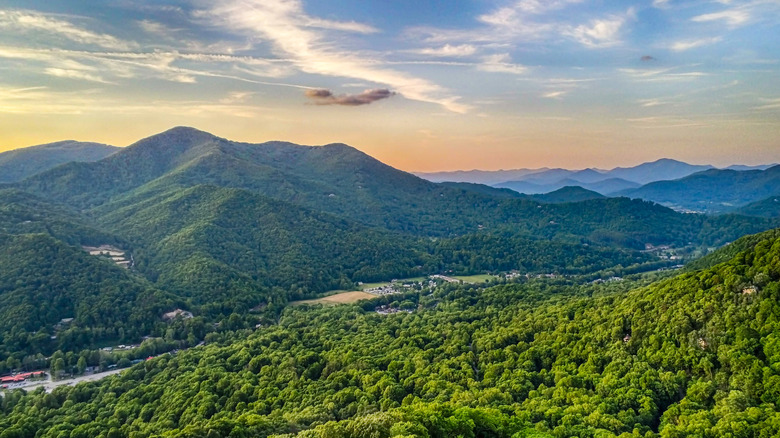
In North Carolina's Haywood County, Maggie Valley is one of several towns nestled in the mountains. The town spreads along its namesake valley, full of creeks and parks, and is home to restaurants, diners, and stores resembling log cabins. It also has access to hiking trails with sumptuous mountaintop views and the Blue Ridge Parkway, a scenic driving route through the heart of Southern Appalachia. Around 16 miles to the west, the town of Cherokee has become a mini Gatlinburg, mostly thanks to a casino, increasing the appeal of Maggie Valley to crowd-weary travelers.
From Maggie Valley, the nearest entrance to Great Smoky Mountains National Park is the remote Cataloochee entrance. Join one of the unbusy hiking trails here, where wild elk roam year-round. One of the most scenic and historically rich is the 7-mile Boogerman Trail (a name you won't forget in a hurry). If you'd prefer to explore the mountains from behind the wheel, you've got 469 miles' worth of road on the Blue Ridge Parkway, lovingly referred to as "America's Favorite Drive". Join the route from Maggie Valley on Highway 19 and be sure to stop at Waterrock Knob, reached via a 1.2-mile hike. Once at the top, you're 6,000 feet above sea level and can see for 50 miles on clear days.
Aside from nature, the town has some cool diversions of its own. You can shop for crafts and local produce at Maggie Mountaineer Crafts, skateboards and snowboards at Flipside Board Shop, or quirky clothes and accessories at Barn Tin Boutique. Maggie Valley also has cozy lodgings, with wood-paneled interiors and rooms with mountain views. The log cabins at Misty Creek are about as cozy as their name implies, receiving "exceptional" reviews on Booking.com.
Cosby, Tennessee
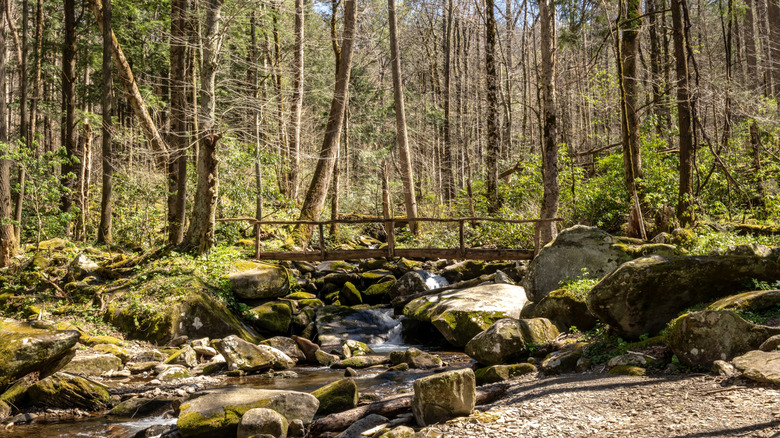
On the quiet, northeastern side of the Smokies, not far from Cherokee National Forest, sits Cosby, a tiny Tennessee town known for its apple orchards. Because Cosby hasn't received the same kind of fanfare as many of the more populous Smoky Mountain towns, it's perfect for travelers who view nature as a form of escape. Expect secluded and scenic hikes, family-friendly nature trails, uncrowded campgrounds, and no busy thoroughfares or main streets to contend with.
Though referred to as a "town," technically Cosby is an unincorporated community, meaning it exists by tradition and has no local government. It feels like that, too, spread out throughout the mountains and valleys rather than having a downtown or focal point. The advantage is that Cosby has some really atmospheric cabins and rental lodges hidden in the woods, properties that make the clamor and lights of Gatlinburg seem half a world away.
The Cosby area actually spills into the national park, so if you're staying in town you'll benefit from ease of access. There are several campgrounds and parking areas here, and a number of trailheads from where you can start hiking through the mountains. Most of Cosby's trails score well on AllTrails and many have been applauded for their lack of crowds. Families should check out the Cosby Nature Trail, which is just over 1 mile long and has an elevation gain of less than 200 feet, while seasoned hikers should consider the trickier Gabes Mountain Trail to Hen Wallow Falls. Carving through a forest of hemlock trees, it leads to a 90-foot-tall waterfall careening down the cliffside. For a sterner challenge, you can summit Mt. Cammerer, by way of an 11-mile trail and more than 3,000 feet of elevation. It's tough, but the views from the top are worth it.