
Goodbye Napa Valley, So Long Sonoma County: This Midwest Region Is The New Hotspot For Wine
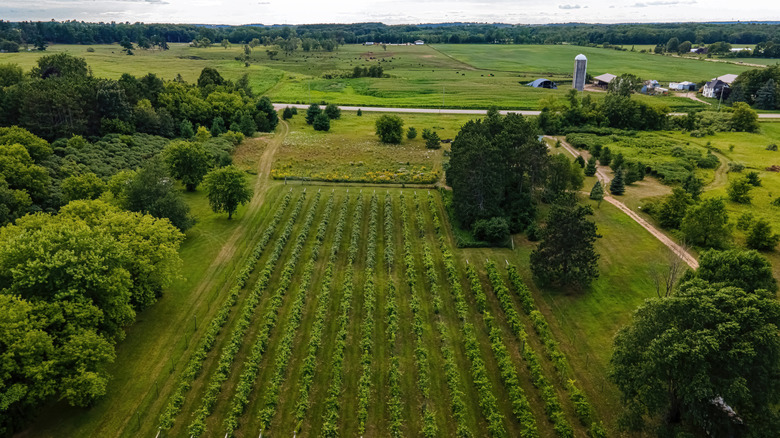
Name a better pairing than wine, cheese, and a carb of some kind — we'll wait. While the idea of sipping a locally made sauvignon blanc or syrah in a vineyard while sampling cheese and charcuterie might be more easily associated with California's famed Napa and Sonoma valleys than the Midwest, there's a new frontier for American wines that has oenophiles turning heads: the Driftless Area.
Across southwest Wisconsin and into parts of Minnesota, Iowa, and Illinois, sprawls a roughly 24,000-square-mile expanse known as the Driftless Area. During the last glacial period, glaciers largely bypassed this region, leaving a uniquely rugged landscape behind. Deep gorges, steep bluffs, groundwater springs, and cold-water streams contrast with the rest of the Midwest, where glaciers flattened much of the topography into plains. Much of the region falls within the Upper Mississippi River Valley AVA, a nearly 30,000-square-mile swath established in 2009 that encompasses much of the Driftless Area and is one of the largest AVAs in the U.S., while the smaller Lake Wisconsin AVA lies within it.
It may come as a surprise that the Driftless is becoming a wine hotspot. Midwest winters can be notoriously cold and long, whereas many famous wine regions, particularly California, have milder, wetter winters, dry summers, and longer growing seasons. Traditionally, fruit wines and sweeter flavors have anchored much of the Midwest's wine production. Native Vitis riparia can withstand brutal winters, but its high acidity and low sugar make for less-than-ideal conventional table wine. Yet the Driftless Area's steep ridges and limestone-rich geology have helped shape a distinct growing environment for cold-hardy grape varieties, which are now transforming the region's viticulture. And although sommelier Dylan Estey of renowned steakhouse Hawksmoor Chicago described winemaking in the Driftless as "still in its infancy," VinePair included the area among the country's top underrated wine regions in 2025.
The Driftless Area produces cold-weather vines for distinct regional wines
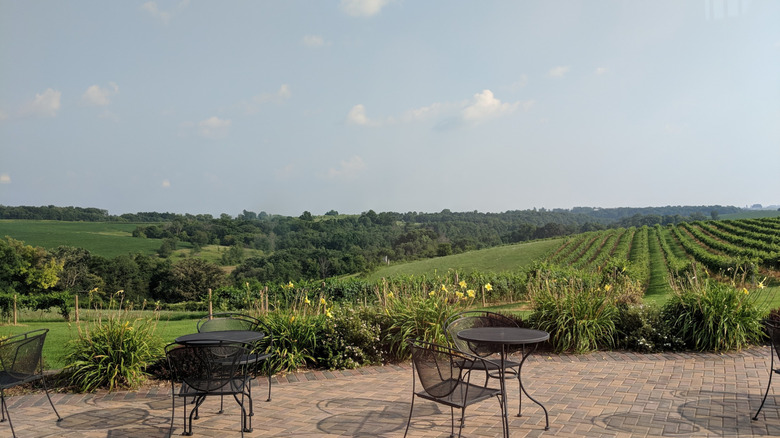
Because Vitis riparia can endure the Midwest's brutal winters but can be difficult to turn into balanced table wine on its own, American grape breeders spent decades crossing local vines with hardy French grapes to develop hybrids with better flavor that could withstand the Driftless Area's extreme weather. Expect to encounter varieties such as St. Croix, St. Pepin, Frontenac, Marquette, and La Crescent on a Driftless Area wine-tasting adventure.
About 75% of the Driftless Area lies in Wisconsin, a longtime U.S. agricultural anchor with a massive cheese economy and five geographic wine regions, making it a natural place to encounter mouthwatering pairings. The Great River Road Wine Trail is part of the Upper Mississippi Valley AVA and spills over from Wisconsin's Driftless Area into Iowa and Minnesota. Wisconsin's Vernon County is itself a significant wine-producing area, with vineyards specializing in winter-hardy grapes. Current trail members include Vernon Vineyards, Branches Winery, and Elmaro Vineyard – all well-regarded, family-run establishments. "Elmaro is truly a gem — every visit feels like a mini getaway," wrote one Google reviewer. "The vibes are always immaculate ... Every bite pairs perfectly with their incredible wine selection."
The Driftless Wisconsin Wine & Cheese Trail runs between Madison and La Crosse, and includes member wineries like Wollersheim Winery and Distillery in Prairie du Sac. It is one of Wisconsin's most historic wineries, where Agoston Haraszthy planted grapevines before establishing wineries in Sonoma Valley, and is part of the Lake Wisconsin AVA. It also includes Wild Hills Winery in the Driftless Area's Ocooch Mountains, and Rock N Wool Winery, toward the area's eastern edge, 30 miles north of Madison. Along the way, artisan cheesemakers like Arena Cheese and Nordic Creamery offer a Wisconsin-appropriate break between tastings.
Exploring the rest of the Driftless Area's Midwest wine collections
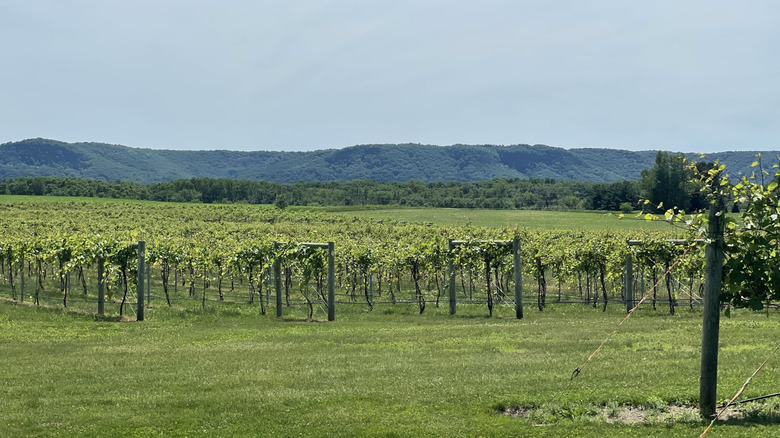
Just over the border — and Mississippi River — from Wisconsin into Iowa, Eagles Landing Winery is a small, family-run spot in downtown Marquette. Guests love its charming outdoor patio and wood-fired pizza, which pairs with grape wines like "Mrs. Sippi," "Outlaw White," and classic Midwest fruit wines like the popular "Campfire Hootch." Fifty miles downriver, Park Farm Winery is another Iowa Driftless favorite, crafting full-bodied reds, whites, and even ports and rosés made with local grapes.
In northwest Illinois, the Driftless Area encompasses Galena, a charming weekend destination filled with cozy inns, scenic hills, and, of course, cold-hardy vineyards. Galena Cellars has a vineyard with a winery and tasting room in downtown Galena, while Fergedabouit Vineyard & Winery, located down the road in Hanover, boasts a 4.8-star Google rating (guests call it a hidden gem and rave about the cheese plates and focaccia). Massbach Ridge Winery has a vineyard in Elizabeth and a tasting room conveniently located in downtown Galena. "Nice selection of some unique wines," wrote one Google reviewer. "Daffodil White was rich, sweet, white, soft, flowery, not too sweet, smooth."
According to the Wine Institute, California is the fourth-largest wine producer in the world and accounts for 80% of U.S. wine production. Healthy debates rage over which California wine region — Napa or Sonoma — offers the better wines and the ultimate getaway, but for hidden gems and less pricey experiences, the Midwest has its fair share of undersung wine regions. In addition to the Driftless Area, the southernmost corner of Illinois features the Shawnee Hills Wine Trail, a collection of charming vineyards near the Shawnee National Forest. Michigan also boasts a wine scene, particularly along the Traverse Wine Coast near Traverse City, the beautiful Lake Michigan community with Italian vibes.