
Napa Valley Or Sonoma: Which California Wine Escape Is The Ultimate Getaway?
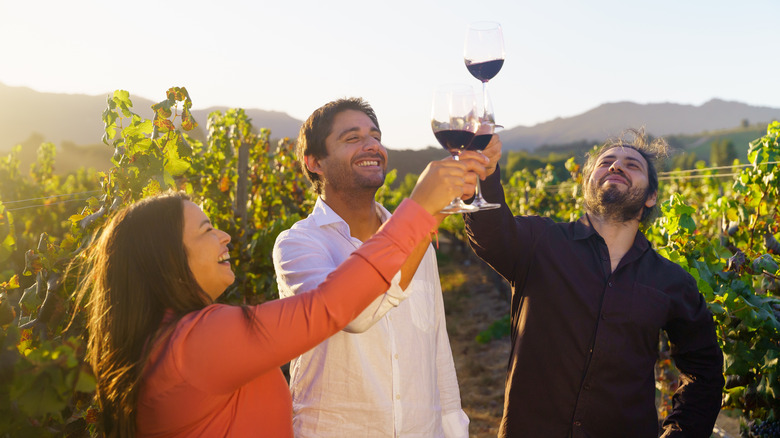
Some of California's best wines, and even the world's, are coming out of Northern California. This has been the case for decades, thanks in part to the Judgment of Paris. In 1976, California wines were blind tested against some of the best French wines, and Napa Valley wines won for best red and white. This came as a huge surprise, and it really helped put California wines on the map.
50 years later, Napa Valley has firmly established itself as a renowned wine country getaway. However, Napa's not the only major player. Sonoma Valley, just to the west of Napa, is also a celebrated wine region. Separated by the Mayacamas Mountains, both regions are less than two hour's drive from San Francisco (barring traffic). Both are great destinations. I lived in California for over a decade, and I've visited both valleys many times. Both have lots of wineries, fantastic restaurants, great hotels, hot springs, and even hot air balloon rides — all the things you could want in a wine country getaway.
If you only have limited time, like a weekend, you'll want to focus on just one of the regions. But which one? Broadly speaking, you're choosing the vibe, since both valleys are beautiful and have good wine. For something more internationally prestigious with renowned restaurants, but higher prices, go to Napa. For something more relaxed, a bit more rustic, comparably less expensive, but still with the features you want in wine country, visit Sonoma. Here's what to know about the highlights (and some of the downsides) of both regions to see which one matches how you like to travel and what you're looking for in your wine country getaway.
Napa is well-known and beautiful, but more of a splurge
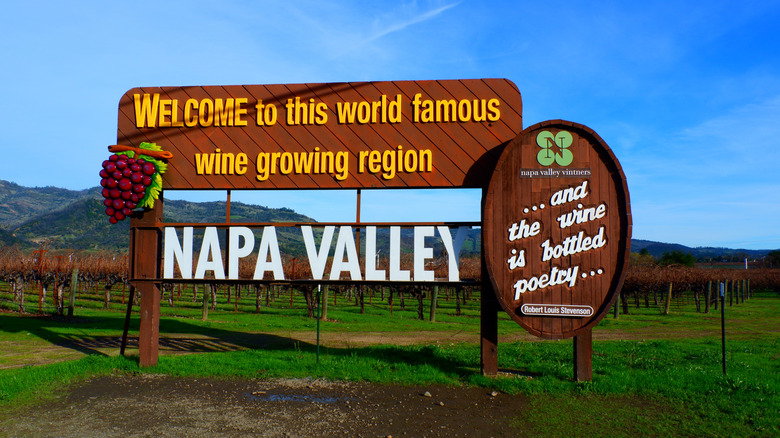
Napa Valley runs from American Canyon in the south up along Highway 29 to the town of Calistoga, known for its hot springs serenity. Napa has more name recognition, so it's more of a bucket list wine country destination. It's also beautiful, with sweeping vistas of vineyard-covered hills that you don't get as much of in Sonoma. You can get some really high quality wine here, as there are over 400 wineries. The Judgment of Paris winners were Chateau Montelena and Stag's Leap Wine Cellars, both of which are open for tastings. In St. Helena, aka "Napa Valley's Main Street," you can find the region's oldest winery: Beringer Vineyards, which has been operating continuously since 1876. Napa is known for its cabernet sauvignon, but you can find other varieties, like the acclaimed merlot at Sullivan Rutherford Estate.
Napa has some of California's best-known restaurants, like The French Laundry in Yountville. Helmed by Chef Thomas Keller, it's a three-Michelin-star restaurant with tasting menus that will set you back upwards of $425 per person (at the time of writing). For great wine and food in a beautiful setting, Round Pond Estate's Il Pranzo experience features an elaborate four-course meal that's made with locally sourced ingredients and paired with wine for $225.
For Napa downsides, I've found that on the whole, just about everything is more expensive. There are some wineries with tastings for $50 or less, but not a lot. As for staying in Napa Valley, there are some relatively budget friendly places, but it definitely has more luxury places. I've also found myself stuck in traffic more times in Napa than in Sonoma, and it can feel more crowded, especially during harvest.
Sonoma Valley has more bang for your buck
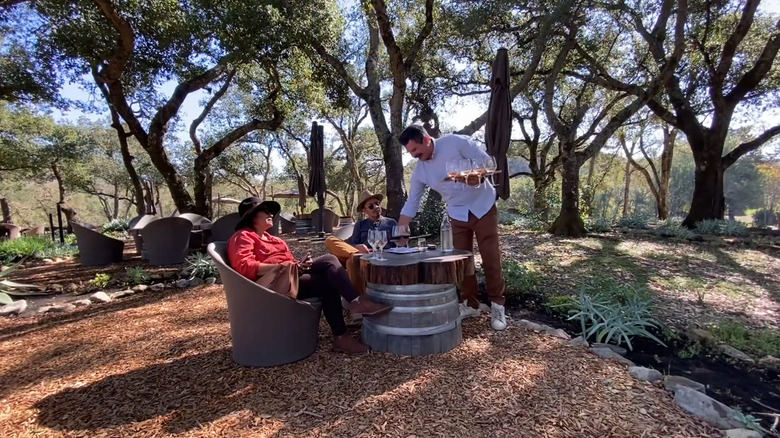
Sonoma County ranges from inland mountains all the way to the Pacific Ocean, and within the county, there are multiple wine regions. For our purposes, I'm focusing on the Sonoma Valley, which stretches from near Fairville up along Highway 12 through the town of Sonoma to just south of Santa Rosa. The picturesque Sonoma Plaza is California's largest town square, and it has a mix of historic buildings, including the original Mission. It has cute shops, good restaurants, and a tasting room. Make sure to wander down Vine Alley, where you can taste pinot noirs by Fulcrum Wines. For an on-site tasting, Bartholomew Estate Winery offers tastings in the shade of giant oak trees or in an art gallery.
While Napa has more Michelin stars overall, Sonoma has Enclos, a two-Michelin-star spot with a seasonal tasting menu that starts at $295 (at the time of writing). There's also El Molino Central, which received the Bib Gourmand Michelin designation, recognizing it for its high quality Mexican food at a good value. For great food without pretension, the girl & the fig in Sonoma Plaza is a well-known French restaurant serving delicious dishes like fromage dumplings and smoked trout.
I've found it easier to get tables and walk in wine tastings when visiting Sonoma, and I've paid less for wine and food. Though Sonoma typically feels more relaxed than Napa with price points that are more palatable for most, it still has high end spots, like the Fairmont Sonoma Mission Inn & Spa in Boyes Hot Springs. So while both valleys have their distinct charm, if you can only go to one, Sonoma Valley has both luxury and relative bargains. For those who want to be able to name-drop restaurants and wineries that they visited, choose Napa.