
5 Local Favorite Landmarks To Visit For Pittsburgh's Literary Legacy
Pittsburgh is old by American standards, founded back in 1758, and this is one of the things I love about living here. It's a place where the past lingers, where buildings and bridges still bear stains from the heavy industry years, and former steel mills and magnates' estates have been repurposed into art spaces that link the city's past to its present.
What many people don't realize about Pittsburgh, though, is that its literary scene has equally deep roots. During the industrial heyday, while Andrew Carnegie was building the city's extensive system of free public libraries, the city was home to writers like Willa Cather, Nellie Bly, and Mary Roberts Rinehart. Figures like August Wilson and Rachel Carson continued that tradition through the 20th century, setting the stage for the diverse voices that make up Pittsburgh's lit scene today.
All of this makes Pittsburgh a worthwhile destination for visitors who enjoy both books and history. Our old libraries and university buildings aren't the only places where you can see traces of the city's literary past. Here are the literary landmarks that I recommend for writers and readers who want to explore Pittsburgh's legacy of literature and learn more about the many writers who have lived here.
Explore the life of August Wilson
Playwright August Wilson is arguably the most iconic native Pittsburgh writer. If you don't know his name, you probably know his plays, which include the Tony-winning "Fences" and Tony-nominated works like "Ma Rainey's Black Bottom" and "The Piano Lesson." His 10-play Century Cycle is also called the Pittsburgh Cycle, because all but one are set in the Hill District, the Pittsburgh neighborhood where Wilson grew up.
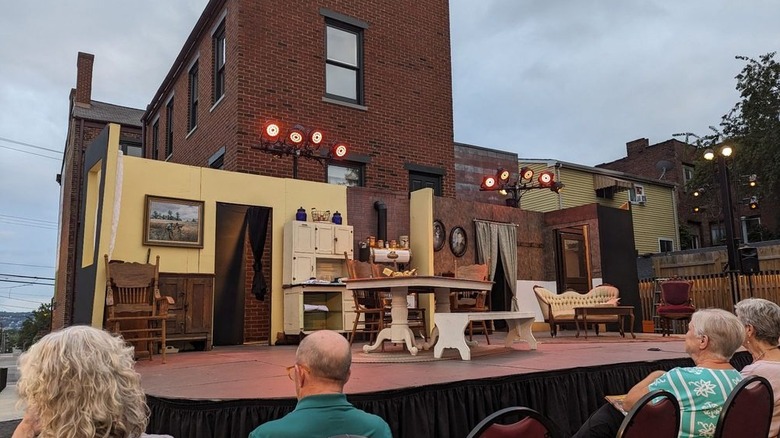
Wilson's childhood home is now an arts center called the August Wilson House. The home has been restored to its 1950s appearance and hosts public events like outdoor productions of Wilson's plays and a block party every May to celebrate his birthday. While you're in the neighborhood, you can check out other spots that Wilson frequented or that were featured in his plays (and often both). The Hill District Digital History Initiative designed a nine-stop walking tour that includes spots like St. George Church, where Wilson spent time as a kid, or Eddie's Restaurant, the diner where he'd meet with the Black Horizon Theatre Group.
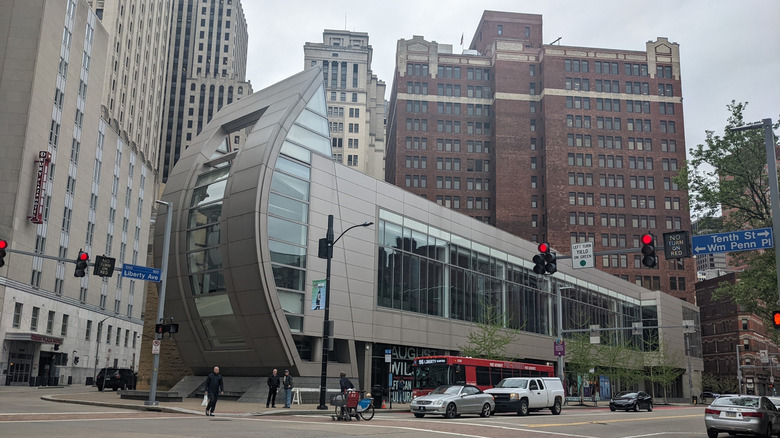
The Hill District isn't the only place where Pittsburgh celebrates its famous playwright. The August Wilson African American Cultural Center in Pittsburgh's revitalized, bustling downtown was inspired by the writer in more than just its name, with programming that celebrates Black culture and arts. This includes music performances and visual art exhibitions, along with the Storytime Spotlight series, focused on children's books by Black authors. It also has a permanent exhibit, The Writer's Landscape, where visitors can walk through three scenes representing Wilson's life, including a café inspired by Eddie's and a replica of his home office. The August Wilson Center's galleries, including the Writer's Landscape exhibit, are free to visit and open in the afternoons on Thursdays through Sundays.
Follow in the footsteps of Rachel Carson
I didn't learn about Rachel Carson until I started graduate school at Chatham University, the college where Carson earned her bachelor's degree in 1929. For anyone else who isn't aware of this underappreciated environmentalist, Rachel Carson is best known as the author of "Silent Spring," one of the first works to highlight the environmental impact of pesticides. She also advocated for policy changes to Congress, and "Silent Spring" became a seminal work for the environmental movement.
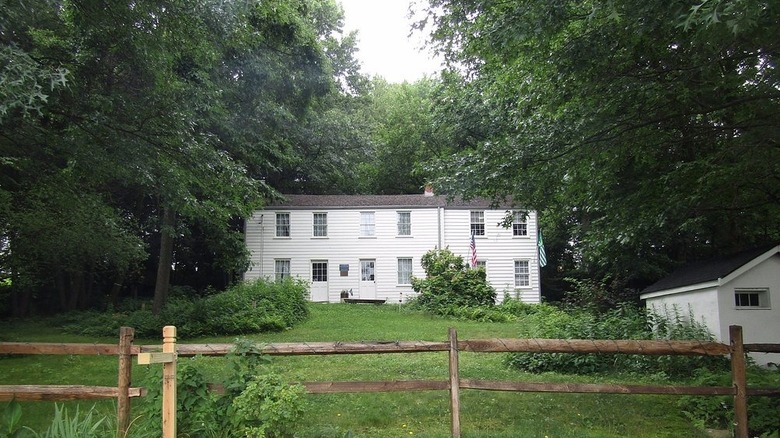
Rachel Carson was born in Springdale, a suburb about 20 miles northeast of downtown. It's easy to see how the setting inspired Carson's love of nature, as it's home to nature preserves like the boat-in Allegheny Islands State Park and Barking Slopes Conservation Area. It's also where you'll find the Rachel Carson Homestead, the property where Carson grew up. Docent-led tours of the home are offered by appointment, and you can sign up for one on the Homestead's website. The outdoor spaces of the property are open daily from dawn through dusk and include a Sensory Walking Trail.
Other places in Pittsburgh memorialize Carson, and fittingly, many are outdoor spaces. One is Rachel Carson Park, which is along the Allegheny River about a mile south of the Homestead. The 46-mile Rachel Carson Trail is among the most extensive of the scenic hiking trails near Pittsburgh. It starts about 12 miles north of Springdale in Harrison Hills County Park, and ends in North Park, passing by the Homestead on the way. One of the bright yellow Three Sisters suspension bridges that connect downtown to the North Side is named for Carson, too, which is a very Pittsburgh way of honoring a local hero (for context of notoriety status, the other Sisters are named for Roberto Clemente and Andy Warhol).
See Pittsburgh through the eyes of Chbosky or Chabon
Landmarks tend to be linked to historical figures, but Pittsburgh has also produced some modern writers who used it as a setting. Two books in particular stand out for both their popularity and the fact that their movie adaptations were filmed in the city: Stephen Chbosky's "The Perks of Being a Wallflower" and Michael Chabon's "The Mysteries of Pittsburgh."
Stephen Chbosky was born in the Upper St. Clair neighborhood and based much of the novel on his real-life experiences growing up there (like ordering grilled stickies, which fellow Western Pennsylvanians know really come from the local diner chain Eat'n Park). Row House Hollywood in Dormont was where main character Charlie and his friends watched "The Rocky Horror Picture Show," and the theater still holds regular screenings of the cult flick, complete with callbacks and props. You can also drive through the Fort Pitt Tunnel blasting "Heroes" to recreate the pickup truck scene or head up to the West End Overlook, where the characters hung out after school, and check out stunning views of the downtown skyline.
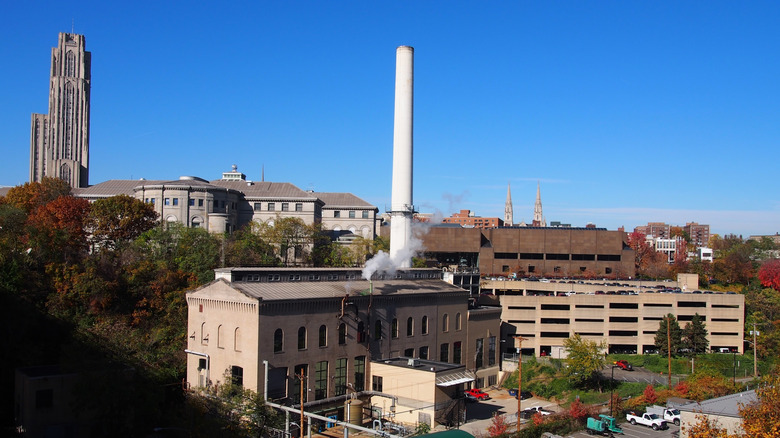
Michael Chabon isn't from Pittsburgh, but he lived here in the early 1980s while studying at the University of Pittsburgh, which inspired "The Mysteries of Pittsburgh." You can still visit many of the locations in the book. The highest concentration of still-extant locations is in the university district of Oakland, where you'll find Hillman Library, the Cloud Factory (Bellefield Boiler Plant), Schenley Park, the Cathedral of Learning, and the Lost Neighborhood (Panther Hollow). Make sure to check local events calendars for Chabon-related happenings during your visit. Chabon occasionally comes back to Pittsburgh to give readings, and the local arts organization Shiftworks has organized walking tours of the book's locations.
Learn about overlooked mystery pioneer Mary Roberts Rinehart
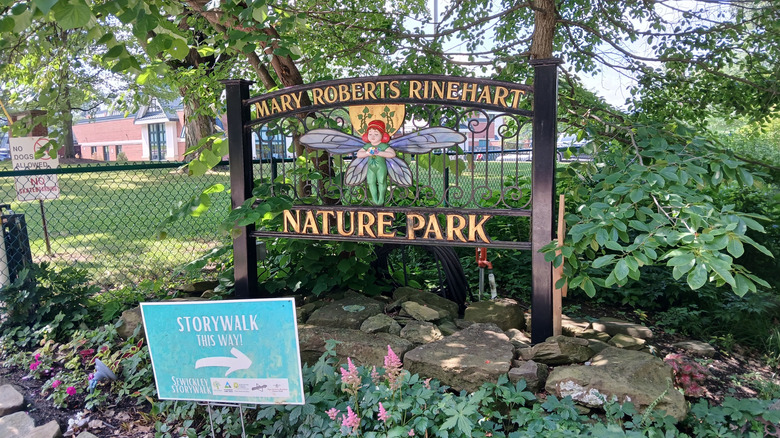
100 years ago, Mary Roberts Rinehart was likely Pittsburgh's most famous writer. A mystery writer, she wrote 60 books between 1908 and 1954, which cumulatively sold more than 10 million copies and earned her the nickname the "American Agatha Christie." She helped popularize the stock mystery phrase "the butler did it," and she created The Bat, a costumed villain that inspired Bob Kane in his creation of Batman. Despite all of this, she is little-known today. Even as an avid reader, I only learned about her after moving to Pittsburgh, where there are a few landmarks that keep her memory alive.
Rinehart grew up in what was then Allegheny City, which has since been absorbed into Pittsburgh's North Side. There are a lot of attractions for writers and readers here, and you can add Rinehart's home to that list. The mid-Victorian house at 954 Beech Avenue is where she wrote her first novel, "The Circular Staircase," and is on the National Register of Historic Places. She moved to an estate in the Glen Osborne neighborhood in 1911, and she would later describe the 11 years she lived there as "the happiest I have ever known." A portion of that land has been restored into the Mary Roberts Rinehart Nature Park. The park is free to explore daily from dawn to dusk and has fun details to discover, like the StoryWalk trail, as well as the fairy houses that inspire events like Fairy Day in June and The Magic Forest in the fall.
The University of Pittsburgh has also preserved writing and artifacts from Rinehart's life in the Mary Roberts Rinehart Papers. The collection is physically stored in Hillman Library's Archives & Special Collections but has also been digitized and can be explored for free online by anyone who wants to learn more about her.
Visit Gertrude Stein's birthplace
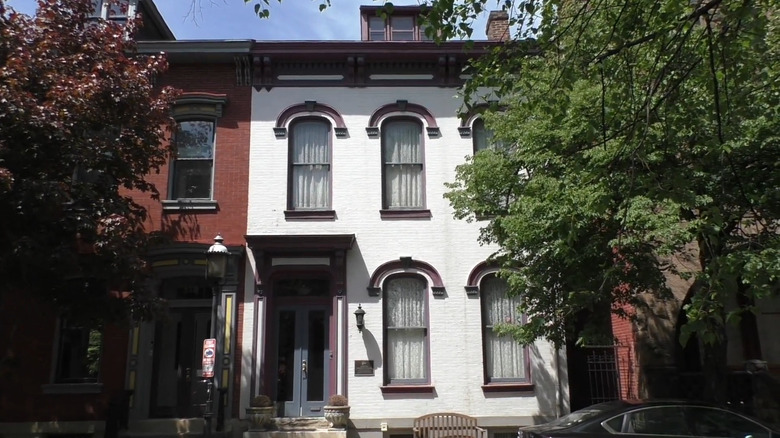
Like Rinehart, Gertrude Stein was born in Allegheny City — about a block down Beech Avenue from where Rinehart lived, in fact, although their paths likely never crossed. Stein was still an infant when her family left Pittsburgh, and she never returned, which has always made me a bit hesitant to call her a "Pittsburgh writer." She embraced her Western Pennsylvania origins, though. She called herself "firmly born in Allegheny, Pennsylvania" in her 1933 autobiography, and Allegheny (or, rather, a fun misspelling of it) is one of the few words on her gravestone in Pere Lachaise Cemetery in Paris.
To see Stein's birthplace in person, you can head to 850 Beech Avenue and look for the white-painted row house with the plaque on the front. The home is within the broader Allegheny West Historic District, which also encompasses nearby historic areas. Many of the homes in the neighborhood date to the 19th century, making it an appealing part of the city for history buffs to explore overall. There are also other literary attractions nearby. Two blocks away, at 908 Galveston Avenue, is City Books, Pittsburgh's oldest used bookstore. City Books held the inaugural Gertrude Stein Day to celebrate the author's 150th birthday in 2024, and while no similar festivities have been announced for the coming year as of this article's writing, Stein's birthdate (February 3) is still a fitting time to visit.