
Just Over An Hour From Boston Is New England's Park With Scenic Wetlands, Nature Walks, And Unique Wildlife
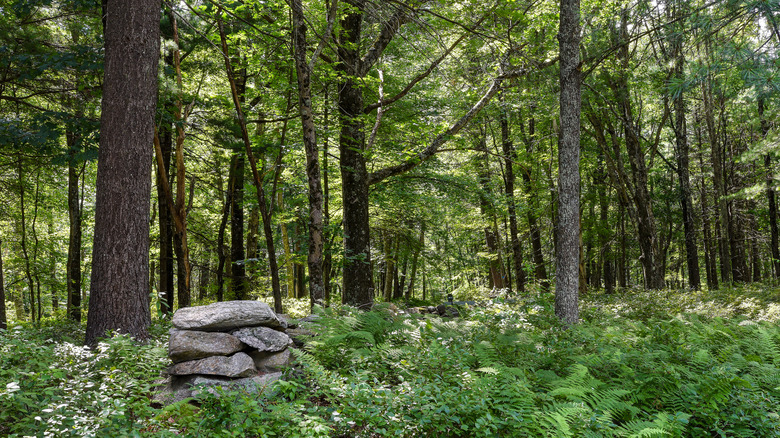
Boston's parks can feel far away from the city's traffic once you get beneath the trees, and an especially wild landscape can be found by heading farther into central Massachusetts. Roughly an hour or so from the streets of Boston, the scenery shifts to rocky woods, swampy wetlands, and acres of undeveloped land where diverse wildlife has more room to roam. More specifically, the state-managed Mine Brook Wildlife Management Area (WMA) in Worcester County, Massachusetts, is home to rugged landscapes waiting to be explored.
Spread across the towns of Douglas and Webster, Mine Brook WMA protects 1,062 acres in an area also known as Douglas Woods. MassWildlife manages the WMA as four chunks of land, three of which also connect to the much larger Douglas State Forest. Anyone looking for walks on less manicured land where nature is allowed to do its own thing will find plenty of appeal here. MassWildlife also notes the land is home to some unique critters, from "uncommon reptiles and amphibians" to an interesting array of dragonflies and whip-poor-wills, nocturnal birds known for their namesake call.
While it's technically considered a park, as it is managed land open for outdoor recreation, visitors to this wild patch of forest won't find landscaped overlooks, paved walking paths, or even a visitor center. MassWildlife deliberately keeps its wildlife management areas wild, and Mine Brook is a place for people who prefer woods that still look like woods. The lack of development is what makes this protected pocket of Massachusetts such an appealing escape when you want nature front and center. Give yourself time to wander, as the mixture of upland forest and wetter ground keeps the scenery changing as you move through the property.
Vernal pools are home to some of Mine Brook's most unusual wildlife
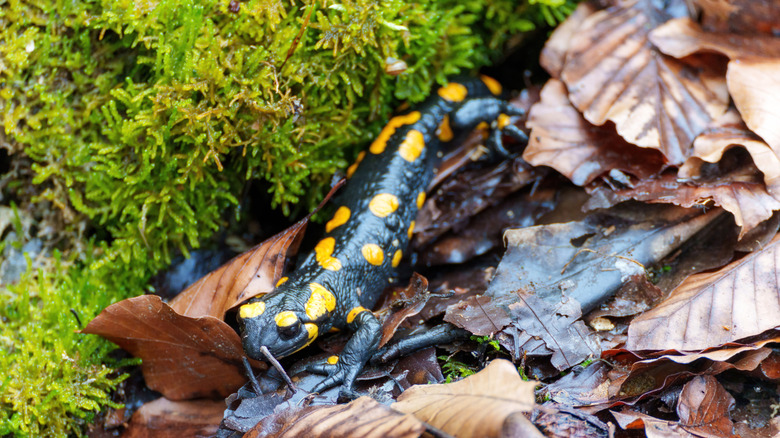
New England is home to some unique wildlife, and Mine Brook's rocky woods have escaped extensive plowing and development, according to MassWildlife. That long history of relatively undisturbed habitat has helped native species thrive. The land is home to crucial ecosystems for unique (and even rare) flora and fauna. Vernal pools fill seasonally and create important habitat for animals that depend on fish-free wetlands for part of their life cycle. At Mine Brook, the combination of these pools, swamps, forest, and rocky grounds gives wildlife watchers a good reason to look close at the water, as well as into the trees.
According to Mass Audubon, the state's vernal pools host species like the wood frog, the spring peeper (a small but loud tree frog), spotted salamanders, and fairy shrimp. On the drier oak ridges, visitors may catch sight of more common woodland species, like white-tailed deer and gray squirrels. The soundscape changes with the season, too. Visit on a spring or summer evening and MassWildlife recommends listening for the song of eastern whip-poor-wills echoing through the forest. The state's frogs are also known to be noisy, making distinctive croaks and peeps to add to the ambience.
However, wildlife watching here comes with one important thing to keep in mind: Mine Brook is a wildlife management area rather than a preserve, so hunting, fishing, and trapping are allowed on these lands. During hunting seasons, it's recommended to wear blaze orange for visibility. Dogs must stay on their leashes and should also sport an orange vest or bandana. For visitors who want to avoid hunters altogether, plan to visit on a Sunday when hunting is prohibited in Massachusetts. On the other hand, visitors interested in hunting, fishing, or trapping should consult the state's Division of Fisheries and Wildlife for dates and regulations.
Explore woodland paths in Mine Brook Wildlife Management Area
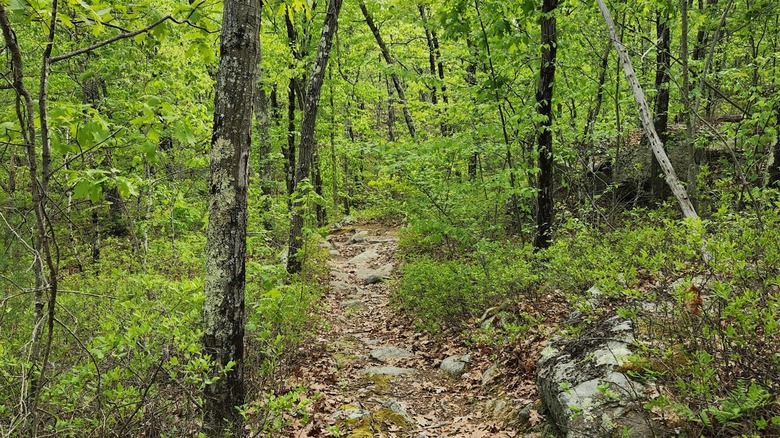
Alongside the WMA's seasonal wetlands, visitors can also expect to wander through drier forest ridges dotted with mountain laurel. Exploring the area's various habitats requires a little more preparation than a walk through a manicured park, though. Across the state's wildlife management areas, trails may be unmarked, so consider downloading a map ahead of time. Nature lovers can add the adjacent Douglas State Forest to their itinerary for more scenic nature and lake fun.
Jason Newton, who creates content about the Old Connecticut Path that runs partly through Mine Brook, noted in a video that there are stepping stones around the wetland areas that make it easier to navigate. This ancient path used by Native American and colonial travelers adds appeal for history buffs, who can start their exploration from Rawson Road in Webster, according to Newton. But for hikers who'd like to explore the broader area in a loop, Hiiker lists an easy Mine Brook loop trail of about 8.5 miles that begins and ends in Douglas. The site also notes a shorter out-and-back trail from Webster of just under 3 miles. While these routes can provide visitors a starting point for exploring Mine Brook, the official MassWildlife map is the best reference for understanding property boundaries and access points.
For a leisurely nature walk, there's no need to cover the entire area. Pick one access point and plan to linger around the wetter sections of the forest, paying attention to changing vegetation and wildlife around vernal pools. Visitors may want to wear waterproof or mud-friendly footwear, especially after a spring rain. While Boston may be one of the greenest cities in the world, Mine Brook's wildlife haven makes for a unique nature escape within easy reach of the city.