
Tennessee's Historic District Was Nearly Abandoned In The '80s — Now It's A Must-Visit For Music Lovers
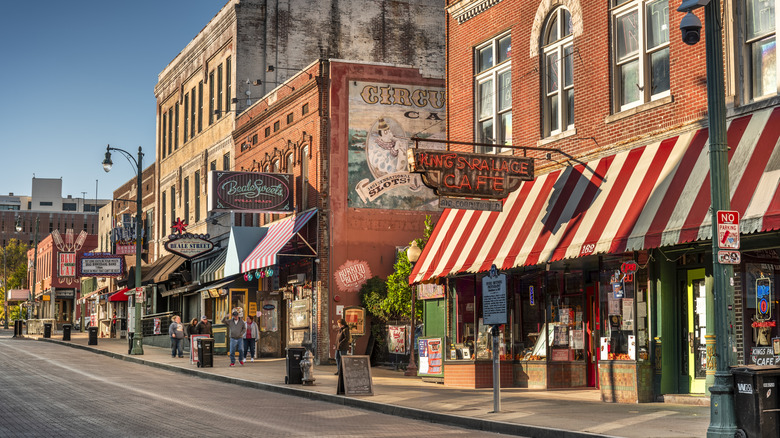
When you think of music states in America, Tennessee naturally comes to mind. Numerous music genres, from unheard to beloved around the world, started here, including country, bluegrass, rock n' roll, gospel, and blues. While Nashville understandably gets a lot of attention, Memphis was where the blues took its first breaths. It wasn't just anywhere in Memphis either. Beale Street, the iconic live music, bar, and dining strip in downtown, was the epicenter of blues music and remains integral to the genre's performers and lovers today. However, this historic Tennessee district wasn't always an icon and very nearly became abandoned in the 1980s.
Memphis is the best music city in Tennessee that isn't Nashville thanks to the music history, culture, sights, and sounds along Beale Street. It's odd to think that Beale Street was almost lost not so long ago. The neighborhood started really thriving between the 1890s and 1930s, when it was the main entertainment district for Black residents in Memphis. It attracted blues musicians, nine-to-five professionals, business owners, families, and entertainers. The neighborhood was really hitting its stride in the '40s and '50s, before becoming the Beale Street Historic District in 1966. This was the moment Beale Street and all its character, history, and culture were almost completely lost forever.
A city-approved redevelopment project in 1969 prioritizing white tourists over Beale's Black residents effectively decimated the district, bulldozing over 550 buildings and displacing about 1,500 residents over 10 years. Beale Street's 40 blocks became three, and locals were pushed out. The place where B.B. King and Muddy Waters had cultivated Memphis blues was unrecognizable. When funding for the redevelopment ran out, Beale Street was all but abandoned. Buildings decayed, the past was destroyed, and there was little hope for the future.
How Beale Street became a music haven once more
It's fitting that music is what rescued Beale Street from becoming a permanent ghost town. The district's music history, culture, and food inspired John Elkington's redevelopment project in the 1980s to turn it into a place tourists could immerse themselves in blues music. Over the years, Beale Street was resurrected from rows of abandoned shopfronts to the living, breathing, and thriving music pilgrimage you see today. While Beale Street has successfully been transformed back into the Home of the Blues, its Black culture and history unfortunately hasn't been preserved or recaptured as easily. Music lovers have a lot to feed upon along Beale Street, even if they may have to simultaneously contend with the ongoing neglect of Black history and mass marketization of Black music here.
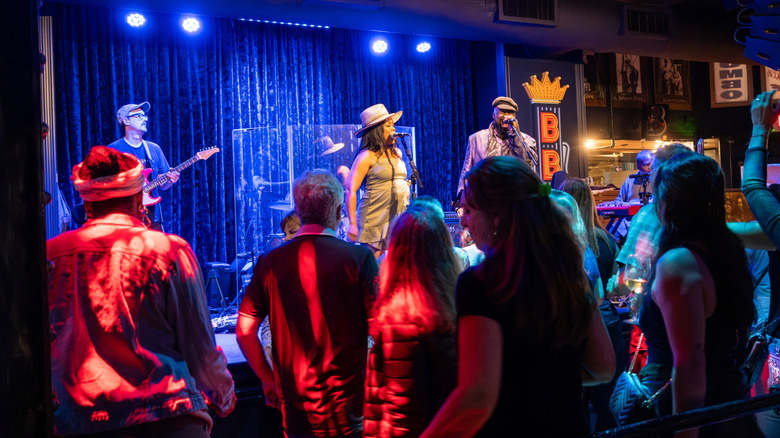
Anyone seeking out blues music can find it on the dance floor at B.B King's Blues Club, which hosts live musicians most nights playing blues, rock n' roll, soul, and more. Rum Boogie Cafe is one block away and, like B.B. King's, pairs delicious barbecue with live blues music. Then there's Blues City Cafe, yet another popular joint to dance and sing to blues music until the wee hours. It's not just blues on the menu. Silky O'Sullivans is a dueling piano bar and Beale Street staple housed in a century-old building. Live patio bands, cold beer, and diving goats also entertain patrons.
You also don't always have to just listen to music, either. Grab a Sunday drink at Peoples on Beale for some karaoke. It also hosts Thursday stand-up comedy and Saturday DJs. If you want to explore Memphis' Black history as well, visit the National Civil Rights Museum, one of the most important Civil Rights sites in America.