
How To Experience Italy On A $2,000 Budget
We may receive a commission on purchases made from links.
The idea of traveling to far-off lands without breaking the bank is older than you think. During the Middle Ages, pilgrims were more than happy to empty their purses at the end of their journey, but along the way, they were always on the lookout for a free meal and a cheap bed for the night. Maybe our reasons for traveling have changed in the last millennium, but a budget-friendly break (especially in Europe) still has a lasting appeal.
Italy is neither the most nor the least expensive place to visit, but that median position can still lead to soul-crushing bills. Hotels are expensive. Food, if you're not careful, can get pricey. Budgets can easily spiral out of control. Of course, with a little inside knowledge and a few moments spent assimilating tips that let you explore Italy on an extremely tight budget, finding your way around "The Boot" is more than doable.
Still, it's time for a truth bomb: A $2,000 Italian trip for anything other than a quick city break is a definite challenge even for one person, especially depending on where you're coming from. Those traveling to Italy from Australia are going to pay a lot more than those taking a flight from the United Kingdom, and there's little that can be done about that. However, savings can be found regardless. We've used personal experience as a jumping-off point here, and we are basing our budget on a traditional, seven-day journey for a single traveler. We've also tried to keep things fresh and up to date by checking prices on cost-of-living sites such as Numbeo and turned a close eye on seasonal price variations and currency exchange in order to squeeze as much as we could out of every dollar, without making unpalatable sacrifices.
Find a cheap flight

There are three basic costs to consider when you have set yourself a $2,000 budget: travel, accommodation, and spending money. That latter includes money spent on food. While your spending budget might fluctuate on a day-to-day basis, a journey tends to be front-loaded from the get-go with the cost of the flight itself. Thankfully, there's more than one way to shave a few bucks off any eventual ticket price.
Airlines release cheap flights based on demand; if you book too early, the risk of missing that budget window is all too real. Flights leaving on Monday through Wednesday are generally cheaper, and leaving early in the morning or very late at night can absolutely save you money. Just don't book extra nights in a hotel in order to facilitate a 6 a.m. flight — that sort of defeats the purpose.
According to Google Flights' trends and tips for 2025 holiday travel, booking your Italian adventure around 50 days before departure is something of a sweet spot: Our investigations found flights from New York to Rome booked 50 days before the time of writing for as little as $400. The same journey booked last minute can easily cost a couple hundred dollars more. Such prices are mercurial, of course, and bargain hunting is highly recommended. Meanwhile, opting to fly to lesser transport hubs can also reap dividends. A London to Rome flight in September can be found for $330, whereas London to Pisa might cost as little as $120 for those willing to set off early. Yes, it's about a three-hour train ride to Rome, but tickets can be found for as little as $30, and you'll probably get to add a quick visit to the namesake Leaning Tower to your itinerary at no extra cost.
Stay away from city center hotels
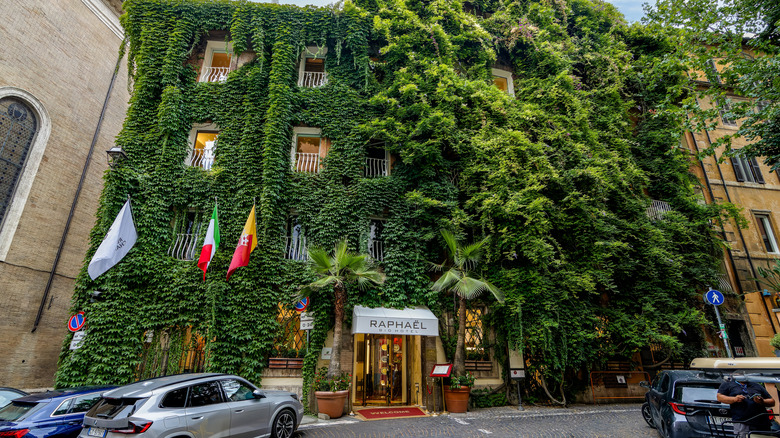
They say that location is everything, but when it comes to choosing the right accommodation for a $2,000 Italian vacation, things are a little bit more nuanced. Now that you've saved money on flights and have your dates secured, the next step is to save some money on hotels.
The most obvious tip here is to opt for hostels since they're the absolute cheapest option out there. But even if your budget is tight, that doesn't mean you have to live the life of a 20-year-old backpacker. Like flights, hotel prices fluctuate not only with seasons, but also by how long they are booked in advance as well as how centrally-located they are.
One week in Florence takes you to one of the most walkable cities in the world, but even during the shoulder season, a hotel set in the center of this Renaissance-era gem comes at a premium price. You can easily blow through the lion's share your entire budget by opting for such convenience. The trick? Consider staying in the suburbs. Whereas a hotel with a view of the Basilica of Santa Croce could easily set you back about $1,600, a rental apartment in the quaint town of San Casciano Val di Pesa, about 12 miles south of the city proper, can be found for less than $700 for a seven-night stay. It's a 26-minute bus ride into the city, and will only set you back a couple of bucks each way. Those looking to find the best places to stay on Lake Como face similar choices: A view of the lake is all well and good, but opting for somewhere more inland and dealing with the commute to the shore could save you hundreds of dollars irrespective of the season.
Travel during the shoulder season

There's a rule when it comes to seeing all that the world has to offer on a budget that goes something like this: Summer is bad, Christmas is worse, and if the location just so happens to celebrate some other religious or cultural event, expect prices to go up accordingly. In short, when you have a budget of $2,000 to spend on your Italian dream vacation, timing is critical.
For those unfamiliar with the concept, shoulder seasons take place on either side of the most popular time to visit any given location. In some cases — such as in any one of a number of lively towns hidden in the Alps — peak travel takes place during the winter ski season. Down south, spring and fall breaks are the way to go to avoid the droves of summer tourists, specifically the months of March to April, and October to November. Such dates are a general guide, because pitfalls do exist. Some might even argue that the "shoulder season" is getting shorter and shorter because of Italy's popularity. Travel during the ever-mercurial Easter break, for example, commands a premium, and other local festivals — such as the fertility festival, the Wedding of the Trees, in Vetralla — can push up prices as well. As we mentioned, religious and cultural touchstones are budget-vacation kryptonite.
Frankly, practically any season can be breathtaking in Italy. Spring in Tuscany is the equal of any summer vacation, and the primofiore harvesting of Sicilian lemons makes for a memorable fall excursion. It could also be argued that Rome is too hot in summer, anyway. Yes, it is one of the most walkable cities in Europe, but a 3-star hotel in November likely costs almost half of what you'd pay for the same level of comfort in July.
Choose a low-cost region
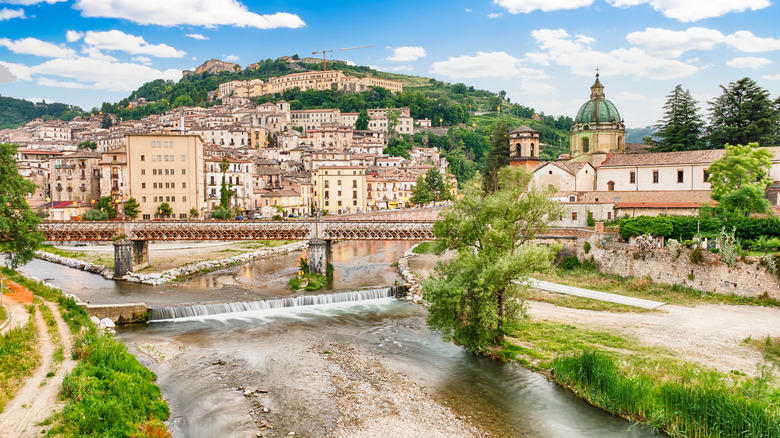
Just as prices can vary by the season, they can also fluctuate depending on which part of Italy you choose to visit. A quick look at regions people are selecting for a comfortable retirement offers a general overview: The cost of living in the south is generally lower than it is in the north.
For instance, an imported beer in Rome is twice as expensive as it is in the city of Bari, some 260 miles to its southeast. A 4-star hotel in Milan can easily set you back well over $200 even in September, while a night in Cosenza — a place of scenic coastline and 70-degree Fahrenheit fall weather — can be obtained for around $90 or so. There are, however, exceptions to this rule. The city of Positano lies far to the south and is priced out of our budget thanks to its climate, striking architecture, and all-round loveliness (unless you are prepared to experience it in the depths of winter). Experience is invaluable here, but you don't need an intimate knowledge of the region. A quick search for well-reviewed accommodation posting reasonable rates is usually indication enough that you've selected a budget option. For extra peace of mind, you can always head over to Numbeo's Italian cost of living rundown and get into the minutiae of it all.
However, you don't necessarily need to skip the more expensive regions. If Rome is on your bucket list, spend a couple of nights there before heading south to spend the rest of your vacation exploring the Italian hinterlands. For many, southern Italy is the bucket-list destination of choice: Tuscany is unbeatable, but sleeping on Puglia, Sicily, Abruzzo, or any number of cheaper destinations isn't the power play you might think it is.
Choose your trains carefully

Italy is a land of contrasts: coastlines peppered with beautiful islands that don't get nearly enough attention, mountains that offer breathtaking vistas, and a rolling countryside that has inspired artists for centuries. There are many ways to explore the place, and in truth, each has merit. But if you want your $2,000 to deliver an eclectic experience, the Italian train network is the way to go.
Take Tuscany, for example. It remains one of the most visited places in Italy and not without reason. Florence isn't cheap, but choosing an alternative base of operations as a jumping off point can save you hundreds. The city of Siena, a delight in its own right, sits just about 54 miles south of Florence. Compared to Florence, Siena is a budget traveler's dream come true, and staying there does not mean you need to drive to the Tuscan capital: It's only an hour and a half by train and costs around $12 dollars each way. Even cheaper fares can be found if you are prepared to travel early or late.
Those wishing to go further afield on their trip can also embark on another time-honored way of keeping hotel bills to a minimum. An overnight train from Rome to Milan can be purchased for less than $75. Yes, you have to sleep in a seat and there's a change of train in Bologna in the wee hours of the morning. But such an example is far from an isolated incident. While hopping from one city to another via the exclusive use of sleeper trains is more of an exercise in endurance than an actual vacation, strategic use can seriously cut down on hotel bills.
Embrace the food culture

With a budget of just $2,000 and the intention to create a vacation that refuses to compromise on enjoyment, it's safe to say that daily expenditures are going to be about necessity over desire. No matter how tight the budget, some things should never be scrimped upon. Because you have to eat, and since it's a crime not to eat well in Italy, you're going to need some money-saving tips and tricks.
At least coffee is cheap. An espresso costs around $1.50 and a cappuccino clocks in at about $3 or so. Ordering one at a table, however, comes with a hidden cost, while those who opt to drink their coffee at a bar (known as "al banco" in Italian) can grab a brew from as little as one euro, or about $1.17.
At the midday meal, take advantage of the menu del giorno — or menu of the day. It is way cheaper than its evening equivalent. Fill up and coast until the workday grinds to a halt, at which point, it's time for an aperitivo or two. A post-work Italian tradition, an aperitivo consists of you paying for a drink (an Aperol spritz is popular) and your drink usually comes with finger food that is generally complimentary. Then there are the broader tips: Avoid fancy restaurants and steer clear of eating near tourist traps. That last one is a little more difficult than it sounds, but if you have a direct line of sight to a place of historical interest, you are likely too close to the center of action and almost certainly paying a premium rate for your meal.
Sign up for tours
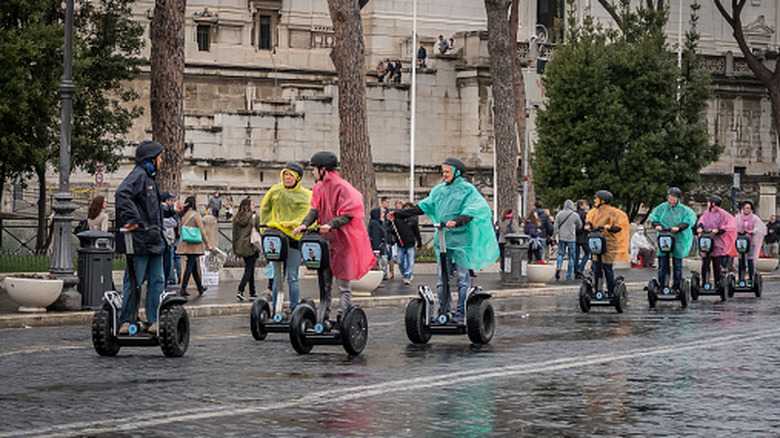
Up until now, we've restricted ourselves to a bespoke experience that's heavily geared towards finding savings. There is, however, another option: an all-expenses-paid tour which provides an enviable level of control over what we spend.
Certain aspects of the trip are still relevant to the ground we've already covered. Prices are seasonal; longer stays cost more and you might still need to fly into one city and possibly take the train to another to keep costs down. Plus, unless all meals are included — which they rarely are — you're still going to have to drink your coffee al banco and eat your biggest meal at midday. But there are some other things to look out for. Firstly, you'll want to pick a tour that not only takes you to the places you want to go but also one that provides as many meals as possible. You aren't likely to get fed morning, noon, and night, but finding a seven-day tour with six breakfasts and two dinners for less than $1,400 is doable, leaving you enough money to cover the flight cost on top.
For those whose flight costs make even a $1,400 tour out of reach, choosing a shorter stay taking place in the most off-season of months is a viable option. A six-day tour of Rome in early December can be done for just over $1,000 dollars. An eight-day fly and drive tour of Milan via Tuscany, complete with daily breakfast and rental car, isn't much more expensive. You still have to keep a close eye on your daily spend and be comfortable foregoing a certain amount of flexibility, but the lure of the group discount makes it well worth consideration.
Fill up on free art and history
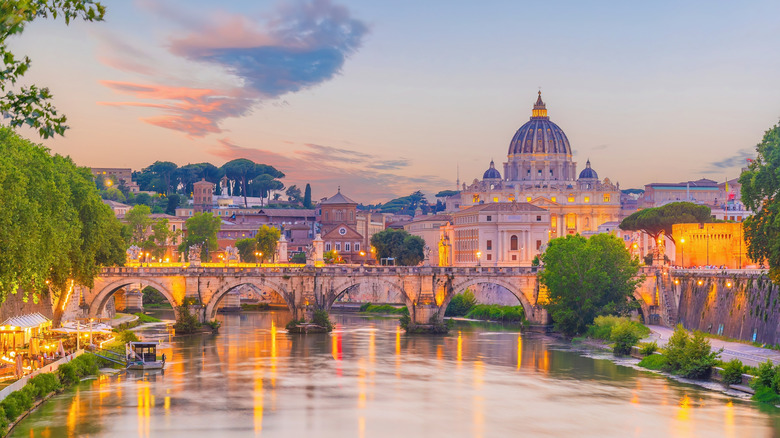
Many simple joys of Italy arrive without a price tag. The gentle scent of citrus on a Sicilian breeze. A coastal drive as the sun sets over the Adriatic. A summer hike across the hills of Tuscany. But you'll also find a number of places that charge top dollar for the chance to connect with so much history. The Colosseum costs around $30 per person — closer to $60 if you take a guided tour. Such prices are not at all unreasonable; the building is around 2,000 years old and one of the wonders of the modern world, after all. But for those traveling on a tight budget, you'll find that these things add up quickly.
Entry prices abound across the peninsula, for sure, but there's no need to miss out. The trick is to select places that you absolutely must see and then save money by spending the rest of the time exploring some of the many free points of interest. St. Peter's Basilica, for example, is free of charge to all visitors, and it's not alone when it comes to such largesse. You can explore all that the exquisite Basilica di San Miniato in Florence has to offer without spending a dime.
Meanwhile, you'll find many museums and art galleries open their doors free of charge on certain days. Indeed, from October to March on the first Sunday of the month, state museums and archaeological sites celebrate what the Italians call Domenica al Museo, or literally, "Sunday at the Museum." With careful planning, you can create an itinerary around those specific dates and make full use of the tradition. And yes, the entire Parco Archeologico del Colosseo is on that list.