
The 10 Most Walkable Cities In Europe, Ranked By Popularity
There is no one-size-fits-all vacation, and there probably never will be. There are beach holidays in the Caribbean that are popular with boomers, hiking excursions for those yearning for a connection with nature, and lazy days filled with wine tastings, spas, and fancy resorts for people who like to indulge in the finer things in life. But what about people who are looking for none of the above, preferring an eclectic, local experience? For such tourists, few things offer more variety than a walkable city.
To be clear, walkability is subjective. You can technically get from points A to B in Johannesburg if you really must, but doing so might expose you to danger that is best avoided. Similarly, while the streets of Seville are delightful, walking around that Spanish city in the summer can be a unique exercise in heat exhaustion. For our purposes here, a city is considered walkable if it is safe, if several points of interest are within a manageable distance of one another, and if it offers a low-discomfort experience.
We used Discover Guru Walk, Motel One, and other sites that ranked cities by walkability to create our own list that is also based on our personal experiences in each city. Recent data from the last few years from official city tourism websites, as well as travel sites such as Go With Guide and Road Genius, also helped us define their popularity. Additionally, we took into account how public transportation helped with the walkability of these cities. Certain cities are separated into neighborhoods that you might need to travel between without wearing yourself out, so that factored into our thinking. Finally, while all these cities are popular in general, this article is ranked from the "least" to most popular.
Prague, Czech Republic
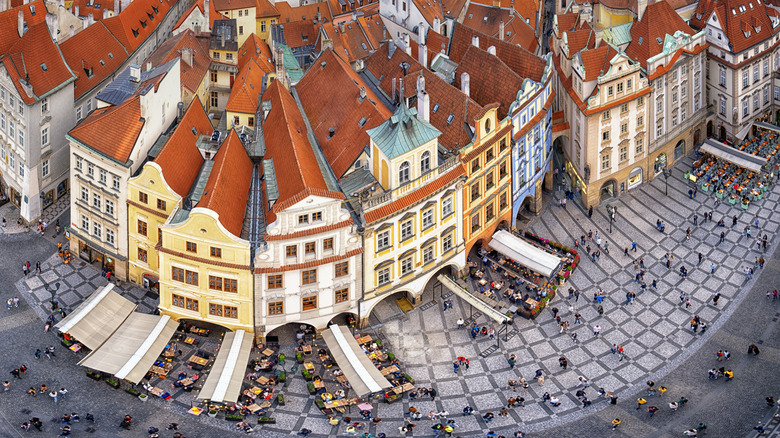
Yes, Prague gets horribly congested. After all, it got nearly 8.3 overall visitors in 2025, according to Prague City Tourism. But this is also a city filled with plenty of attractions and eminently walkable spaces — so there's a reason it shows up on so many lists of the "best destinations in Europe."
There are two obvious pedestrian hubs here. First is the historic core, which is clustered around one of the most beautiful squares in the world. The Staroměstské náměstí, a.k.a. the Old Town Square, is a place of historic buildings that date back centuries, bright frescoes, and a wealth of cafes, bars, and monuments. It houses the world-famous Astronomical Clock, a masterpiece of 14th-century ingenuity and the oldest such device that's still in working order.
About 20 to 25 minutes away on foot, over the river, is Prague Castle. It can be reached via the pedestrianized Charles Bridge, also of 14th-century origin and a worthy attraction in its own right. Crossing means navigating the artists and vendors who ply their trade there, but it's all part of the experience and allure. Once at the castle, you can buy tickets to take a guided tour around Saint Vitus Cathedral and explore places such as the royal crypt and Saint Wenceslas Chapel. Also for an additional fee, you can climb the Great South Tower and enjoy a panoramic view of Prague that quickens the breath more than the 287 steps it took to get there. However, simply walking around the area and soaking up the history still comes free of charge.
Bruges, Belgium
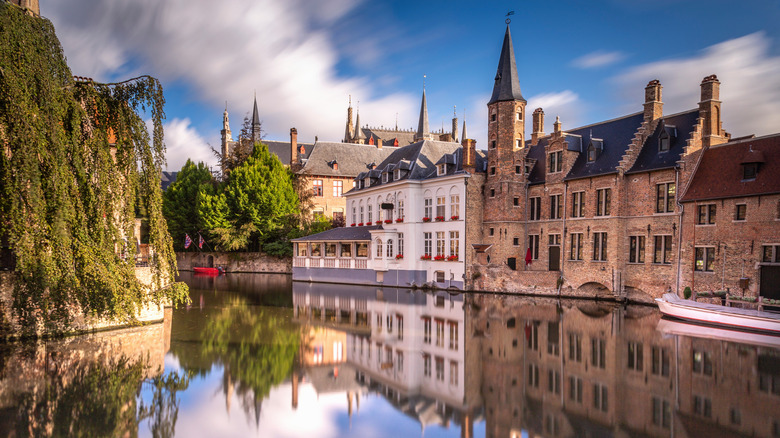
Belgium doesn't always make an appearance on people's bucket lists, but that should change. The principal cities in Belgium can certainly to hold their own against the most popular destinations of Europe. Take Bruges, for example. It is far from being the most visited city in Europe, but it's so lovely that about 8.3 million travelers go there every year, according to Visit Bruges. And considering that Motel One also ranked it as the most walkable city in Europe, we decided that we would be remiss if we didn't mention Bruges here.
There is a reason that this medieval enclave is known colloquially as the "Venice of the North." It's center is a masterclass of medieval design and a UNESCO World Heritage site with few immediate peers. Its canals are hundreds of years old and the city is well-served by dozens of bridges that date as far back as the 12th century. Bruges is no slouch when it comes to attractions either.
The Belfry of Bruges is a must-see, provided you can manage the 366-step tax required to enjoy its panoramic views. Even if you don't, you can at least enjoy the walkable streets below. A quick jog around the Markt and Burg Squares with their brightly colored guild houses and nearby Stadhuis (City Hall) yields similar dividends. This area is a great place to stop for a cold drink or quick bite, as well. The food in Bruges is top tier, however under-reported that might be, and it's an absolute pleasure to replace all those burned calories at the end of a busy day of walking around.
Lisbon, Portugal
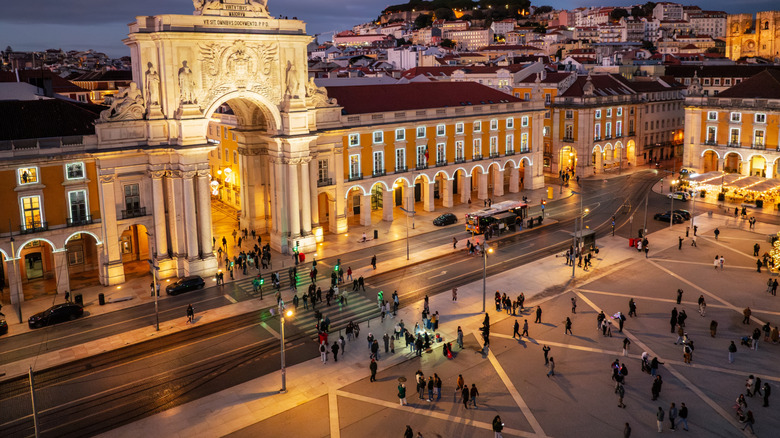
Portugal's hold on European hearts and minds is strong. According to GoWithGuide, city of Lisbon, in particular, welcomed some 8.8 million people (international and domestic) in 2024 to experience the art, culture, and lifestyle of what is widely regarded as one of the happiest holiday destinations in the world.
First up, a disclaimer: Lisbon can be considered walkable in the sense that its historic districts are tightly clustered around the picturesque waterfront. But it's also rather hilly and therefore not for everyone. Still, it is ranked at No. 5 in terms of walkability by Discover Guru Walk and the city's public transit (including its iconic funiculars) can help you avoid too much exersion.
The Praça do Comércio, a harbor-facing plaza of exquisite design, is one of Europe's finest, and from there, visitors can fan outward in search of the very best the city has to offer. The 12th-century Sé de Lisboa, a.k.a. Lisbon Cathedral, is only eight minutes' walk east from Praça do Comércio, while the National Academy of Fine Arts is roughly the same distance, albeit in the opposite direction. The famous Santa Justa Lift, which offers panoramic views without the need to climb hundreds of stairs, is also less than 10 minutes to the north. From there, you can easily reach the Carmo Archaeological Museum and the Museu de São Roque within five to 10 minutes as well. The Castelo de São Jorge — a 12th century complex that almost feels like a town in its own right — is also reachable in about 20 minutes on foot and includes its own restaurant, the aptly-named 1147.
Madrid, Spain
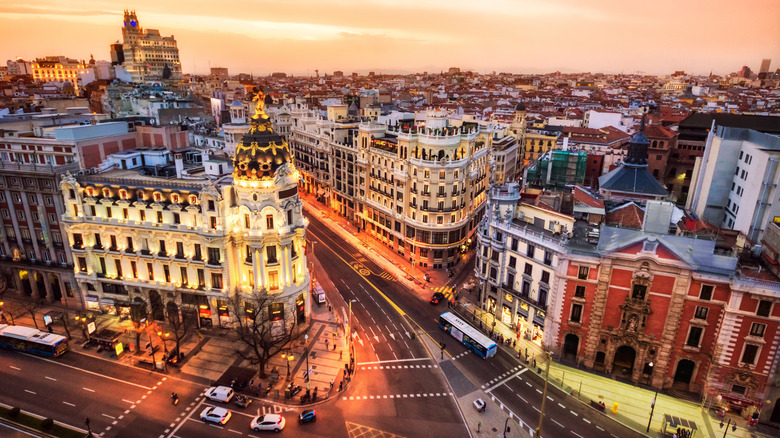
Madrid, despite being the largest city in Spain, has long found itself eclipsed by Barcelona. That latter bastion of Catalan culture receives more international visitors (more on that later), but Madrid is equally worth your time. Yes, it lacks a beach, but its nightlife is more authentically Spanish and perhaps less rambunctious than its eastern counterpart in our opinion — and over 11 million people (international and domestic) descended on Madrid in 2024 (via Road Genius).
Indeed, for many, Madrid is one of Europe's best-kept secrets. It is comparatively light on tourists, yet yields a cornucopia of attractions clustered around historic grand boulevards such as the UNESCO-recognized Paseo del Prado. As a consequence, pedestrian exploration of the city is surprisingly hassle-free.
Visitors can start their journey at the elegant Royal Palace of Madrid, the largest such building in Western Europe, and open to the public year-round. A quick, 10-minute jaunt from there and you'll arrive at Plaza Mayor, the pedestrianized and ancient heart of the old city. It's a lively place full of music, great food, and boutique shopping experiences. Yet more retail therapy exists just down the road at the Puerta del Sol, while those in search of inspiration can peruse the gilded street writing of the nearby Barrio de las Letras. Lastly, the city's Golden Triangle of Art not only lives up to its name but can be reached on foot by traveling about 20 minutes east of Plaza Mayor. There, you'll find the Museo Del Prado, Reina Sofia, and Thyssen-Bornemisza galleries that somehow manage to quench the thirst of even the most voracious lovers of art.
Berlin, Germany
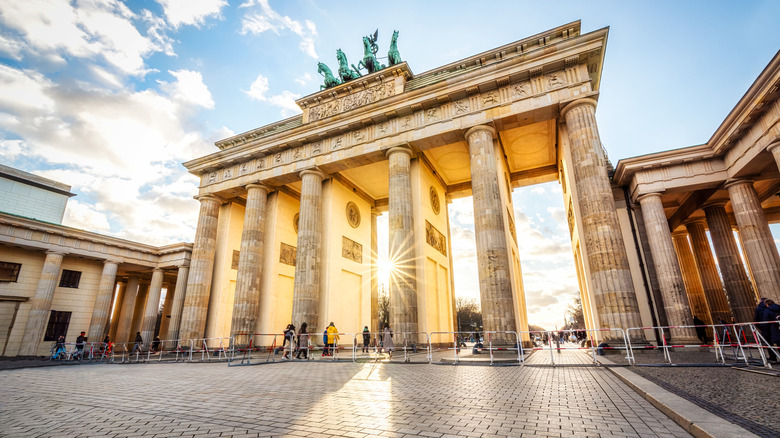
Although Berlin welcomed 12.4 million visitors in 2025 (via Visit Berlin), the city retains many of the scars of its troubled past. But it is that very pathos that lends the city a vibrancy that makes it stand out from other European cities. The German capital is a place of culture, delicious food, and a laid-back attitude to life that is genuinely infectious. Berlin is popular, cosmopolitan, and arguably best explored after dark — but for those traversing the daytime, at least, it is also most assuredly walkable.
If there is an iconic starting point for an exploration of Berlin, the Brandenburg Gate surely fits the bill. From there, multiple unique features and points of interest radiate out like spokes on a wheel. The Reichstag is only a seven-minute stroll away, and a walk around its impressive glass dome is the highlight of many a Berlin city break. A short jaunt from there takes you to the House of World Cultures and its impressive collection of non-European contemporary art.
Berlin is also one of those aforementioned cities that has several interesting neighborhoods, although not all of them are adjacent to each other. Once you're in a spot, you can certainly walk to several attractions, but if you are traveling between neighborhoods, you can also take public transit. Mauerpark and the Berlin Wall Memorial are in another part of the city (about 25 minutes northeast via public transit from Brandenburg Gate) but are luckily within 15 minutes of each other on foot. The Instagram-famous Checkpoint Charlie and the can't-miss Wall Museum are also in a separate neighborhood from the attractions above, about 20 to 25 minutes walking south of the Brandenburg Gate.
London, U.K.
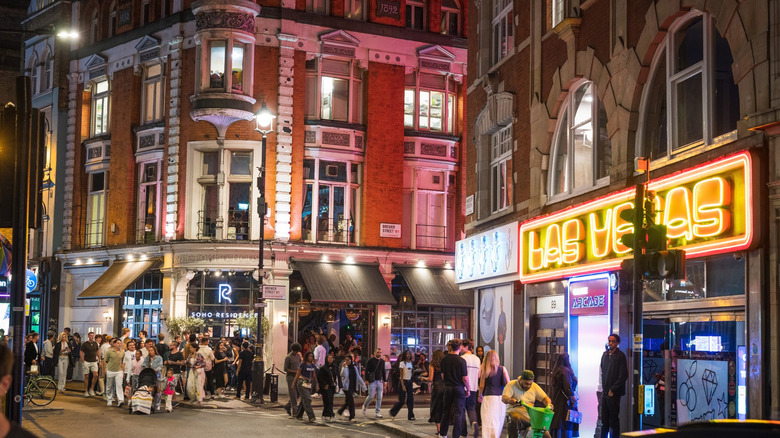
According to Euromonitor (via TimeOut Worldwide), London welcomed 22.7 million overall visitors in 2025 and over 20 million in 2024 (via Road Genius). And each point of interest is practically a self-contained day trip. Take the Tower of London, for example. It's one of those tourist hubs so impressive that even the locals visit it from time to time. It's also well over an hour's walk along the Thames to get to that other iconic building, the Palace of Westminster, and its famously oversized clock.
So, yes, London is genuinely is walkable, as long as you are prepared to use the London Underground, a.k.a. "The Tube," as well as London's iconic red buses, to get to different areas. Once you're in a spot, you can spend the rest of your day walking. Each stop allows you to explore distinct areas of the city without having to spend the entire day yo-yoing back and forth.
You can take a selfie outside the Houses of Parliament, pop inside Westminster Abbey, then walk 15 minutes up to Trafalgar Square. Or, stop by the British Museum and then take a stroll around Russell Square. On the south side of the Thames, start your day by marveling at groundbreaking art at Tate Modern, then walk about five minutes east to see Shakespeare's Globe theatre. Buckingham Palace is also close by to several monuments in both Green Park and Hyde Park. There are, of course, hundreds of itineraries you can make for yourself, but this is a great way to optimize your time for walking.
Rome, Italy
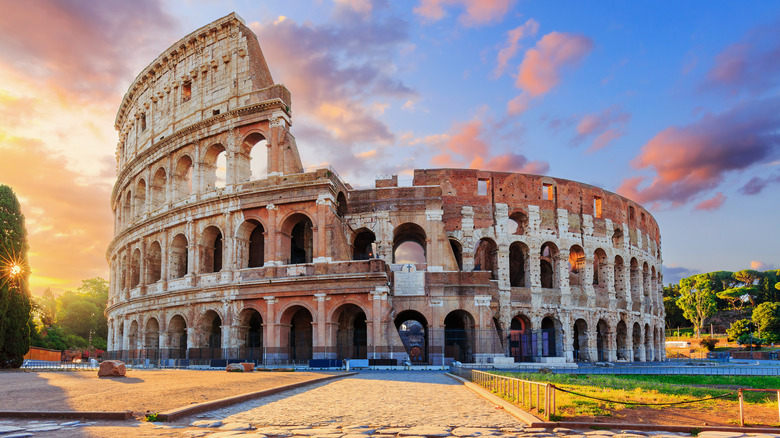
With its overall 22.9 million visitors in 2025, according to Turismo Roma, Rome is an open-air museum where over 2,700 years of history sit within a compact and highly walkable historic core. The seven hills upon which ancient Rome was built remain in situ, and the Palatine Hill, makes for an excellent jumping-off point.
From there, it's a downhill walk to two of Rome's most famous attractions: The Colosseum is less than 10 minutes away, and needs no introduction, while the Forum, the once beating political heart of the city, is only a four-minute walk. Meanwhile, the Circo Maximo, Domus Aurea (the ruins of Nero's once grandiose villa), and Capitoline Museums are all within a short stroll of the Colosseum. The (at times) overlooked Basilica of Santa Maria Maggiore is also reachable within 20 minutes.
Much like London or Berlin, Rome is also a city of many clustered attractions that require taking some public transit in-between. The must-see Pantheon is about 10 minutes from the Trevi Fountain, but it might be too much of a trek (30 minutes) from the aforementioned Palatine Hill on foot. Also, nobody could blame you for then taking a bus across the river to see Vatican City (and all all the walkable attractions within). Rome is a city of food, of bright lights, and unforgettable nights out. A late-night taxi home might be a prudent choice, but during the day, letting your feet do the work pays dividends.
Amsterdam, Netherlands
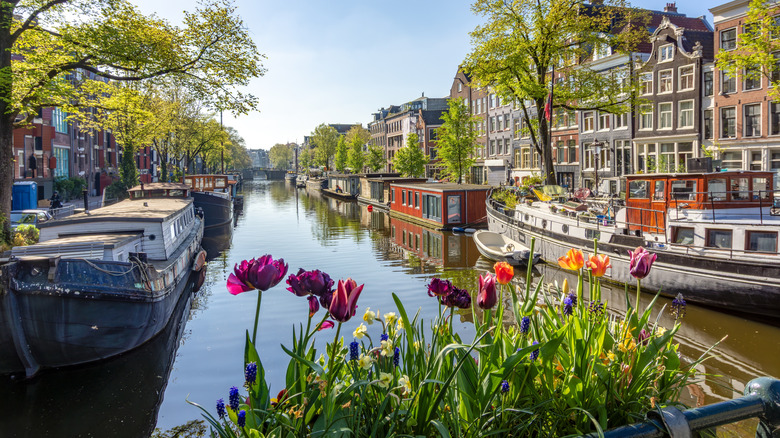
Amsterdam hit a record of 23.7 million overall overnight visitors in 2025 (via NL Times) and it's easy to see why the capital of the Netherlands is a cultural giant of great repute. It's no less walkable either. Like Bruges, Amsterdam is built on a series of canals, 165 of them to be precise, all connected by 1,281 bridges.
The first thing to note about wandering around Amsterdam is the sheer number of attractions within a brief stroll of one another. The Koninklijk Paleis, a.k.a. the Royal Palace Amsterdam, is an excellent frame of reference, worth a visit, although it does close its doors to visitors at certain times of the year. Regardless, it's a 17th-century marvel of Dutch Classicist design even when viewed from the outside. And two other must-see attractions sit within walking distance of the Royal residence, albeit in different directions.
The Rijksmuseum, arguably the finest art gallery in the world, is only about a 24-minute walk south down some of the city's most beautiful pathways. Keep going for another five minutes of gentle strolling, and you'll find yourself at the Van Gogh Museum. The showcasing of Rembrandt, Vermeer, and Van Gogh within five minutes of one another is not something you get to experience on the regular. Meanwhile, those heading west from the Royal Palace will soon encounter the Anne Frank House. It's a place of reflection, to be sure, but visiting it is also a mark of respect and an homage to the victims of one of the darkest periods of human history. Few places in Western Europe are more worthy of your time.
Barcelona, Spain
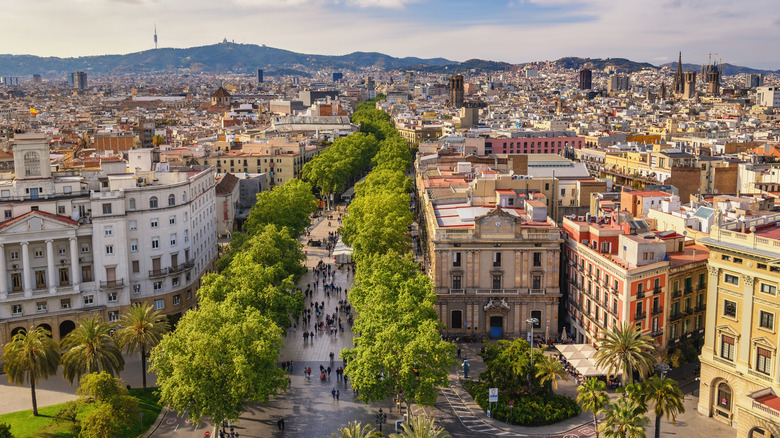
Where Madrid presents itself as a quieter enclave of culture, cuisine, and imperial majesty, Barcelona, maybe sees itself more as the rambunctious rebel. And with some 26.1 million overall visitors in 2025 (via Barcelona Tourism Management), it's hard to argue with that analysis. Its beaches are up there with the best that Europe has to offer, its glorious promenade is a microcosm of fast-paced activity. Yes, crowds are an issue, but there are ways to avoid them if you know how. Oh, and like Madrid, Barcelona is best explored on foot.
You could do worse than choosing the Plaça del Rei as a central hub. A Gothic plaza of medieval vintage, its worn flagstones and imposing arches practically act as literal windows into the past. Here, you'll find the Grand Royal Palace, a must-see in and of itself, but in Barcelona, it feels almost like a hors d'oeuvres. The city's most impressive Gothic cathedral is just two minutes northwest, while the nearby Basílica de Santa Maria del Mar provides a more authentically Catalan take on the architecture of the past.
Meanwhile, the list of attractions within walking distance of the medieval heart of the city is genuinely difficult to summarize. There's the unmissable Picasso Museum, the UNESCO World Heritage-honored Palau de la Música Catalana, and the Mercat de la Boqueria, where foodies can experience the best that Barcelona cuisine has to offer. Less than 20 minutes into your walk from the medieval plaza, and you'll hit the Passeig de Gràcia, an upscale district up there with some of the best shopping experiences in all of Europe.
Paris, France
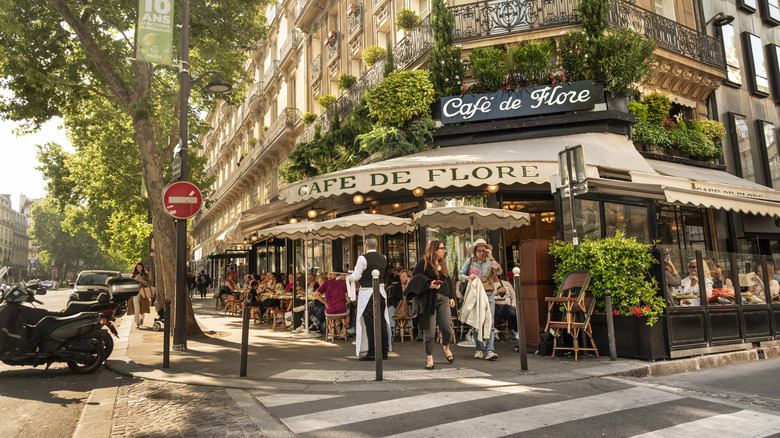
In 2023, Paris and the surrounding area embraced 37 million overall tourists (via Paris Je T'aime), and certainly the subsequent years seem to be telling the same story, with Atout France reporting over 102 million tourists to France, in general, in 2025. Keep in mind that the city also hosted the 2024 Summer Olympic Games, so, granted, that might have also skewed some numbers. Even within the Paris city limits, it's still recommended to hop on the Metro or a bus from time to time, despite the city's rather dense construction. Once you arrive at your desired arrondissement, there are some hugely walkable spaces to explore.
Using the iconic Notre-Dame de Paris cathedral as an anchor, for example, reveals the sheer number of things to see and do within a 1-mile radius. The Louvre, arguably the most famous museum in the world, is just 20 minutes across the river. You'll also find the Musée National Picasso-Paris, the Musée de la Chasse et de la Nature, and the gorgeous Carnavalet Museum within similar distance of one another. Or, start your day at Champ de Mars with the Eiffel tower at your rear and still find plenty more to see within strolling distance of the tower: the Grand Palais is about 25 minutes away, or you can walk across the Seine to the Place du Trocadero. There are also half a dozen other world-class museums nearby.
Paris is also a city of hundreds of itineraries you can plan. Indeed, a stroll down the Champs Elysée is an experience all by itself. A selfie beside the Arc de Triomphe, then perhaps a macron or two at Ladurée? Such things are the very essence of the Parisian experience.