
5 Sushi Restaurant Rules American Tourists Break Within The First 10 Minutes
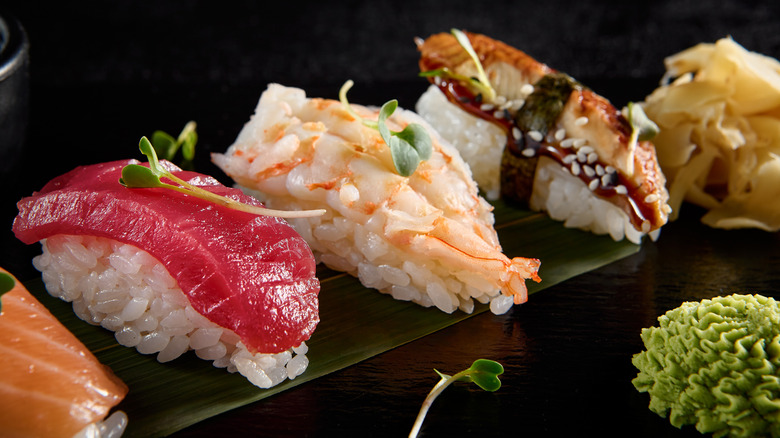
Earlier this year, a survey by Remitly polled 4,600 people from 26 countries, asking which nation they considered the politest in the world. Japan won, hands down, with 35% of the vote, far outpacing every other country in the world. It comes as no surprise, then, that dining in that country's famous sushi restaurants comes with a host of unwritten rules and esoteric social niceties. American tourists aren't particularly known for politeness (the USA scored under 2% on the same survey), as can become painfully obvious when Yankees with more enthusiasm than etiquette blunder into a Japanese dining establishment with manners akin to a bull rushing into a china shop.
Sushi today is characterized by exquisite fine-dining experiences, such as multi-course "omakase" tasting menus. This style of dining leaves the choice of ingredients to the sushi chef and involves a parade of delicacies, lovingly served over the sushi counter a few bites at a time, typically over the course of hours. The omakase experience is practically like attending a theater performance you can eat. But the history of sushi is long, and it originated as a street food.
According to The Story of Sushi: An Unlikely Saga of Raw Fish and Rice by Trevor Corson, a citywide ban on cooked street food after a major fire broke out in Tokyo in the 1600s led to the widespread popularity of cold sushi as fast food, a low-cost staple among workers. It wasn't until the 20th century that it became haute cuisine. But that depth of history naturally means that the process of dining at a sushi bar really does come with some unexpected rules with fascinating roots. Here are the ones you need to know, whether you're springing for a top-shelf meal costing hundreds or heading to a secret hole-in-the-wall with a reputation for serving up sublime seafood.
Don't abuse or overuse your garnishes
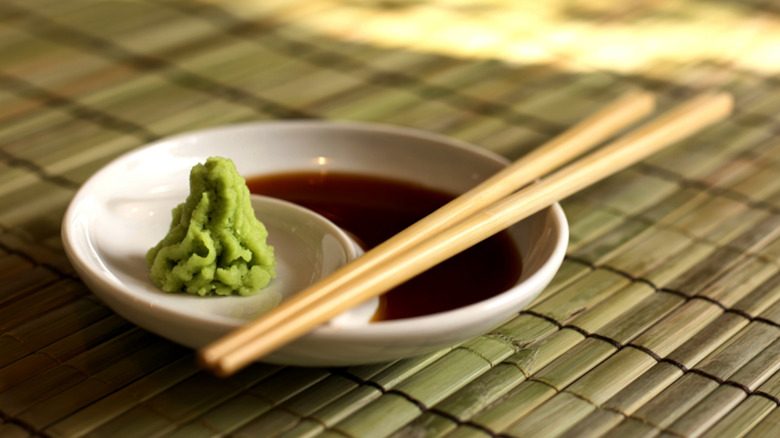
Soy sauce, ginger, and wasabi are the holy trinity of sushi garnishes, served alongside every place setting. But if you aren't from Japan, chances are the very first thing you do when you sit down betrays your ignorance of their proper use. That would be pouring soy sauce into the little dish called a shoyu-zara, then using your chopsticks to scoop up a big dollop of wasabi, stirring it into your dish of soy sauce. This may fly at a fun, casual joint like California's best all-you-can-eat sushi buffet in Chatsworth, but when you're being served directly by the chef at a sushi counter, each bite has been made with just the right amount of wasabi for the type of fish. No need to put your taste buds on blast while insulting the chef.
Feel free to pick up your nigiri between two fingers to pop it into your mouth. It isn't rude at all but considered proper sushi etiquette. This technique makes it possible to properly dip your nigiri in the soy sauce: fish-side down. It also helps keep the rice together and avoids over-soaking, but is nearly impossible to accomplish gracefully using chopsticks. Chopsticks are handy for eating a saucy sliced roll that would be too messy to pick up otherwise.
Pickled ginger (gari) is not a garnish to be layered on top of your sushi. It's a palate cleanser, to eat in small nibbles between bites of different varieties of nigiri. There is one other use for ginger, which is that you can grasp it with chopsticks and use it as a brush to paint soy sauce onto heavily sauced pieces of sushi that would be impossible to dip. Deploying this technique will mark you as a true sushi bar savant.
Do eat pieces of sushi in one bite
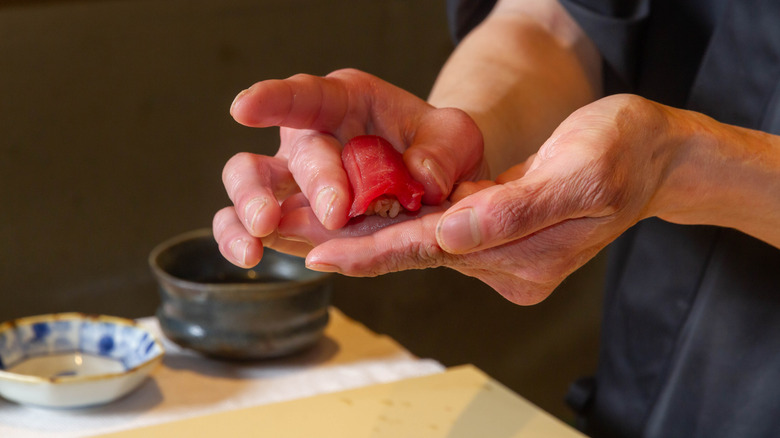
Sushi neophytes may think nibbling away at a piece of nigiri is the best way to savor such a work of culinary art, but in Japan, you're expected to do the opposite, wolfing it down in one go. Adept sushi chefs craft each piece of nigiri to be eaten in a single bite. This avoids the careful composition falling apart and preserves the intended proportions of rice, fish, and wasabi.
When you're served smallish nigiri, it's not a sign that the restaurant is being stingy with portions, but that it's presenting right-sized bites. In that light, another crass move that will mark you very publicly as an ignoramus? Leaving a sushi restaurant an ill-informed review on social media complaining that the pieces are "too small."
You may find, in casual U.S. sushi restaurants that cater to Americans' penchant for ordering everything supersized, that sushi portions can simply be too large to eat in a single bite. Nehmo Bento & Sushi in Santa Ana, aka "Orange County's Downtown" went viral in 2025 for its colossally portioned giant salmon nigiri, fist-sized portions that abandon any notion of delicacy or proportion. In such a case, by all means don't bite off more than you can chew.
Don't put your phone on the sushi counter
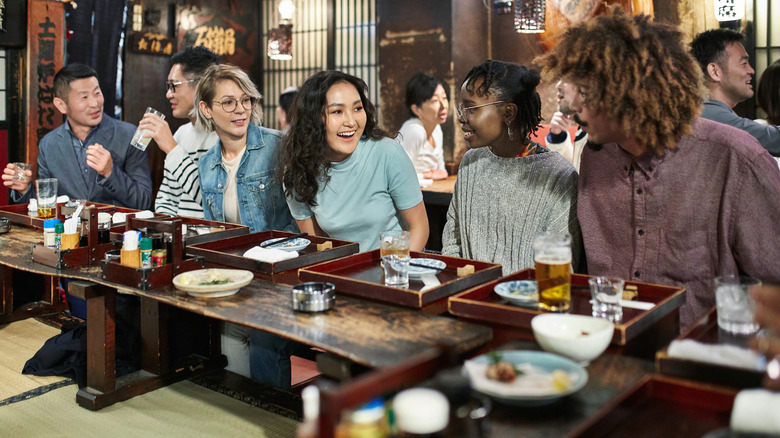
The sushi counter is sacred, like an altar, so plunking your iPhone down on it is the height of clueless rudeness. So, for that matter, is using your phone to take a picture of each piece of sushi that comes out. Many Japanese sushi bars prohibit or frown on photography, much the way an art gallery usually prefers you not photograph the art. This has changed somewhat in recent years, but check the vibe before snapping away, or politely ask about the rules before Instagramming your dinner.
Another way in which you can show respect for the sushi bar, which is often carved out of a valuable piece of solid wood, is to remove dangly jewelry and watches before dining so as not to scrape it. The only bling on the counter should be those shiny, jewel-like morsels of fish that are about to send you into a swoon.
Even if you're far from Japan's Michelin-starred sushi counters, respecting these rules will make your experience more enjoyable and show respect to the chefs. So keep the phone in your pocket or handbag, even when dining stateside at the fabled buffets in Reno, America's all-you-can-eat sushi capital.
Avoid sounding like a know-it-all
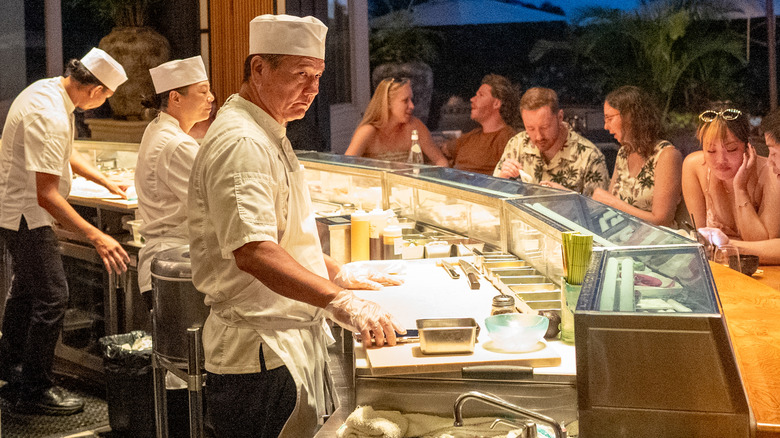
There's a classic sushi bar scene in "Curb Your Enthusiasm" where Larry David makes a cringey faux pas by shouting out the traditional sushi chef's greeting of "irasshaimase" when his dinner companion arrives, deeply offending the chefs. The full-volume greeting is exclusively reserved for the chefs, of course, and to clumsily use it yourself simply marks you as a first-class buffoon. So unless you're a comedy legend doing a bit, let the chefs do the greeting.
What you may not know is that there is also a whole not-so-secret yet private language the chefs use amongst themselves. You may think it makes you sound like an insider to clumsily mangle terms you copped from the internet when ordering from these seasoned pros, but trust us, just ... don't. Sushi chef lingo is reserved for the professionals. For a customer to use this insider terminology would be "off-putting" according to Sushi University. Feel free to learn these fun terms so you can understand what they're saying to each other, just don't embarrass yourself by speaking sushi chef slang aloud, especially when ordering directly from the chefs. That means never calling soy sauce "murasaki," wasabi "namida," or green tea "agari."
Another no-no is to ask for the check by calling it "oaiso." According to the Substack "Spirit of Sushi," this is an error even Japanese sometimes make: "Traditionally, it's a humble expression from the restaurant owner, meaning 'I apologize if I come across as unfriendly,' because Japan has a culture of modesty. Thus, when a customer uses this phrase, it implies 'no courtesy' on the part of the restaurant."
Don't be late for your reservation
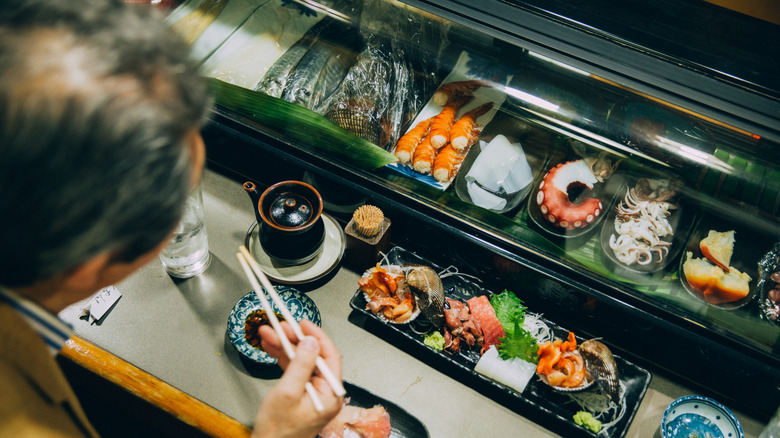
The Land of the Rising Sun's epic politesse extends to Japan's most unbreakable etiquette rule: punctuality. When you make a reservation at a sushi restaurant, especially for seating at the sushi bar, remember to treat it like a theatrical performance, where late arrival is taboo. Some omakase-only restaurants do, in fact, have sushi-bar seatings that are treated like showtimes, with patrons seated all at once for a fixed-length performance by the talented chefs. Should you arrive late for this style of meal service, you risk not being seated at all or missing out entirely on courses that have already been served to other guests.
You may think that being 5-10 minutes late for a reservation is no biggie, but you'd be wrong. Believe it or not, being as little as one minute late in Japan can be taken as a sign of disrespect. Japanese patrons will traditionally arrive 10 minutes early for a dinner reservation, so arriving 10 minutes past the reserved time is really more like being 20 minutes late. One of the things that makes a sushi meal so impressive and enjoyable is the masterful precision displayed by the chefs, so do them the courtesy of being equally precise with your timing.