
Austin's Lakeside City Park Is A Texas Paradise With An Idyllic Nature Walk, Swimming, And Fishing
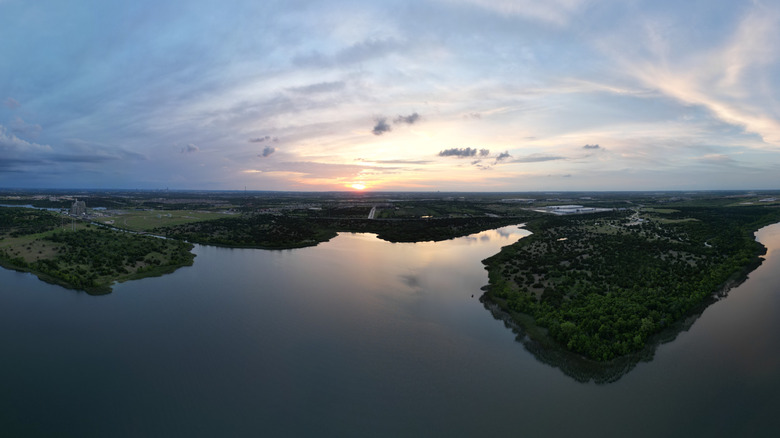
Located in Texas Hill Country, Austin is not only the state's capital city — it's also part of one of the fastest-growing metro areas in the country. As the fourth-largest city in the Lone Star State, it has seen steady population growth for over half a century. Nonetheless, Austin has retained an impressive amount of greenspace, exudes a conservation mindset, and offers an abundance of outdoor activities. Nowhere is that more apparent than at Walter E. Long Metropolitan Park, a lakeside city park that offers opportunities for nature watching, swimming, fishing, and more.
Located just 9 miles east of the Texas State Capitol building, Walter E. Long Metropolitan Park opened to the public in 1969, two years after its namesake lake was impounded. Much of the land surrounding the 1,269-acre lake is owned by the City of Austin. The metro park takes up most of this land, but two sections – Decker Tallgrass Prairie Preserve and Louis René Barrera Indiangrass Wildlife Sanctuary — have been set aside for conservation purposes and are only open to the public for special events or preapproved hikes.
At just under 2,500 acres, Walter E. Long Metro Park is Austin's largest city park, providing ample space for birding or nature watching. It's home to your typical park amenities such as volleyball courts and picnic areas, although you'll also find a lot of undeveloped area within the park — and a lack of commercial development along the lake adds to the sense of tranquility. Visitors can even hike a portion of the Austin to Manor Trail, a significant chunk of which runs through the park and Tallgrass Prairie Preserve.
Ways to enjoy the water at Walter E. Long Metropolitan Park
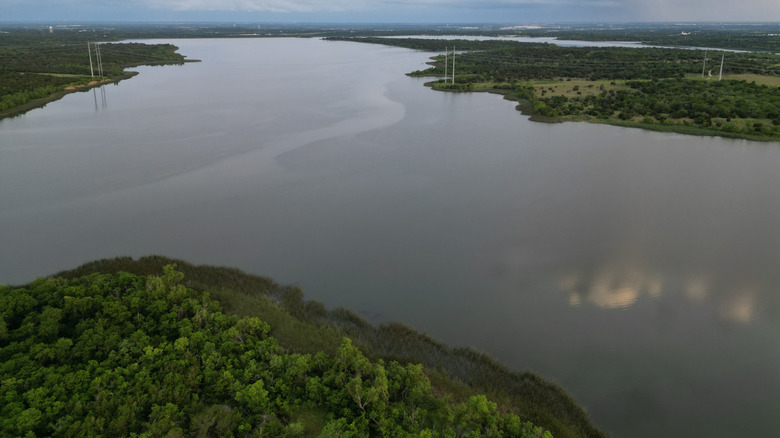
Of course, many visitors come to this scenic metropolitan park to enjoy the water. To that end, Walter E. Long Lake is well known among anglers for producing quality catches. The lake has an outstanding population of largemouth bass and yields good numbers of slot-size fish. It is also routinely stocked with hybrid striped bass and produces panfish of impressive size (often over 8 inches). Anglers can fish from shore throughout the park. Generally, boaters can also access the lake utilizing the park's three-lane boat ramp. However, the ramp has been closed for the past few years — the water level is lower than usual to accommodate ongoing dam repairs, making the ramp unusable. The ramp is expected to reopen in 2027. For now, shore-launched craft are still allowed to launch from the park.
Once the boat ramp reopens, not only will fishermen be able to utilize it, but so will pleasure boaters and jet skiers. Until then, paddle boarders, canoers, and kayakers can continue to paddle the lake, including along the shorelines bordering the tallgrass preserve and wildlife sanctuary. Additionally, swimming is still allowed in designated areas. The park remains a popular spot for swimmers looking to escape the crowds of some of Austin's better-known swimming spots. Triathlon events are held here, too, so it is not uncommon to see swimmers training in the lake ahead of their competition.
Best of all, this park is easily accessible. It sits just a few miles beyond East Austin, Austin's hippest neighborhood, and is less than 10 miles from Austin-Bergstrom International Airport (AUS). Round Rock, the "Sports Capital of Texas," is less than half an hour away. There are also a variety of other parks and natural areas nearby, such as McKinney Falls State Park, home to a breathtaking waterfall.