
Under 2 Hours From Philly Is New Jersey's Once-Thriving Agricultural Village That's Now Part Of A Scenic State Park
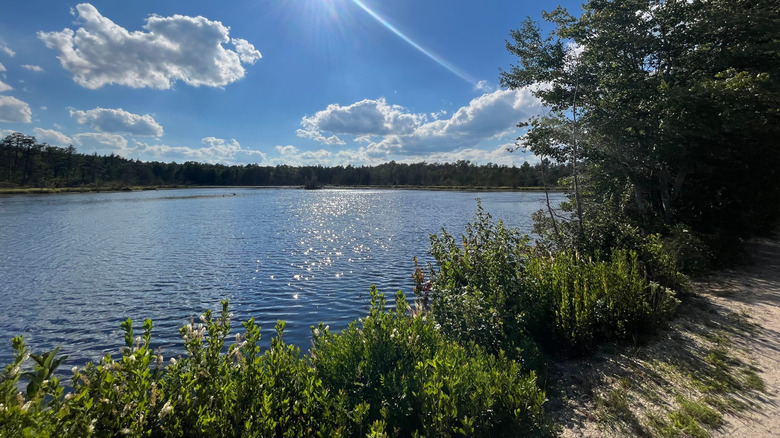
New Jersey has some of the most densely populated areas, not just in the United States but across the world. But there is a lot more to Jersey than the crowded urban hubs along the Hudson River. Elsewhere in the state, you can still enjoy the open space and farmland that earned it the nickname the Garden State, and even people living in its major metropolises don't have to travel far to find a place to connect with nature. One of these is Double Trouble State Park, where you can explore both New Jersey's natural landscapes and its agricultural history.
Double Trouble State Park is just west of Bayville, a small community along the mainland side of Barnegat Bay. Relative to larger cities, it's about a 90-minute drive east of Philadelphia or about a 75-minute drive south of Newark. It's part of the mysterious wooded Pine Barrens region, with wetlands that are home to endangered wildlife, earning it a designation as a UNESCO Biosphere Reserve. The over 8,000 acres of protected land within Double Trouble State Park exemplify this region's unique ecosystem, with a mix of cedar swamps and pine forests that visitors can explore on its more than 8 miles of hiking trails. All of the park's trails give hikers views of Cedar Creek, which adds activities like canoeing, kayaking, and fishing to the outdoor fun you can have here.
While Double Trouble State Park's nature and wildlife make it worth a visit on their own, its unique history is what sets it apart from the typical state park. The Double Trouble Historic District occupies about 200 acres at the heart of the park and includes a 19th-century company town that gives visitors a glimpse into the region's agricultural past.
Double Trouble ghost town and Historic District
Several New Jersey towns that are still thriving today were founded in the 17th century, like the historic, underrated gem of Piscataway. Other early settlements here have now become ghost towns, and while some of those have been reduced to just a few foundations, preserved settlements like Atsion and Batsto Village along the scenic trails of Wharton State Forest keep the memory of this history alive.
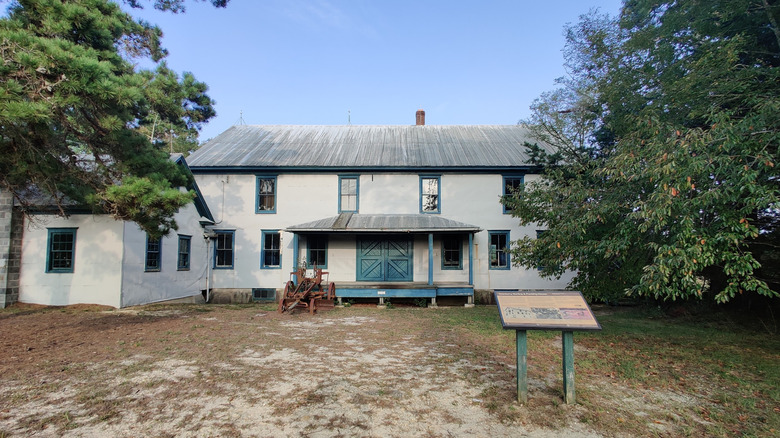
Double Trouble Village is one of the Pine Barrens ghost towns that has enough left intact that it's worth planning a trip to visit. The land was first purchased in 1698, and by the mid-18th century it was the site of a sawmill. The land cleared by this timber operation was repurposed into cranberry bogs starting in the 1860s. In 1903, Edward Crabbe purchased the property to start the Double Trouble Company, and this was when the village started to take shape. Crabbe built cottages for his workers, along with facilities like a sorting and packing house. At its peak, Double Trouble was one of the largest cranberry growers, and Mill Pond Bog was the biggest in the state.
The Double Trouble Company dissolved in 1964, and the land was sold to New Jersey for a state park later that same year. Thanks to that quick transition from company town to protected land, many of the structures have been preserved. The oldest is a one-room schoolhouse built in 1893. Many of the 15 still-standing buildings date to around 1900 to 1910, including a sawmill, the sorting and packing house, and homes used by pickers or foremen. You can also still see some of the old cranberry bogs, though others, like the Mill Pond Bog, have now been overgrown by trees.
Enjoying the outdoors at Double Trouble State Park
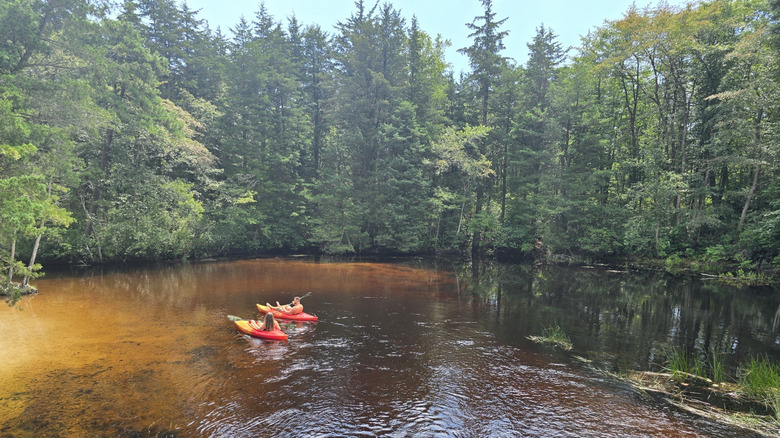
Visitors to this scenic state park will find a variety of natural landscapes to explore around Double Trouble's historic village. The majority of the trails are multi-use, open for hiking, biking, or horseback riding in the summer as well as snowshoeing or cross-country skiing in the winter. For panoramic views, take the short Dover Forge Trail to an overlook of Cedar Creek. If you're looking for wildlife, the 1.9-mile Nature Trail loop passes through a stand of Atlantic White Cedar and restored cranberry bogs, and connects to the 2.5-mile Sweetwater Trail for a longer hike.
Along with vegetation like sweet bay magnolia trees, mountain laurel, and pitcher plants, Double Trouble State Park is home to several types of animals. Users on eBird have reported over 200 species, including birds of prey like broad-winged hawks and bald eagles and water birds like ducks, swans, and herons. It's also a reliable place to spot warblers during their spring migration. Many mammals call the Pine Barrens home, too, like deer, foxes, beavers, and river otters. When the weather's warm, you can add Pine Barrens tree frogs and bog turtles to the species you may see while exploring the wetlands and trails along Cedar Creek.
If you'd rather get out on the water, you can access Cedar Creek from Double Trouble Village or the access points at Ore Pond and Dover Forge. While tubing, rafting, and swimming are prohibited, visitors are allowed to kayak or canoe down the waterway. Anglers can catch pickerel, largemouth bass, catfish, and sunfish, either from non-motorized boats or along the creek's banks. If you're looking for more places to fish, you can head to the nearby quaint coastal escape of Barnegat Lighthouse State Park to cast your line in Barnegat Bay.