
Not Spain, Not The UK: This Mediterranean Gem Is The Most Popular Study Abroad Destination For American Students

Studying abroad can turn a traditional classroom experience into an opportunity to immerse in a new culture, language, and way of life. According to U.S. News, Italy is the most popular study abroad destination for American students. From 2023 to 2024, there were 298,180 American study abroad students, and 45,067 (or 15.1%) studied in Italy, per data from the Institute of International Education. Spain followed with 12.4% of students, and the U.K. was next with 12.2%.
American study abroad programs have been around for more than a century. The University of Delaware traces the first U.S. study-abroad program to 1923, when eight students traveled to France under professor and World War I veteran Raymond Kirkbride. Programs later expanded to Germany and Switzerland, eventually becoming a standard offering at American colleges. Today, most traditional four-year colleges and universities offer study abroad programs or partner with foreign universities and study-abroad providers. It's easy to see why Italy outweighs other destinations like Spain and the U.K. — students can study archaeology steps away from the Roman Forum, Renaissance art with the Florentine skyline as the backdrop, or the art of clothing beside iconic fashion houses in Milan.
Students can choose programs lasting several weeks, a semester, or an entire academic year. Summer and winter sessions typically focus on a specific subject and can last four to 12 weeks, while fall and spring programs allow students to take several courses abroad. Some enroll in classes designed specifically for Americans, while others study alongside local or international students at Italian universities.
What an Italian semester looks like for American college students

University culture began in medieval Italy, so it's no surprise the Mediterranean gem is especially suited to experiential learning. The University of Bologna (which is one of the most beautiful universities in Europe) opened its doors in 1088 and is recognized as the oldest university in operation in the Western world, according to its website. Meanwhile, Florence was the central city of the Renaissance, producing artists and thinkers who shaped modern academia, including Leonardo da Vinci, Michelangelo, and Sandro Botticelli.
What sets Italy apart from other popular study abroad destinations is the experiences students can gain outside the classroom to learn the Mediterranean culture. Programs frequently organize museum visits, cooking lessons, walking tours, and day trips. They can also include visits to wineries, olive groves, and cheese producers, while students interested in the environment can travel into the Dolomites or to small towns on the Mediterranean, like Atrani, one of the best preserved medieval towns on the Amalfi Coast.
For American students planning a semester in Italy, the visa process is an important consideration. U.S. citizens generally need a student visa for stays longer than 90 days, with requirements varying by program. Applications typically involve a passport, visa forms, proof of enrollment, financial documentation, housing information, and other supporting materials. Fees and requirements can change, so students should check with their university and consulate for course-specific instructions.
Rome, Florence, and other Italian cities to study in
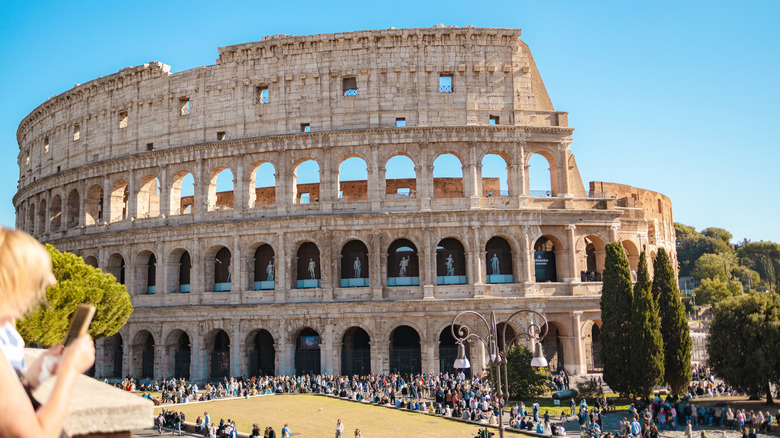
Florence and Rome are the country's largest study-abroad hubs, but programs exist in virtually every major Italian city. One popular CIEE College Study Abroad program takes students to Milan for a semester to study fashion, retail, and innovation. For those interested in the automotive industry, Vanderbilt University offers a unique experience to study mechanical engineering in Turin — the home of FIAT and one of the largest open-air markets in Europe.
Housing shapes daily life abroad. Programs may offer host families, university residences, or apartments. A host family can give students regular opportunities to practice Italian and experience local routines, often including meals. Dormitories provide a traditional student setting and opportunities to live alongside Italian and international students, while apartments offer more independence through shared kitchens and common spaces.
Part of what makes the jewel of the Mediterranean so desirable is its central location and ample plane routes to other destinations in Europe. At the time of writing, Italy has 41 airports and over 40,000 flight routes to 88 countries. Many students report taking advantage of budget flights to see more of Europe on their weekends. A flight from Rome to Paris, for example, takes roughly two hours. Italy's Trenitalia rail lines also top the list of Europe's train operators, according to the European NGO Transport & Environment, which is reason enough as to avoid renting a car in Italy.