
9 Hawaiian Luau Rules Mainland Tourists Break Within The First 10 Minutes
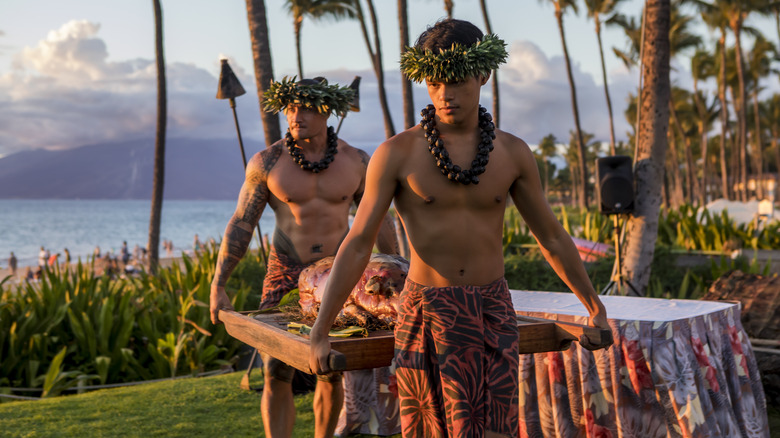
The Hawaiian Islands may be known for the gorgeous beaches that span Maui, Oahu, and the Big Island, but there's a lot more to a Hawaii getaway than just lounging on the sand and enjoying picture-perfect towns that capture island spirit. For many mainland tourists, attending a Hawaiian luau tops the list of must-do activities. Luaus are specifically intended to make guests feel welcome, from the lei greeting to the traditional food to the invitation to immerse themselves in Hawaiian culture. This seemingly casual hospitality, however, is not to be mistaken for a lack of etiquette.
It's all too common for people visiting Hawaii to make awkward or disrespectful choices almost immediately after arriving at a luau, not due to any form of malintent, but because they simply don't know how things work. This guide is here to change that. Here, we'll look at nine Hawaiian luau rules that mainland tourists break within the first 10 minutes, and tell you how to avoid your own mistakes! It is important to remember that every commercial luau is a little bit different, though, so check the rules and regulations for your particular luau event before you head out the door.
To put together this guide, we used several luau events' official websites, Go Hawaii, the Hawaii Activities website, and blogs including the Aloha Shirt Shop. Additionally, I have personally attended the luau at Aulani, a Disney Resort and Spa, so I used my firsthand knowledge from this event to supplement certain sections. Finally, we gathered details from firsthand accounts posted by luau attendees on Tripadvisor, Reddit, and Instagram.
They arrive too close to the advertised start time
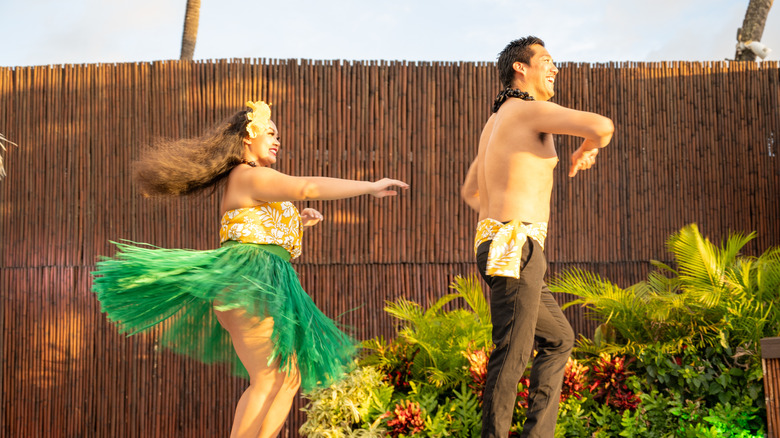
When you book a luau reservation, you might think that the advertised start time is when you need to arrive, but that's rarely the case. Many commercial Hawaiian luaus offer pre-show activities for all ages. In order to take full advantage of these pre-party experiences, it's wise to get to the venue about an hour before showtime. Although every luau is slightly different, the activities available to early arrivals almost always celebrate Native Hawaiian and Polynesian heritage in one way or another.
At Aulani's KA WA'A luau, we lined up a little over an hour before the event was scheduled to start. The girls in our party were warmly welcomed with orchids for our hair, and everyone received kukui nut necklaces. At the Mauka Warriors Luau, meanwhile, guests who arrive before the show are given the opportunity to learn some elementary hula skills, play games from various Polynesian cultures, and enjoy the sacred umu ceremony, which is a formal blessing of the food for the luau meal. Getting to your luau too close to the official start time means you'll miss out on some of the most interactive parts of the evening, so plan accordingly!
Your ticket type may also impact your luau arrival time. For example, at the Island Breeze Luau, Ali'i ticket holders can go to their seats 15 minutes prior to those who have Ohana tickets. As we previously noted, all luaus operate slightly differently, so double-check the schedule of activities for your chosen event before deciding when to arrive. Tripadvisor users recommend getting to the Old Lahaina luau at least 30 minutes early, for instance. And if you're unsure of which luau to book, check out our guide to the best luaus on the island of Maui as the perfect jumping-off point!
They dress for the beach
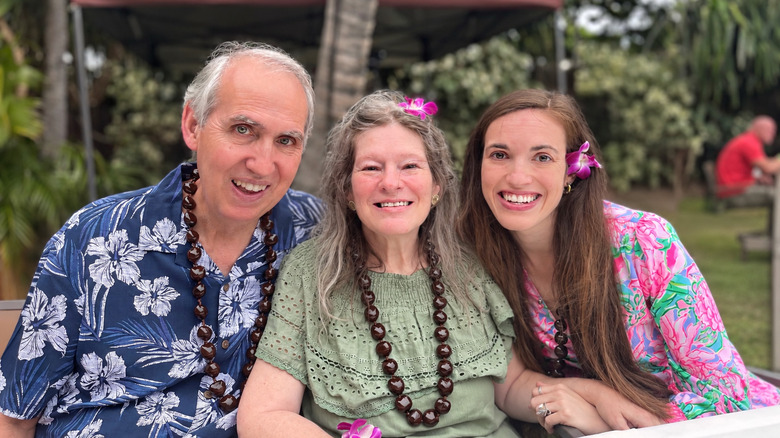
Luaus are not typically formal events, and most people dress with island style in mind. Unlike strict cruise ship dress codes, people can more or less wear anything breezy and comfortable to a commercial luau. While these events don't usually have enforced dress codes, it is important to remember that they are still evening parties, not an extension of your pool day or a day on the beach. Showing up to a luau in a wet swimsuit, a revealing coverup, or a wrinkled T-shirt with board shorts will immediately make a bad impression.
One helpful rule of thumb is to imagine that you're heading to dinner at a relatively upscale beachfront restaurant. That is, after all, in essence, what you're doing! Aloha Wailea Luau recommends resort-inspired sundresses, maxi dresses, nice tops with capris, and classy floral Hawaiian shirts with tailored shorts or linen trousers. Tommy Bahama and Lilly Pulitzer are both great brands to check out if you're looking for the perfect Hawaiian luau attire. I wore a Lilly dress to KA WA'A and got many compliments, even from the waitstaff!
Children can really wear anything that makes them comfortable, though cute sundresses and mini Hawaiian shirts with shorts are adorable options. As for footwear, make an effort to avoid heels. Often, luaus take place on uneven grass or sand, so it's wise to wear sandals or flats. Perhaps most importantly of all, remember that a luau event during a Hawaiian vacation is not a costume party. This is a celebration of Polynesian heritage, so don't wear coconut bras, grass skirts, or anything else that could offend the Native Hawaiian performers and your fellow guests.
They think of the lei greeting as a photo op
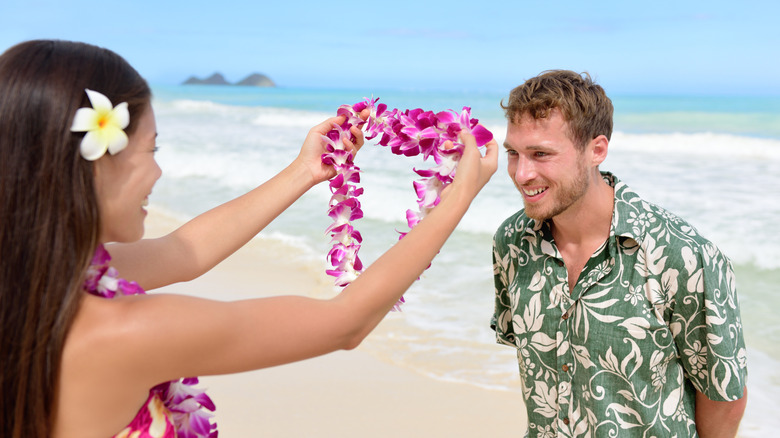
At many luaus, one of the first parts of the experience is a lei greeting followed by a formal photo. Typically, there is an additional charge on top of your ticket fee if you want a print of the photograph. In some cases, however, you may be allowed to have a picture taken on your phone for free. The staff at Aulani was happy to take phone photos for guests when we attended KA WA'A, for example. Because the picture component of the lei greeting tends to be a highlight for people, it's easy to think of the greeting ceremony and the lei itself as nothing more than a photo prop.
In reality, though, the lei is an incredibly meaningful part of Hawaiian culture. The giving and receiving of a lei expresses welcome, friendship, affection, honor, and celebration, all in a single gesture. While traditional purple orchid leis are especially popular at luaus because they symbolize respect, different flowers have different meanings, and some luau events choose other floral combinations. Plumeria, for example, represents beauty and love and is another common lei flower. When a luau host offers you a lei, pause and express thanks. This is an extremely appropriate time to smile and say, "Mahalo."
Then, once the lei is around your neck, taking a photograph is completely acceptable in a commercial luau setting! Just remember that this picture should document this meaningful moment, not look like a goofy novelty photo op. Receiving a lei is an honor. It is also considered disrespectful to take your lei off right away. At the luau I attended, many people left their leis or kukui nut necklaces on for the duration of the evening. Some tourists even preserve their leis by slightly dampening the flowers and storing them in a sealed plastic baggie.
They assume they can sit anywhere
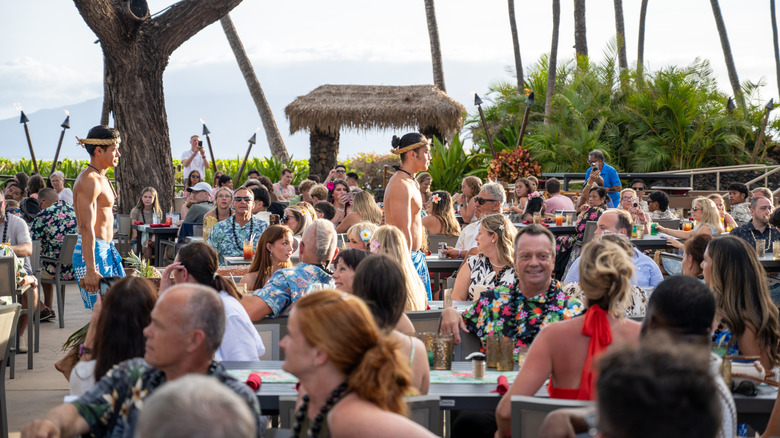
Although Hawaiian luaus might seem casual, this isn't a backyard barbecue. You're likely to have an assigned seat, so don't make the mistake of sauntering in and sitting anywhere that strikes your fancy. Seating policies differ from one venue to another, and the system may not be immediately apparent. For instance, some luaus may assign you a seat at the time of purchase, while others may seat guests in sections on a first-come, first-served basis. Many of these events also divide the audience into standard and VIP sections depending on guests' ticket tier.
At Disney's KA WA'A luau, for example, preferred seating starts approximately 30 minutes before general seating in specified areas of Hālāwai Lawn where the party takes place. Becky at Disney in Your Day had the same experience my family did at this event, confirming that preferred ticket holders get their seat assignments ahead of time, while general admission tables are seated front-to-back in the order in which guests arrive. Randomly sitting down at an empty table in this situation could be awkward if another party was already seated and had gotten up to enjoy pre-show activities.
Other luaus have their own unique seating options. One Facebook user who has attended multiple Hawaiian luau events advised that the most expensive seating isn't always the best seat in the house, noting, "Old Lahaina Luau or Paradise Cove, I usually pick a middle‑section table facing the stage." Another person on the same thread, however, shared that they "have done the VIP seating at Drums of the Pacific and felt it was worth it." Ultimately, VIP seating may be worth it if you don't want to awkwardly stand around not knowing where to sit at any point during your night out.
They mention food allergies too late
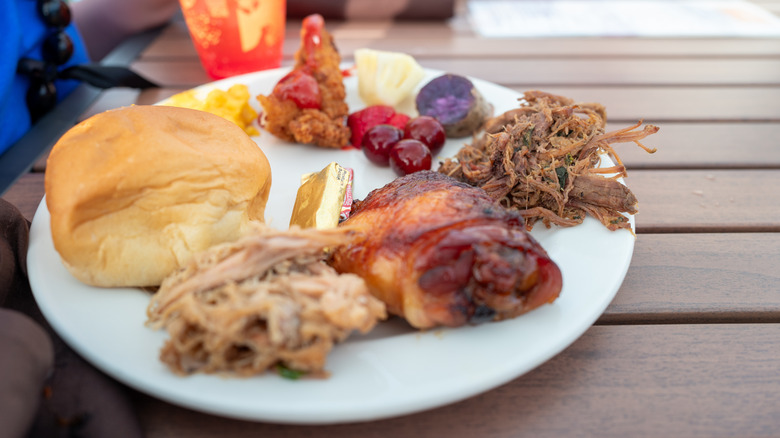
For travelers with food allergies, dining out in an unfamiliar place can be a bit daunting. While some destinations are easier than others — England is one of the best places for diners with allergies — it's still wise to take certain precautions when you make an advance dining reservation for an event like a luau. Waiting until check-in to tell staff members about a food allergy can complicate matters for both the luau staff and the person with allergies. In some cases, accommodations may not be able to be made at the eleventh hour.
Hawaiian and Polynesian-inspired dishes often contain common allergens like shellfish, soy, sesame, and nuts. Additionally, peanut oil and sesame oil may both be used during the food preparation process behind the scenes. Furthermore, at buffet-style luaus, cross-contamination from serving utensils is always a risk, even if people aren't supposed to move the utensils from dish to dish. One person attended the Toa luau and sat near a family dealing with a serious allergy, noting on Facebook that the mom had been quite emphatic upon check-in, and "everything was up to her level of approval."
For peace of mind, if you or someone in your travel party has a food allergy, it's wise to get in touch with all of the luaus you're considering ahead of time to see which one will be best able to accommodate your dietary restrictions. Then, remind the check-in staff when you arrive to be on the safe side.
They talk through chants and cultural demonstrations
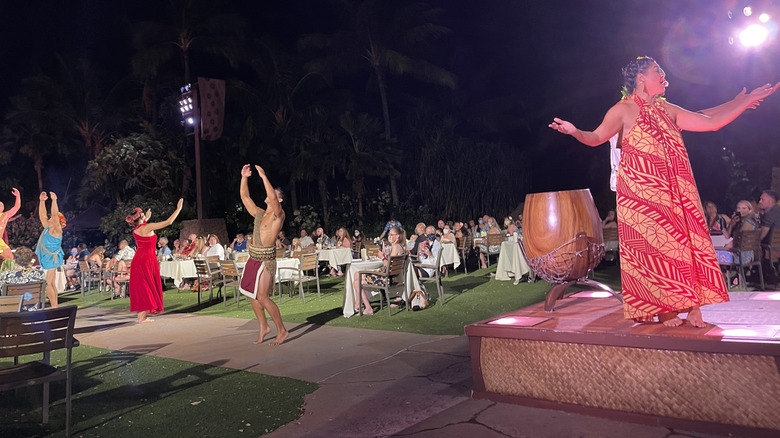
It is not uncommon for the first few minutes of a luau to include greetings and instructions to set the tone for the evening. Every event handles this slightly differently, but attendees might witness an oli, or traditional Hawaiian chant, or hear a prayer called a pule as a signal that the luau has officially begun. These ceremonies are not mere filler; they are a notable part of Native Hawaiian culture and should be deeply respected.
Unfortunately, some mainland tourists don't realize that the talking and chanting at the start of a luau are sacred. As such, they might continue talking amongst themselves at their tables, scrolling on their phones, or moving around taking photos. This is extremely poor etiquette. Once a performer or staff member begins speaking, you should take your seat and stay quiet unless you're invited to participate in some way. This rule of thumb really holds true in any public space.
If you have any questions regarding the ceremonial aspects of your luau event, such as what constitutes the official start of the evening's presentation, simply ask a staff member. The individuals who work at luaus are passionate about Hawaiian culture and tend to be more than happy to help. As a general guideline, though, if anyone else is speaking at a podium or onstage, it's a good time to end your conversation or put your phone away.
They call every Polynesian dance the hula
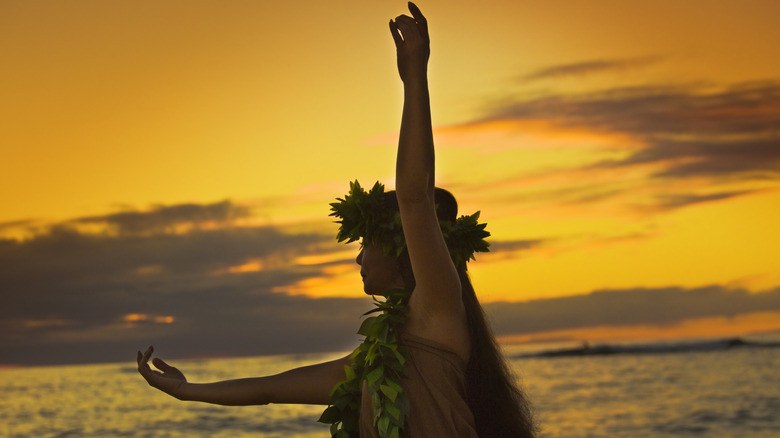
Upon arriving at a Hawaiian luau, one of the first things you may see is a dance demonstration as part of the pre-show. While the instructors often focus on hula moves, it is important to recognize that referring to every Polynesian dance as the "hula" is incorrect. Although people generally make this error innocently, it can be rather disrespectful since every Polynesian dance is specific to its culture and has unique meaning. Hula dancing is specifically Native Hawaiian. While it is well-known in American pop culture, it is far from the only Polynesian dance, and it should not be used as a catch-all term for any similar style of dance.
Even hula routines themselves can differ. Kahiko, for instance, is the ancient dance form that Hawaiian people have been doing since the islands were first settled. 'Auana, on the other hand, is the contemporary style of the dance that Americans from the contiguous United States are most familiar with. Both are special in their own way, and performers are passionate about their art form. No matter what type of hula dancing your luau event features, you are being invited to experience an important part of Hawaiian culture.
However, it's important to be aware of the fact that many commercial luaus also feature dances from other Polynesian cultures. On Facebook, someone knowledgeable about hula dancing shared a video promoting "hula" that, in fact, was more influenced by a combination of Tahitian and other island styles. They urged, "Malihini or visitors please learn about our Polynesia correctly. I'm not knocking down this dance, just the mislabeling of it." Another Facebooker posted a video of 'Ori Tahiti dancing, noting that it is frequently mistaken for hula, though it has different costumes and cultural markers.
They use flash photography
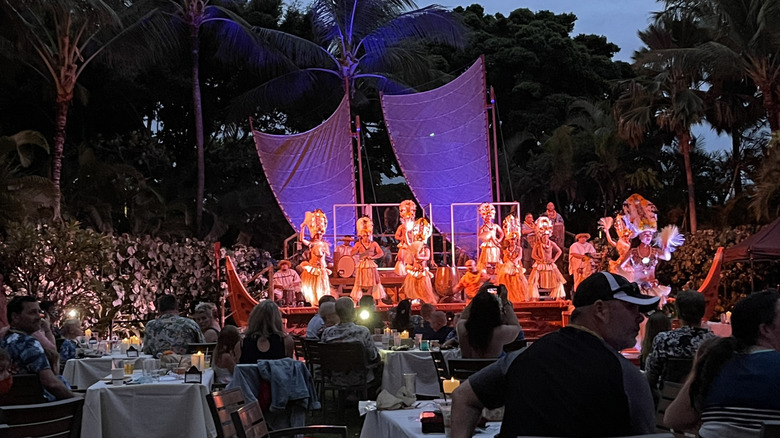
Not using flash photography in inappropriate situations is one of the unwritten rules of visiting Disney Parks, and it also holds true at luaus in the Hawaiian Islands. Luau organizers know that their parties may be a once-in-a-lifetime event for guests, so they usually allow photos and videos of all performances. However, it's crucial to distinguish between taking quick snaps with your phone and using flash photography. The latter can be quite frustrating for others in attendance, as well as distracting to performers.
Sometimes, luau guests begin taking flash photos and videos within minutes of arriving at the venue, and continue throughout the entire performance. As one person on Facebook shared, her "daughter had a lady behind her just randomly throughout the night start recording with her light on, so blinding the whole group of people in front of her." As one might imagine, this is very annoying to everyone in the vicinity, not to mention potentially blinding to performers. One photographer on Reddit warned that flash photography always draws attention, even if you think you're being discreet. Night mode is a better option and more considerate of other guests and performers.
Bear in mind that a bright blast of light from your device may also cause problems for others trying to take non-flash photos and videos. Think of how you would feel if you arrived home to the mainland after your vacation, only to discover that many of your luau images were washed out because of someone else's inconsideration. If you have any questions about using a camera other than a smartphone at your specific luau, ask a staff member. Some events, for instance, may have rules regarding the use of tripods, professional-grade cameras, and other photography equipment.
They treat cultural objects like props
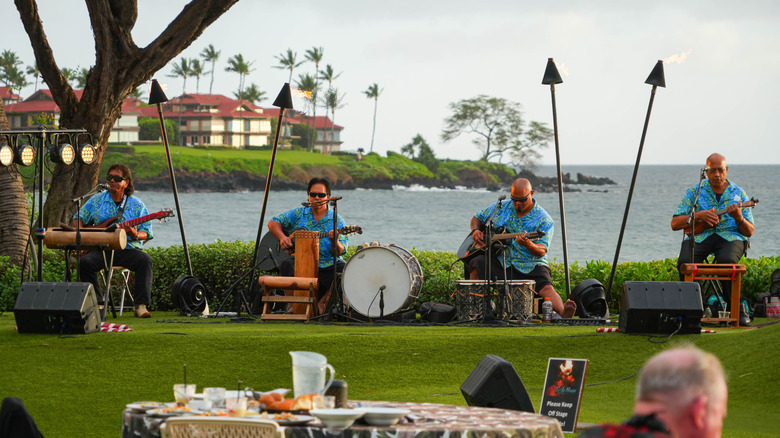
As we've established throughout this guide, many luaus offer cultural activities and interactions prior to the main meal and performance. Guests might learn about authentic Hawaiian crafts, watch or participate in lei making, look at traditional musical instruments, or take part in cultural rituals. These are exciting opportunities to get an up-close look at the islands' culture, but it is important to remember that items like jewelry and instruments are not props.
Although luaus are designed for tourists, and the performers want to educate visitors about Hawaii's rich heritage, the objects you may come into contact with often have sacred meaning and should be treated reverently. If an entertainer allows you to hold or touch a culturally significant item at an interactive luau event, carefully follow their instructions for handling it. If nobody gives you express permission to pick something up, assume you should look with your eyes only.
If you are making jewelry, learning how to make a lei, or engaging in another activity, it's courteous to ask before taking photographs of your party. Furthermore, tourists should, of course, avoid touching performers' costumes or otherwise invading their personal space unless they have been explicitly invited to do so. Keep in mind that certain luau activities, such as spear throwing, require a great deal of concentration, so you may want to stand at a safe distance if you do choose to photograph or video your travel companions!