
Skip The Grand Canyon — Visit These 10 Pacific Northwest Alternatives Instead
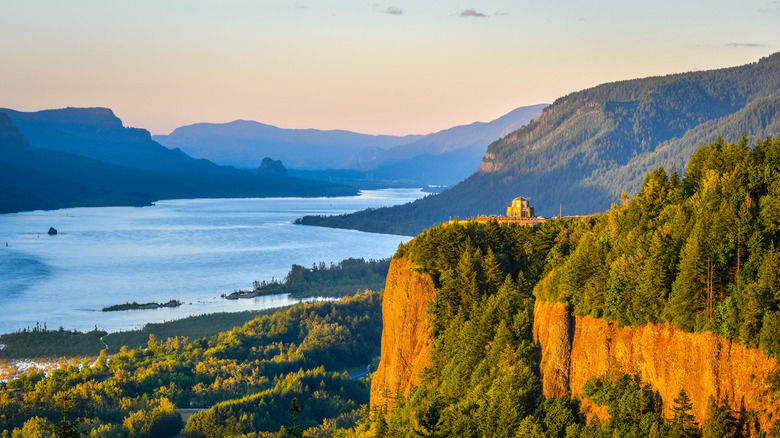
With more than 4.4 million visitors stopping by Grand Canyon National Park in 2025, the Grand Canyon's most popular and accessible viewpoints often suffer from overcrowding and irksome traffic jams. The good news for canyon fans is that, while the Grand Canyon of Arizona may be the "grandest" of America's canyons, it is far from the only one. Nor is the American Southwest the nation's only region with magnificent canyon systems to visit. Much farther north from the Arizona deserts, the much wetter and greener Pacific Northwest has plenty of awe-inspiring canyons of its own — many of which rival the mighty Grand Canyon in size, recreation, and sheer visual spectacle.
While the Grand Canyon originated from the dedication of the Colorado River as it carved away at the Colorado Plateau over millions of years, the many canyons of the Pacific Northwest have a rather diverse array of origin stories. Many of them stretch between the snowcapped peaks of the Cascade Range, while others developed out of dried lava beds forged by the region's potent volcanic heritage. Still others expand across the vast high desert of the Pacific Northwest's overlooked east, where ancient floods and dried lakebeds have coalesced into epic networks of gorges and cliffs.
Thanks to the Pacific Northwest's rainier climate, many of its canyons bear features rarely found in the Arizona desert, including potent waterfalls, lush green forests, and alpine meadows. Though Washington, Oregon, and the surrounding areas have too many picturesque canyons to name in a single list, these 10 canyons are some of the Pacific Northwest's most ravishing settings and formidable rivals to their much more famous doppelgänger in Arizona.
Palouse Falls Canyon
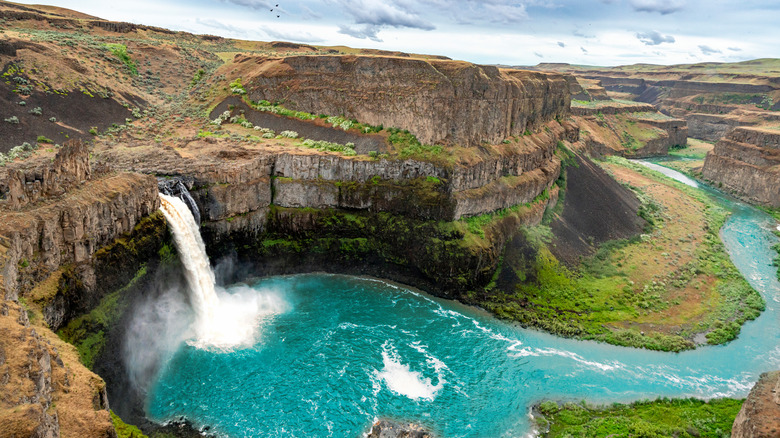
With a sparse volcanic landscape, dark igneous rocks, and mysterious waterfalls, you may assume that the canyon at Palouse Falls State Park is somewhere in Iceland. Remarkably, this otherworldly wonder is pure Washington, though a side of Washington quite different from the state's famed temperate rainforests.
Located in Eastern Washington's unique and underrated Palouse region within the Columbia Basin, the Palouse Falls State Park canyon features dark columns of volcanic basalt sculpted into a deep ravine by the Palouse River. The canyon's highlight is undoubtedly the nearly 200-foot Palouse Falls plunging into its natural stone amphitheater.
Sun Lakes-Dry Falls State Park
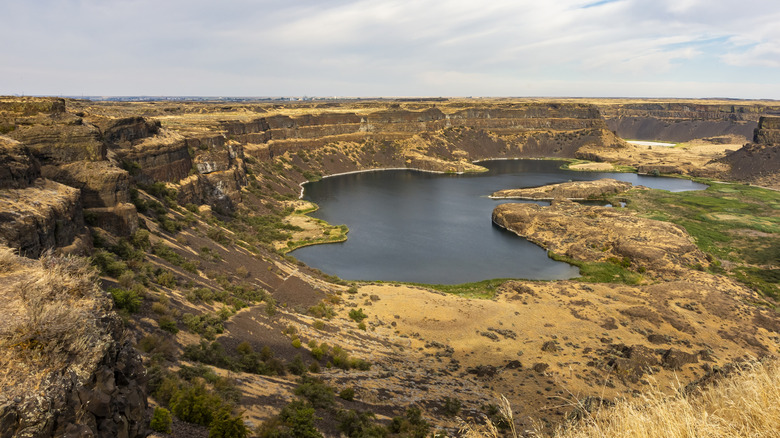
Whether the canyon at Washington's Sun Lakes-Dry Falls State Park is more visually stunning than the Grand Canyon is subjective, but few can dispute that it has a more dramatic origin story. Sun Lakes-Dry Falls is a geological remnant of catastrophic Ice Age floods, resulting in a landscape-altering waterfall four times the size of Niagara Falls!
That waterfall is long since gone (hence "dry falls"), but its legacy lives on in the state park's monumental basalt canyon and its haunting, water-carved cliffs. The surrounding oasis of shrub-lined steppes complements the canyon's strange beauty.
Cottonwood Canyon
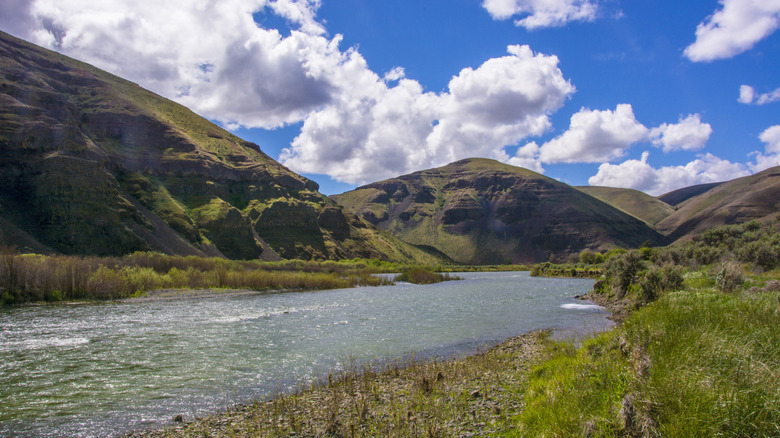
With more than 8,000 acres, Cottonwood Canyon State Park is the second-largest state park in Oregon, a fitting ranking given the size of its namesake canyon. Cottonwood Canyon's near-vertical cliffs stem from the John Day River and the volcanic geography of northeastern Oregon's Columbia River Basalt Group.
The result is a canyon of somber, dark stone cliffs built from ancient lava flows. The surrounding landscape of Oregon's high desert adds a haunting atmosphere of windswept steppes and sagebrush grasslands. With little light pollution and superb night sky views, Cottonwood Canyon is also an official International Dark Sky Place.
Silver Creek Canyon
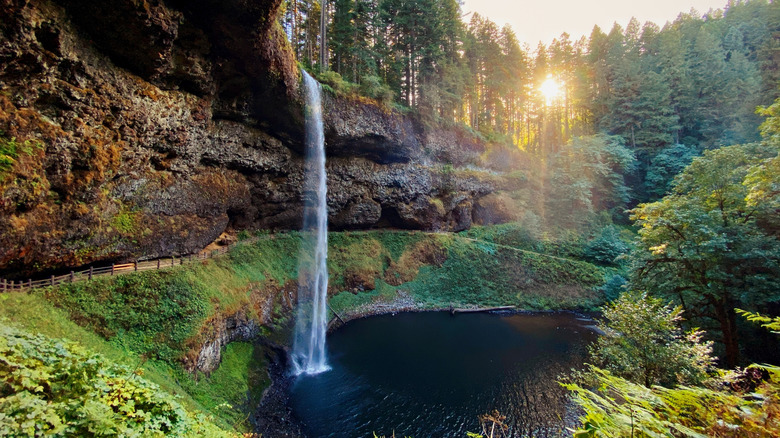
The only Oregon state park to outrank Cottonwood Canyon size-wise is the 9,200-acre Silver Falls State Park, Oregon's largest state park and home of its most majestic waterfalls. The park's 10+ waterfalls plunge into the ornate Silver Creek Canyon, where Oregon's temperate rainforest decorates a deep, rocky gorge with lively shades of green.
The park's Trail of Ten Falls offers impeccable canyon views in one 7.7-mile loop. Hikers will not only get unforgettable views of Silver Creek Canyon, but also its magical waterfalls (some more than 100 feet high) and a forest of ferns, mosses, and wildflowers.
Box Canyon (Mount Rainier)
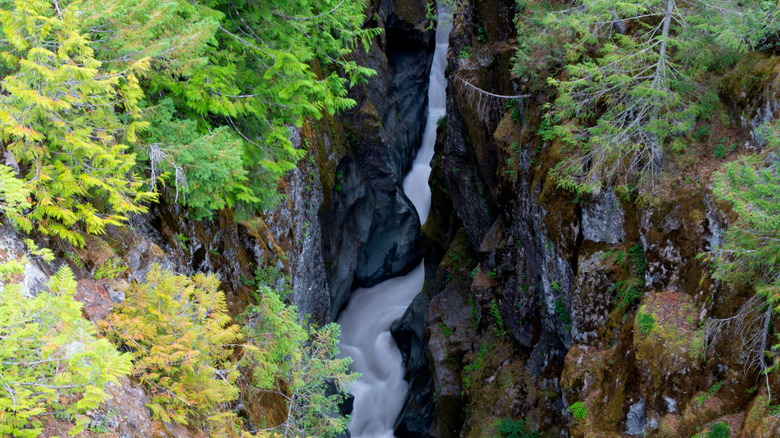
Washington's Box Canyon is miles away from the Grand Canyon in size, shape, and color. Yet Box Canyon manages to exude the same national park grandeur in miniature, thanks largely to its location within Mount Rainier National Park.
In contrast to the Grand Canyon, Mount Rainier's Box Canyon is a narrow slot canyon carved into deep, vertical granite cliffs by the Muddy Fork of the Cowlitz River. Though small, Box Canyon bears a lush covering of Pacific Northwest greenery. The Box Canyon Trail is also an easy Mount Rainier viewing route across a mere half-mile.
Owyhee Canyonlands
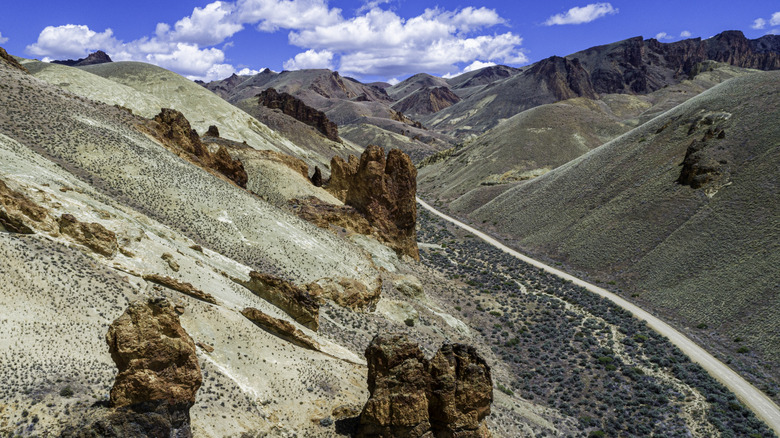
Even in Oregon, the Owyhee Canyonlands look like another planet. Though nicknamed "Oregon's Grand Canyon," this stunning display of geological artistry in southeastern Oregon (and Idaho's Owyhee Canyonlands Wilderness) is more of a complex of badlands, hoodoos, and colorful cliffs, resulting from the Owyhee River cutting through a volcanic landscape.
The Owyhee Canyonlands have colorful canyon walls, monolithic pillars of igneous rock, and the remnants of volcanic lava beds and cinder cones. Hikes like the Painted Canyon Loop, the Leslie Gulch Trail, and the Jordan Craters Trail showcase the Owyhee's strange blend of river canyons and volcanic geology.
Grand Coulee
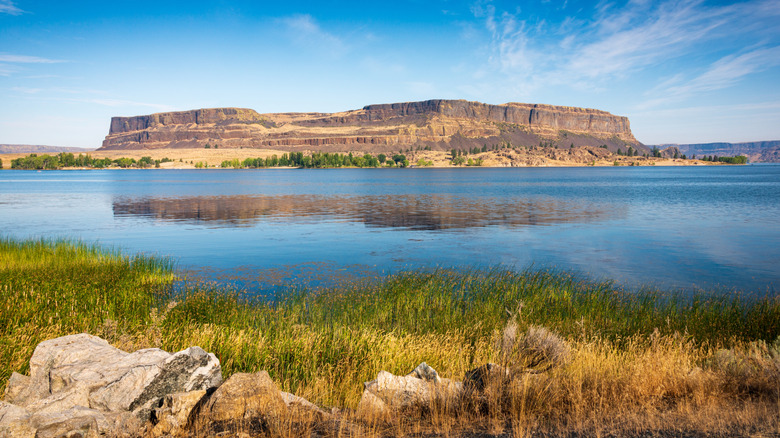
Washington's Grand Coulee is another lofty remnant of ancient Ice Age floods, when massive waterfalls and retreating glaciers cut through the region's basalt-rich bedrock and forged a type of large canyon called a "coulee." Today, the Grand Coulee's ancient riverbed features dramatic basalt cliffs and outdoor recreation in Eastern Washington's high desert grasslands.
The 50-mile-long Grand Coulee canyon features in Washington's Steamboat Rock State Park, where its geology peaks (literally) with a massive, 600-acre columnar basalt monolith known as "Steamboat Rock." The nearby Northrup Canyon offers a quieter canyon escape in a less-crowded corner of the Grand Coulee.
Crooked River Gorge
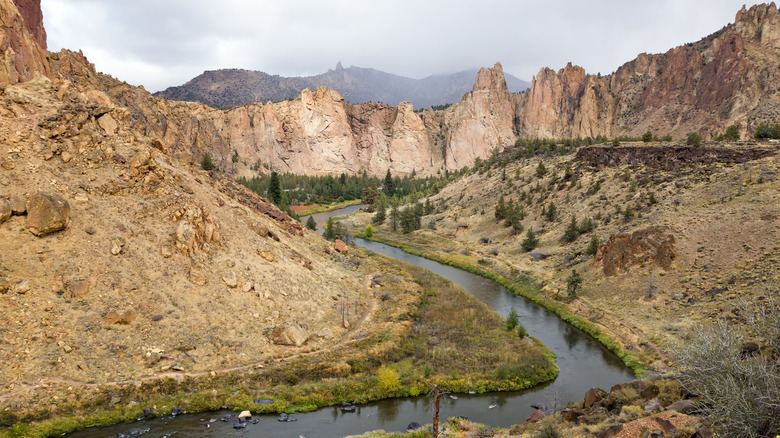
Central Oregon's Crooked River Gorge sports vertigo-inducing cliffs, complex volcanic formations, and river recreation rivaling even larger, national park-level canyons. Reaching 500 feet deep in places, the Crooked River Gorge formed from a complex interaction of the Crooked River and lava flows from the nearby Newberry Volcano.
The Crooked River Gorge is the centerpiece of Oregon's Smith Rock State Park, where the Crooked River has crafted particularly impressive riverside cliffs from preserved volcanic ash. Smith Rock State Park's canyon walls are so formidable that the park has become one of America's premier spots for rock climbing.
Columbia River Gorge
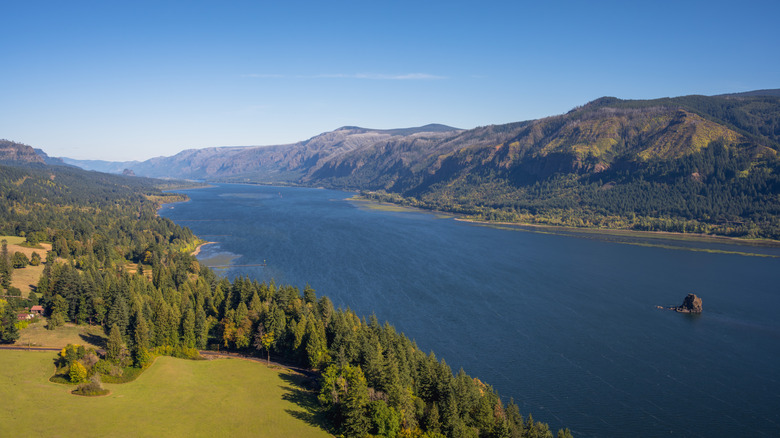
The Columbia River Gorge may be the "unofficially official" canyon of the Pacific Northwest. After all, the Columbia River and its stunning gorge form the border between Oregon and Washington. Spanning 80 miles and reaching depths of up to 4,000 feet, the Columbia River Gorge is likewise a tapestry of the Pacific Northwest's Cascade Mountains, temperate rainforests, and volcanic formations.
The Gorge's basalt cliffs mark the only spot where the towering Cascades split at sea level. The Columbia River Gorge National Scenic Area protects (among other things) a heavy concentration of waterfalls, including Oregon's world-famous Multnomah Falls.
Hells Canyon
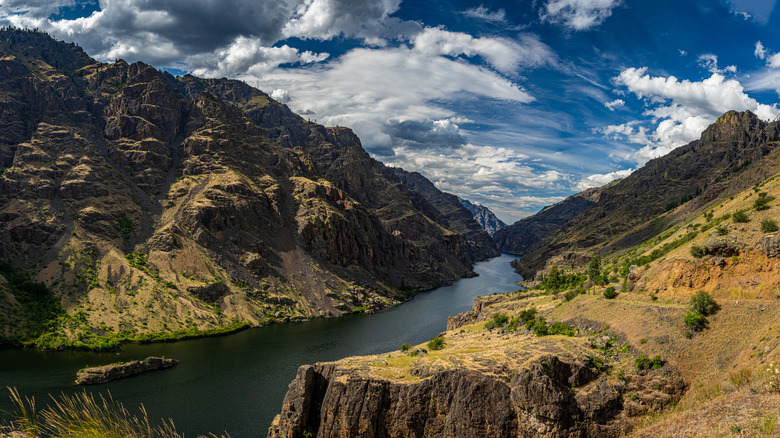
Hells Canyon is not nearly as well-known as the Columbia River Gorge, and its foreboding name is unlikely to help its reputation. However, this remote canyon between Oregon and Idaho is the deepest in North America, outranking even the preeminent Grand Canyon!
Hells Canyon formed when the Snake River cut through Oregon's volcanic bedrock and Idaho's Seven Devils Mountains. The result is a 125-mile canyon with rock walls ascending nearly 8,000 feet above the river. Hells Canyon National Recreation Area offers once-in-a-lifetime river rafting under a rocky skyline higher than any you'll see along the Colorado River.