
Be Cautious Driving Through This US City With The Most Documented Flock Cameras
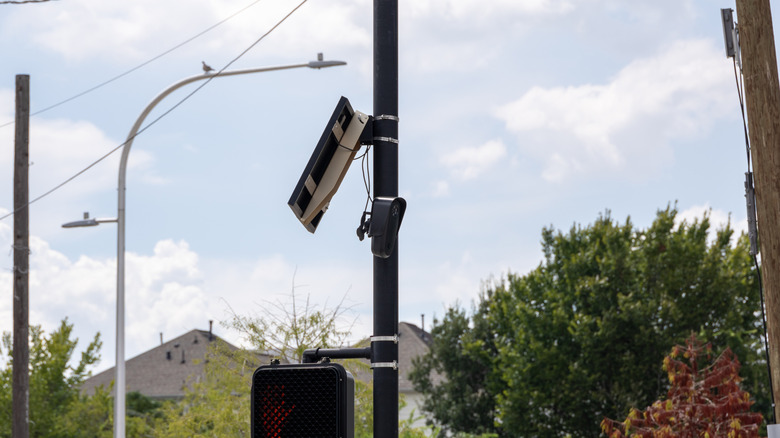
Across the country, a growing number of automated license plate readers (ALPRs) keep tabs on passing vehicles. The vast majority of these ALPRs are made by Flock Safety, and they've begun to fill city intersections, highway entrances, and neighborhood streets. Houston, however, has more documented Flock cameras than any other U.S. city, with over 2,250 of them as of this writing, according to the independent Finding Flock tracker. Flock states the cameras are intended to help police identify vehicles connected to crimes, but many people have expressed concerns about the cameras being misused and potentially infringing on people's privacy. You don't need to approach Houston's streets much differently than you might elsewhere, but the large presence of Flock cameras here is another reason to watch the road and assume the road is watching you.
Houston's Flock footprint gets tallied by Finding Flock through OpenStreetMap volunteers, who identify the cameras in the field, rather than using an official government inventory. As of this writing, volunteers reported almost four ALPRs per square mile, of which 92% are Flocks. In 2022, Houston approved a $6.39 million, five-year contract covering the cameras, installation, and data storage for the police, according to an ordinance. The ordinance says the cameras are intended mainly to detect unauthorized vehicles at city facilities, but also to give police another tool for investigating crimes and finding potentially suspicious vehicles. The broader Houston region has since become a particularly dense Flock network, with cameras also installed by HOAs and commercial businesses, according to The Houston Chronicle. For visitors, knowing how the system works can be useful, alongside the usual unwritten rules to know before visiting Houston.
What Houston's Flock cameras do
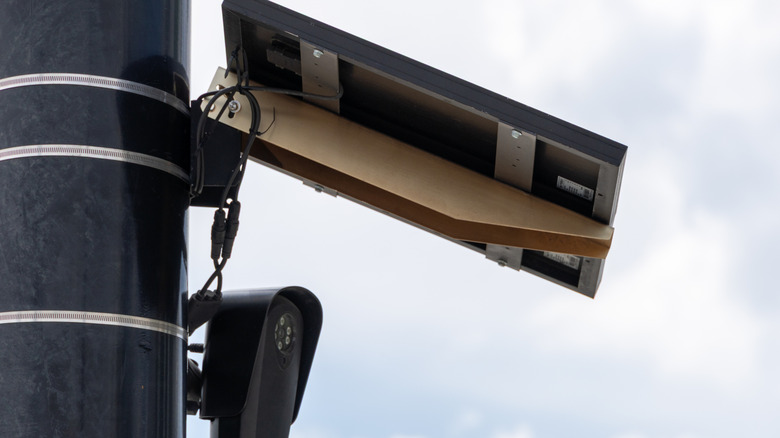
Flock cameras give police a searchable record of all the cars that pass their field of view, capturing license plates, along with details like a vehicle's make, model, color, and where and when it was located, per The Texas Tribune. You'll typically see them — small, vertical units, often with a solar panel — mounted up on street poles. Larry Boggus, a community relations officer with a Houston police department, told The Houston Chronicle that the cameras are effective enough to give officers a persons-of-interest list within 30 minutes of a reported crime.
Flock cameras photograph passing vehicles to help with criminal investigations, but a big part of the concern is what else happens to the collected data. One camera can become part of a larger system for tracing where a vehicle has been. So long as an agency is opted into the system, officers can search thousands of camera networks without a warrant, The Texas Tribune reports.
There are broader concerns about who can access the stored information and what prevents it from being used beyond crime-fighting. James Fletes, a resident of the Houston suburb Conroe (one of the fastest-growing cities in America), told The Houston Chronicle, "It's a scary, slippery slope [...] Anyone can get access to those cameras fairly easily if they want to." In Texas and elsewhere around the U.S., law-enforcement officers have faced investigations over alleged misuse of Flock data, including allegations involving stalking, per The Texas Tribune.
Driving carefully around Houston's Flock cameras
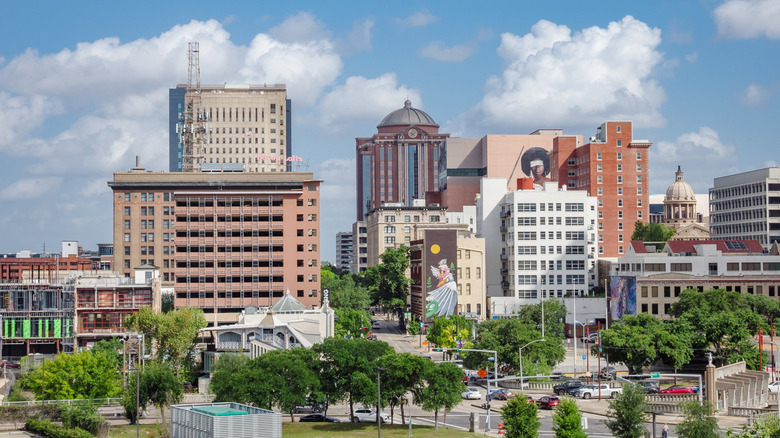
Travelers driving through Houston might have any number of qualms about the city's Flock cameras, whether it's concern they might be misused or simply not wanting their data collected. If you want to minimize your exposure while driving through the Houston metro area, you can find a route to your destination that avoids passing the cameras with a special route-planning app or web tool. FlockHopper and avoidFlock both offer route planners that help you avoid mapped ALPR cameras.
Despite the dense Flock camera footprint, some communities in the Houston metro area have already backed out of the system. Manvel, a Houston suburb with lots of amenities, voted unanimously to end its Flock contract in September 2026, per ABC13. As of this writing, Willis, at the northern edge of Houston, has shut off all its Flock cameras indefinitely, while the city council reviews whether to keep them (via The Houston). The presence of cameras in other parts of the city doesn't fundamentally change the experience of driving around for visitors. However, for good measure, you can use one of the aforementioned apps or Finding Flock's own map to see where cameras have been documented and where you might want to be especially vigilant.