
5 Pier Fishing Rules Tourists Break Within The First 10 Minutes
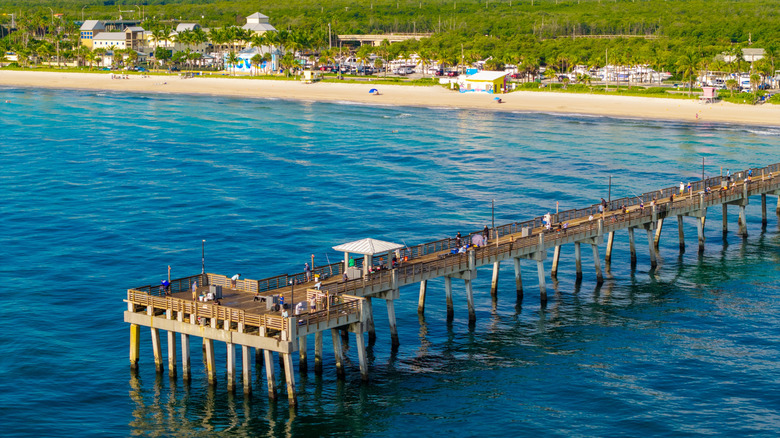
Fishing is a popular way to enjoy time on or near the water. In fact, a surprisingly large number of people plan their vacations around angling. Beyond that, many tourists who don't specifically build their getaway around fishing still try to spend at least some time casting a line. Regardless of the situation, anglers on vacation often gravitate toward scenic fishing piers. Unfortunately, almost without fail, visiting anglers end up breaking an assortment of pier fishing rules — from where and how they fish to what fish they keep.
Breaches in pier fishing etiquette are often the result of inexperienced anglers, such as tourists who only fish once or twice a year while on vacation and don't have a firm grasp of the unspoken rulebook. However, even seasoned fishermen can commit gaffes when fishing from a pier on vacation. For example, an experienced angler who has booked multiple fishing charters aboard different boats for their vacation may wander down to the local pier between their planned fishing trips. And while this fisher might be steeped in fishing knowledge and know exactly how to act when on a boat, they may be wholly unfamiliar with pier-fishing customs.
With that in mind, it's always a good idea to familiarize yourself with pier fishing etiquette and local rules before casting your line — regardless of how much angling experience you may or may not have. In many cases, common etiquette breaches will negatively impact your fellow anglers. However, some pier fishing rules should be followed even when you're the only one out enjoying the water.
Using too many rods and taking up too much space
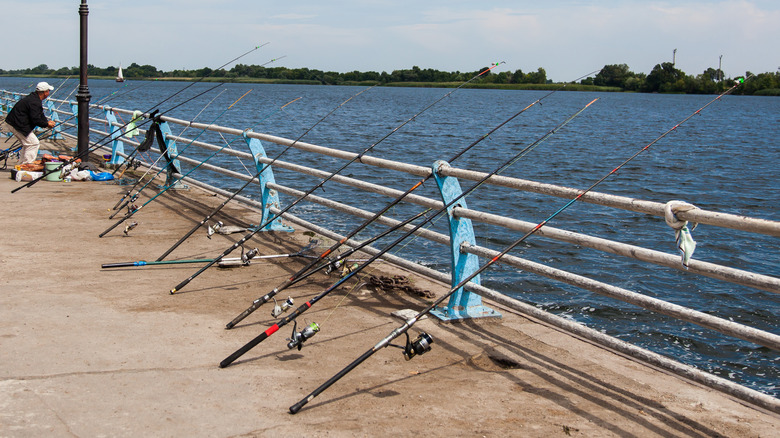
It's not uncommon for overzealous anglers to immediately deploy as many rods as possible in hopes of increasing their odds of success. Tourist fishers, anxious to try new waters and perhaps fishing for the first time in a long time, are guilty of this as well. However, this creates a multitude of issues on a fishing pier and is a frequent topic of discussion among anglers on Reddit and other forums.
The first issue with using multiple rods is that you may be breaking an actual, written rule — possibly even the law. Many private piers limit the number of rods each customer can utilize. In some states, such as California, the number of rods and acceptable gear is mandated by law. In California, that number is two rods per fisherman, whether fishing from a small municipal dock or Oceanside Pier, one of the West Coast's longest wooden piers.
Even if there are no written rules or laws limiting the number of rods allowed on a pier, anglers should keep it to a minimum. Placing a million rods along the rail takes up a lot of space, limiting other anglers' ability to reach the water. Keeping your footprint to a minimum actually pertains to all your gear, not just rods. Space on piers is limited, even if you're fishing on the longest fishing pier in the country. So, common courtesy calls for keeping your gear in a small area, preferably away from the rail so other anglers can move to follow hooked fish if necessary.
Crossing casting lanes
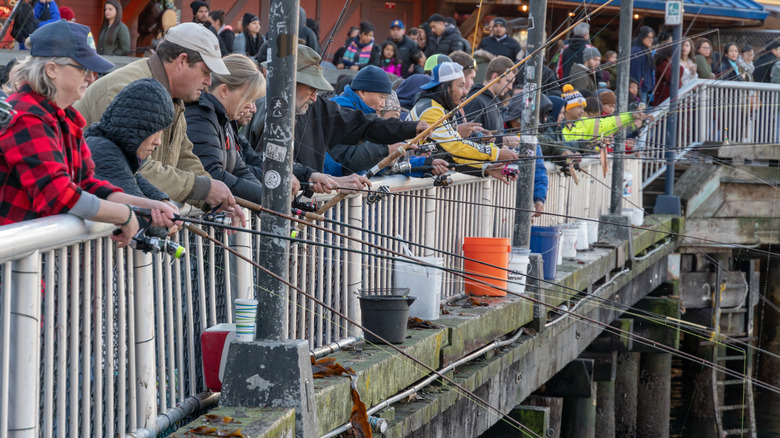
When anglers walk out onto a fishing pier, they find themselves surrounded by water. Whether it be Minnesota's longest fishing pier on Dower Lake or one of the many piers in the "Fishing Capital of Texas," anglers often feel that this abundance of real estate permits them to start casting in any direction. But when fishing on a pier with other occupants, that's not the case. A good practice while pier fishing is to imagine there are casting lanes extending in front of and slightly to either side of each fisherman. Not staying in your casting lane can cause issues for you and the other anglers along the pier.
Crossing casting lanes can result in tangled lines between fishers. If the two anglers with ensnared lines are far away from each other, it can cause chaos for everyone between them. Additionally, if someone is fighting a fish when the lines get crossed, it can ultimately lead to that fish being lost. To avoid this issue, cast your line straight ahead (in your imaginary casting lane) or drop it directly below you, underneath the pier. If your casting skills aren't good enough to do this, practice before you head out.
Staying in your lane takes discipline, particularly if you see a school of active bait or feeding fish along another section of the pier. The temptation may be strong to launch a cast in that direction, even if it means crossing casting lanes. But the proper thing to do is wait until the activity moves into your area. If another angler is hooked up to a big fish nearby, it's best to hold off casting until that fish is landed.
Using rails to cut bait or fillet fish
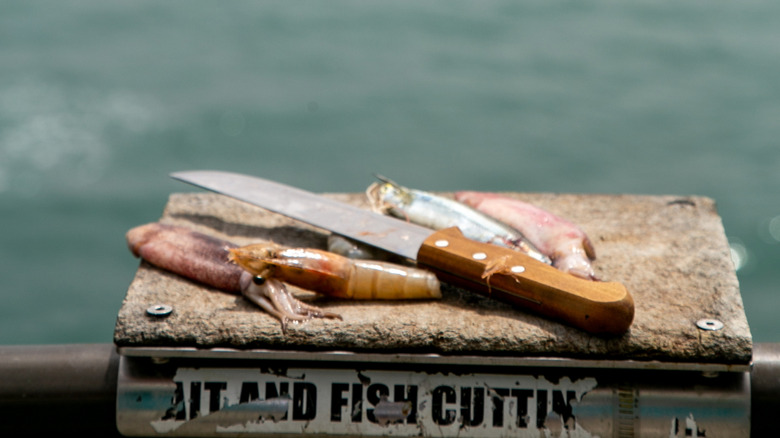
Many pier fishermen use bait or chum that needs to be cut before being cast out to sea. That alone is not a problem. However, cutting it on the wrong surface is a serious problem. To that end, one of the first things many tourist fishers do when they arrive at a fishing pier is begin cutting their bait atop the flat surface of the pier railing. This is a definite no-no, as it leaves a slimy, stinky mess and attracts a variety of pests, including seagulls. The same goes for cleaning your catch.
To avoid this issue, you should use designated cutting stations on the fishing pier. Depending on the pier, these may be located near the entrance or at various points along its length. If you are unsure whether a pier has a dedicated bait board or cleaning station, bring a cutting board or block of wood with you as a backup. Any unused bait or chum should be discarded in the water, not in the trash containers (though be sure to check the local regulations).
When it comes to cleaning or filleting fish, this should be done at the designated fish cleaning station at the end of your fishing trip. Depending on where you are fishing, this can be a legal requirement, as well as a cleanliness issue — make sure you read up on the rules for your specific destination so you're not on the hook for a hefty fine.
Scattering trash
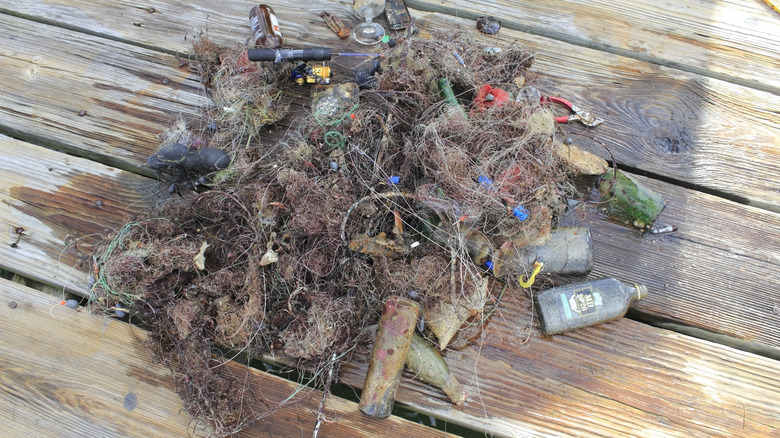
Just about everyone who adventures outdoors is familiar with Leave No Trace. And these same principles apply to fishing piers as well. Unfortunately, far too often, as soon as tourist fishers get onto a fishing pier, they begin leaving a trail of trash that lingers long after they are gone. This can be avoided by taking a bit of extra time, using trash and line receptacles on the pier, and packing out whatever you bring in.
Littering at a pier comes in all shapes and sizes, but it often begins within the first 10 minutes of a tourist's arrival. Why? Anglers anxious to make that first cast begin ripping open packages of hooks, lures, and bait the moment they find a good spot along the pier. This trash needs to be disposed of properly and immediately, lest it get blown around the pier or, worse, into the water.
Wrappers, used fishing line, and other trash should be promptly discarded. If you don't want to leave your gear to dash to the trash can each time you need to throw something away, bring a trash bag with you, secure it to your gear, and place items in it as needed. At the end of the night, you can throw the entire bag in the pier's trash can. This is a simple way to ensure no trash is left behind or ends up in the water.
Not having a fishing license or knowing local regulations

Recreational fishing laws are set by each state. As a result, regulations and license requirements vary drastically from one location to the next. This means it's incredibly important to do your research before packing your fishing gear — otherwise, you may inadvertently break one or more laws before you get your first nibble.
First and foremost, you need to know if a fishing license is required. Many states offer affordable, non-resident licenses (also known as "temporary licenses") that let tourists fish while in town without needing to purchase a full, year-round license. Almost every state requires anglers above a certain age (typically 16 or 18) to have a license, but there are exceptions. For example, in Texas, the Free Fishing in State Parks initiave allows everyone to fish without a license in a state park — so long as they do so from a pier or the shore. And according to the State of California's Department of Fish and Wildlife, anglers do not need a fishing license when fishing from a public pier.
Tourists should keep in mind that even when a fishing license is not required, all other regulations must be observed. That means you still have to follow the state's bag and length limits, as well as all other pertinent laws. To that end, it's critical to accurately identify any fish you intend to keep. If you are unsure of the species (which is not uncommon when fishing new waters) or the size limits, the fish should be released.