
Forget Red Rock Canyon, visit California's Less-Crowded Historic Park With A Uniquely Vibrant Culture
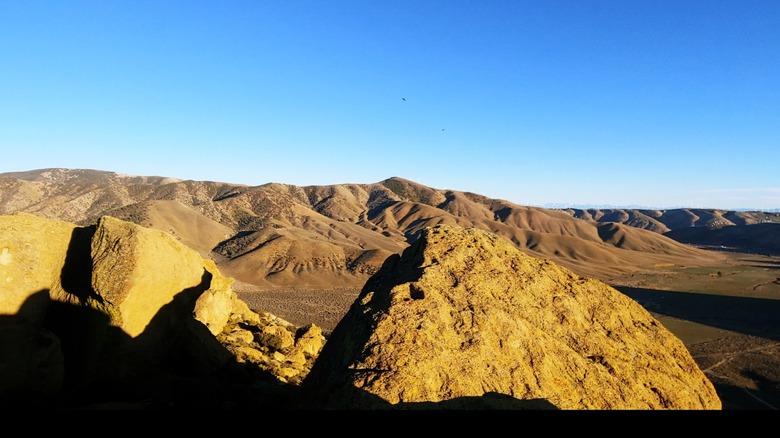
Featuring more than 55 designated state historic parks, the California State Park System is a treasure trove for history buffs or anyone with an appreciation for the human experience across time. And while Nevada's Red Rock Canyon National Conservation Area, with its rust-colored cliffs and ancient petroglyphs, attracts more than 3 million visitors every year, California is home to a lesser-known park with an equally vibrant yet rarely revisited history. Enter Tomo-Kahni State Historic Park, a 560-acre preserve that hides a former Kawaiisu village and is only accessible by guided tour.
Established in 1993, the park lies 20 miles outside Mojave, on the arid highway between Bakersfield and Barstow.
From the road, the landscape may look like any other stretch of seemingly inhospitable land in the Tehachapi Mountains, but the region was home to the Kawaiisu people for thousands of years. Translating to "winter house" in the Kawaiisu language, Tomo-Kahni served as a refuge during the cold months and a place for people to gather.
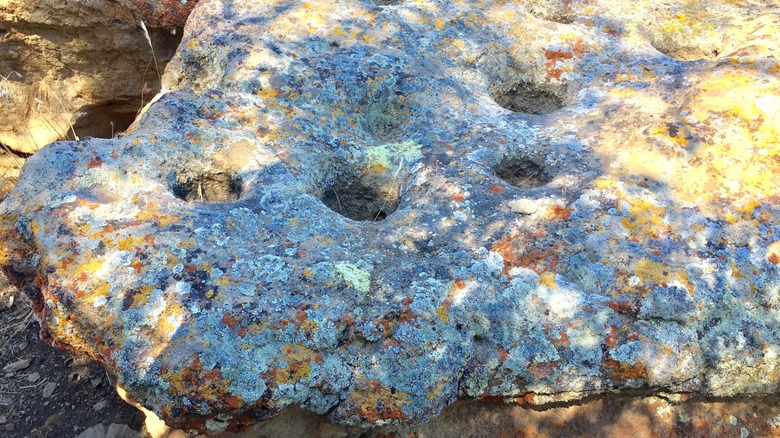
Although the Kawaiisu's traditional way of life changed over time, this historic park preserves a window into the past that relatively few visitors get to witness. Today, no physical structures remain, but the sandstone hides bedrock mortars used to pulverize acorns and buckeyes, mainstays of the Kawaiisu diet. Visitors may also encounter petroglyphs, including images of bighorn sheep, and boulders once used to support shelters made of willow and juniper branches.
How to visit Tomo-Kahni State Historic Park
Unlike Red Rock Canyon or most other parks, Tomo-Kahni State Historic Park isn't designed for casual visits or road trip detours.You won't find networks of accessible trails, interpretive signage, or developed visitor facilities. Instead, a bronze plaque marking the site as California Historical Landmark No. 1054 stands near the entrance, and locked gates make it clear that access is restricted outside guided tours. The only way the public can visit the park is by signing up in advance for a State Park docent-led tour via Reserve California — and the tours are few and far between.
Costing $20 per person, the tours usually fall on several weekends throughout the fall and spring. For instance, in 2026, the park offered 12 tours spread across Saturdays in April, May, September, and October. The booking period starts on January 1 of each year, and it's a good idea to grab a spot early because each tour is capped at 15 people. As Tomo-Kahni doesn't have its own office, you can contact Fort Tejon State Historical Park, an abandoned military fort between Los Angeles and Bakersfield if you have any questions.
If you do manage to secure a tour, you can count yourself among the few who have visited one of California's secret historic state parks. California State Parks' most recent statistical report puts annual visitation at fewer than 1,000 people, while the park has under 20 Google Reviews and a 3.7-star rating.
Things to know before visiting Tomo-Kahni State Historic Park
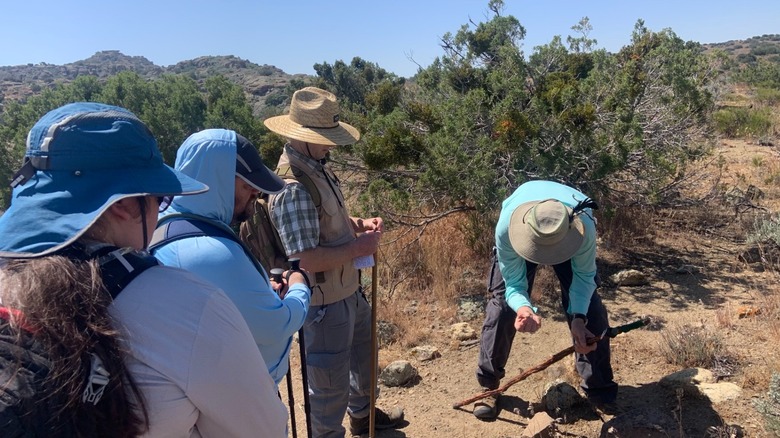
Obviously, you need to be part of the state-sponsored tour to visit Tomo-Kahni State Historic Park, but there are a few more things that will help you make the most of your visit. First, reading up about the Kawaiisu people and the site itself will provide a base of knowledge before you arrive. "Kawaiisu Culture" from California State Parks is a great resource that won't take too much time to go over. Before starting the tour, visitors meet at the Tehachapi Museum, about 12 miles from the park, for an orientation.
After the orientation, visitors are encouraged to carpool to the park, where the 3-mile hike begins at 4,000 feet. The trail includes an 800-foot elevation gain, and visitors should plan for about 4 hours for the entire experience. The park makes it clear that the hike isn't for beginners and requires a degree of physical fitness. "Parts of the trail are on uneven terrain. Participants should have the physical ability and stamina to make the hike as everyone must stay together," per the state park.
Because much of the hike is exposed, visitors should bring sun protection, including sunscreen and a hat. The park also urges hikers to dress in layers, as the weather can change quickly. For another off-the-beaten-path preserve with Kawaiisu roots, visit the paradise of desert sandstone cliffs at Red Rock Canyon State Park — not to be confused with the conservation area in Nevada.