
Maryland's Peninsular State Park Is Packed With History, Nature Views, And A Scenic Trail
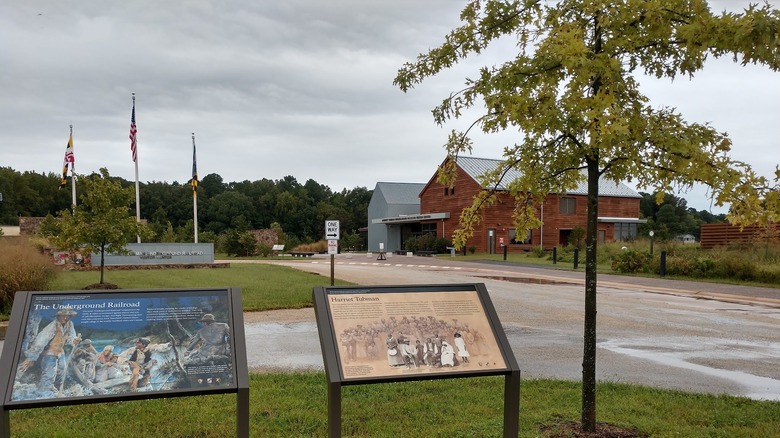
The Chesapeake Bay is the United States' largest estuary, providing a home to more than 3,600 plant and animal species. The region is also connected to the history of slavery and the Underground Railroad, including the life and legacy of Harriet Tubman, who was born and raised on Maryland's Eastern Shore. This combination of natural beauty and history makes the Chesapeake Bay region popular for visitors with a range of interests, and you can explore both of those aspects of the area at Maryland's Harriet Tubman Underground Railroad State Park.
The Harriet Tubman Underground Railroad State Park is located on the Delmarva Peninsula that forms the eastern border of Chesapeake Bay. It's about 5 miles south of Church Creek in Dorchester County, a rural county that was first settled by English colonists in the 17th century. This gives the area a lot of history even beyond its status as the birthplace of Harriet Tubman. With a population of around 33,000 people across the entire county, along with natural spaces like the Blackwater National Wildlife Refuge and Taylor's Island Wildlife Management Area, Dorchester County is a place visitors can escape the bustle and crowds of Maryland's urban hubs. Though they're not too far away — Harriet Tubman Underground Railroad State Park is about a two-hour drive from Washington, D.C., or Baltimore, or about three hours south of Philadelphia, so it's in easy reach of several East Coast cities. While it's a relatively small park and may not be worth taking an extended drive to see on its own, the variety of natural and historic sites around it makes the Harriet Tubman Underground Railroad State Park an excellent addition to a broader tour of the Delmarva Peninsula.
Celebrating Harriet Tubman's legacy
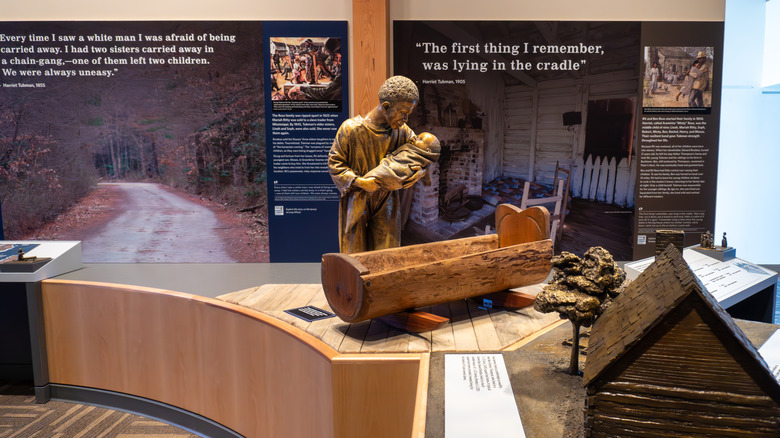
Harriet Tubman was born in 1822, not far from where the state park named for her is located today. In fact, you can visit the site of the farm where she spent her early years along Greenbrier Road, about 5 miles east of the state park, where a historical marker and interpretive signs give visitors more insight into her life and legacy. You can learn more at the state park's visitor center, where you'll find multimedia exhibits that shed more light on Tubman's childhood in slavery, her escape to Philadelphia in her late 20s, and her work guiding other enslaved people to freedom via the Underground Railroad. Along with these permanent exhibits, the Visitor Center has a temporary exhibit space that is used for rotating displays of artwork inspired by Tubman's life or the legacy of the Underground Railroad.
Harriet Tubman Underground Railroad State Park is open on Wednesdays through Sundays all year round, and it's free to enter the park and tour the Visitor Center exhibits. For those who want to explore further, the park is along the Harriet Tubman Underground Railroad Byway, a 125-mile scenic drive from Dorchester County to Philadelphia, Pennsylvania, that goes past over 30 sites related to the famed abolitionist. Several of these sites are within a quick drive of the state park. This includes a cluster in the historic Eastern Shore city of Cambridge, about 10 miles north of the park, where you'll find landmarks like the Harriet Tubman Museum and the Beacon of Hope statue. You can download a free audio guide to the sites along the byway if you want more context while you visit them.
Nature views in the Legacy Garden
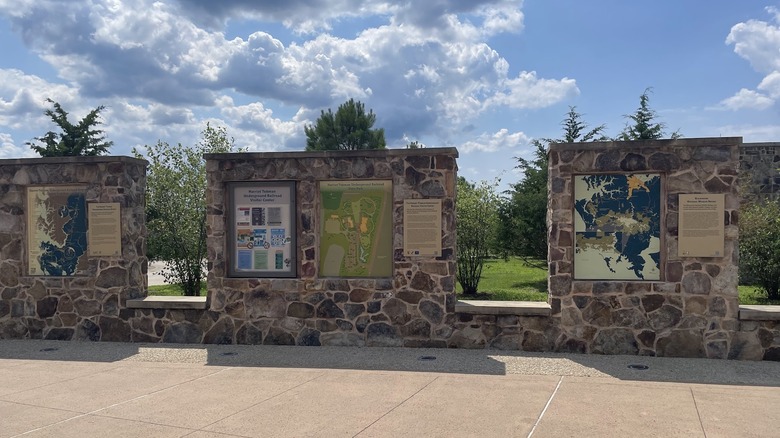
Harriet Tubman Underground Railroad State Park is just north of the Blackwater National Wildlife Refuge, often referred to as "the Everglades of the North" for its wetlands and unique wildlife. While the 17-acre state park is small compared to the more than 20,000 acres of the Blackwater refuge, it still has nature to explore. Adjacent to the Visitor Center is the Legacy Garden, which is ringed by a 0.75-mile trail. This gravel loop trail goes through woods and meadows of native plants where you can see butterflies pollinating the flowers. The path itself is flat and easy to navigate, with a peaceful, secluded atmosphere that fits its intent as a space for quiet reflection.
The park's open spaces are a mix of mowed lawns and untended grass, harkening back to the landscapes Tubman would have passed through when guiding fellow freed slaves north. This vegetation also provides a home for many species of birds, including colorful songbirds like Eastern bluebirds and American goldfinches that can be spotted year-round, according to eBird. The garden is especially beautiful when the wildflowers bloom in the spring and during leaf-changing season in the fall. Summer is also a beautiful season, though you'll want to come prepared with bug spray. Since part of the area is marshland, it can get quite buggy on hot days.
Most visitors spend around 1-2 hours at the park. If you want to make a day of it or take a longer hike, three of the Blackwater Refuge's trails (The Woods Trail, Marsh Edge Trail, and Key Wallace Trail) are just a few miles to the east. There is more nature to enjoy on the Delmarva Peninsula, too, like the dunes, beaches, and wild horses of Assateague Island off the peninsula's Atlantic shore, about 90 minutes to the east.