
Be Cautious Driving Through This US City Where Speed Cameras Issue A Ticket Every 48 Seconds
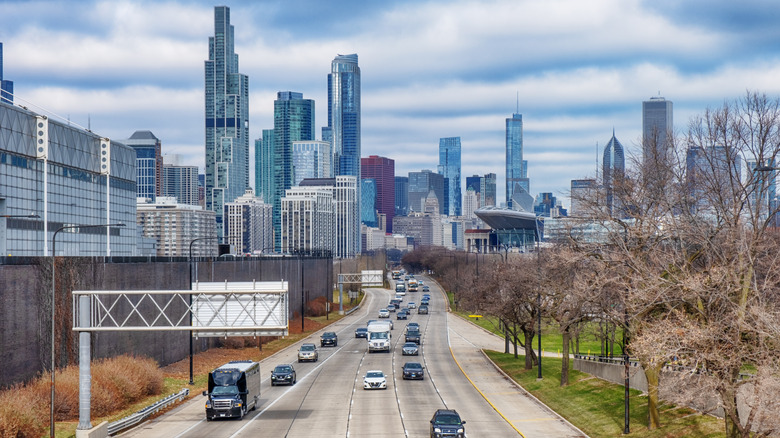
Although it's a form of reckless driving, the need for speed is arguably a universal one. Sometimes, it's driven by anxiety, frustration, and pressure to get to where you're going. Other times, it's a pleasurable sensation of freedom and exhilaration, perhaps with a smidge of the Freudian self-destructive death drive. At all times, it's a safety risk, which Chicago has tackled head-on with a controversial network of automated speed cameras.
The Windy City has one of the country's biggest and most robust automated traffic enforcement systems of both red-light and speed cameras, the latter of which were introduced in 2013. A 2022 University of Illinois Chicago report found that from 2017-2019, these speed cameras cut down accidents by 12%. With 50 new speed cameras installed in 2025, Chicago is now issuing a speeding ticket every 48 seconds (26% more than the year before), according to Illinois Policy. At this time, over 200 cameras populate the city, including in some of the most vibrant neighborhoods, like Lincoln Park. These cameras are working faster than ever to flag drivers going 6+ miles over the speed limit during posted times. The fine depends on the speed: 6-10 miles above the limit is a $35 fee, while 11+ miles is $100.
Mayor Brandon Johnson implemented this new spate of cameras, despite previously calling them a form of "regressive taxation" that needed to be phased out in his 2023 campaign. Johnson has changed his tune since then, using these cameras and the tens of millions of dollars they generate to balance the city budget and pay for Chicago Police Department positions that he had tried to cut. So, where will you find automated speeding cameras in Chicago, and what happens if you get a ticket?
The locations of automated speeding cameras in Chicago
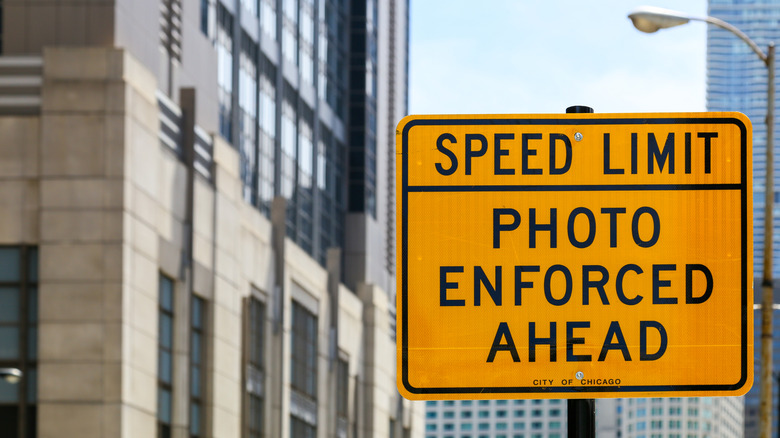
A City of Chicago map of speed camera locations shows they're all over. Legally, cameras must be in "children's safety zones," according to CBS News, which is defined as being within one-eighth mile of a school or a park. City officials argue that speed cameras increase safety, but many counter that they're about fixing budget deficits — and unfairly targeting minorities and the working class to do so. Alternatively, some say that infrastructure changes like bike lanes and speed bumps effectively reduce speed without costing vulnerable residents.
Some have noted that cameras are in places that aren't really populated by kids. CBS News found that some areas with these cameras don't have high numbers of speeding-related fatalities, which calls into question the role of safety that they're supposed to serve. The aforementioned University of Illinois Chicago report concluded that while there was some safety improvement from automated speed cameras, there was "little relationship between the number of tickets issued and the safety impact of cameras."
This report found the cameras to be most active in Black and Latinx-Hispanic neighborhoods, where people may not be able to pay off the tickets immediately, leading to late fees and forced removal of vehicles, which generates even more money for Chicago. It's one example of how automated tickets can disproportionally affect working class and lower income folks. You'll find highly active cameras on the Southeast and Southwest Sides, with the North Side having the largest number of cameras (via Illinois Policy). Neighborhoods like the lively and historic Beverly, North Park, Ashmore Park, Washington Park, Jefferson Park, and Edgewater are all hotbeds for speed cameras. Compared to white drivers, Black drivers in Chicago get 2.5 times as many tickets, while Hispanic drivers get two times as many, according to Block Club Chicago.
What happens if you get an automated speeding ticket in Chicago?
In Chicago, the default speed limit is 30 mph, unless otherwise posted. To avoid getting a ticket, reduce the distractions or triggers that may cause you to put the pedal to the metal. Consider turning on the voice of your navigation system so you don't have to look at it, and maybe install an app that will tell you when a speed zone is coming up soon. You can also save those rousing 2000s road trip flop songs for an open road outside the city. After all, Sweet James found that songs with 120+ BPM can trigger risky driving behavior like speeding, so skip the Bon Jovi and turn up the Lana Del Rey instead.
There's no limit to how many speeding tickets you can get, and they can be issued to rental cars, too. These are civil penalties, not moving violations, so you won't get points on your license. When a new camera is installed, you have a 30-day grace period with a warning and no fine. If you get a ticket after that, you'll have 21 days to either pay the fine or contest it. Late payments will result in a penalty that doubles the fine.
In 2021, thousands were fined in Chicago for speeding in areas where the signs were misprinted (via CBS News). So, if a camera snaps you, double check the posted signs. See if they're accurate, and note that if they're blocked or unreadable, that could be enough to contest a ticket. Check the photo and video evidence provided on your ticket to see if your license plate and car make and model are all visible. If the car is marked as "other" when it's clear in the visual evidence, that could help you contest it, since the city has to properly identify the vehicle.