
'Minnesota's Last True Wilderness' Is An Untamed Recreation Area With Camping, Swimming, And Scenic Trails
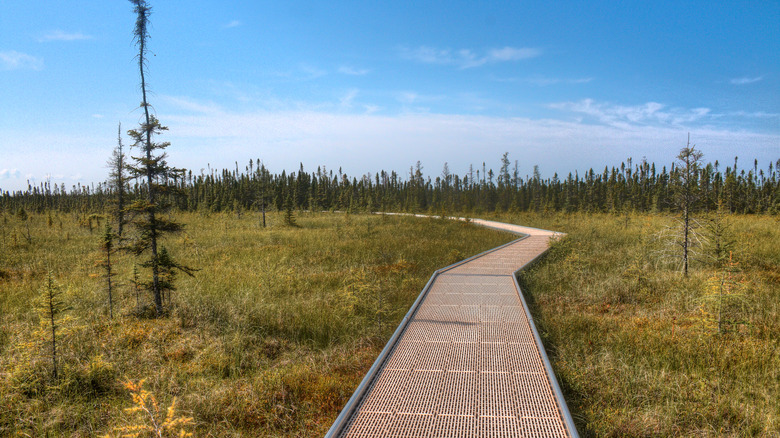
Unless you're talking about harvesting cranberries, the concept of a "bog" may not seem like the most inviting outdoor destination. As such, Minnesota's Big Bog State Recreation Area is unlikely to stand out in a state with spectacular outdoor phenomena like Lake Superior's western shores and the vast network of lakes and forests in Voyageurs National Park. Still, Big Bog State Recreation Area deserves recognition as a true natural wonder, in both Minnesota and the nation at large. While the word "bog" may, in a sense, "bog" prospective visitors down, the truth is that Big Bog State Recreation Area is a truly pristine and untamed expanse of forests, lakes, and (yes) bogs that is commonly referred to as "Minnesota's last true wilderness."
Big Bog's pristine nature is largely due to its remote location. Situated in the open forests of northern Minnesota, Big Bog is hours away from Minneapolis and St. Paul. The closest city is the famously cold International Falls along the U.S.-Canada border, which sits about an hour and a half north. Beyond untamed north Minnesota wilderness, the "big" in Big Bog's name is not a misnomer. The park's bog system is literally record-breaking in size, and supports a complex ecosystem that's as picturesque as it is essential. For the price of the park's $7 one-day entry permit, visitors can access Big Bog's scenic trails and recreational amenities, including a sandy swimming beach. And if you're looking to stay overnight, Big Bog State Recreation Area's campsites offer a perfect blend of "rustic" and "comfortable" amidst a wild Minnesota landscape.
The lesser-known wetlands of the Land of 10,000 Lakes
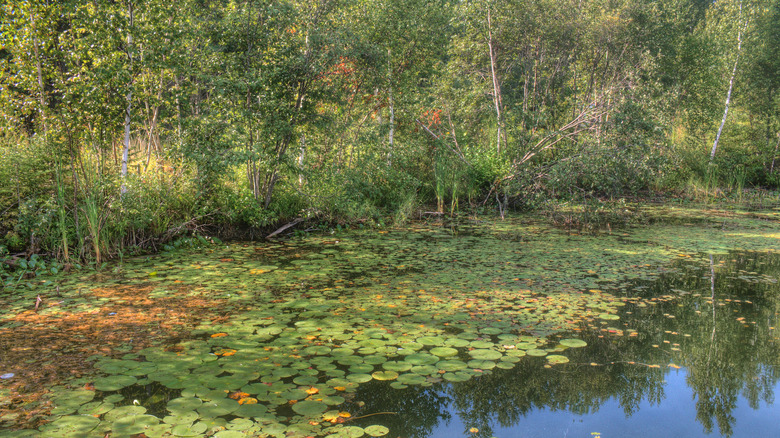
As America's "Land of 10,000 Lakes," Minnesota has enough freshwater escapes to make up for being so far from the ocean, including hidden lakeside artist sanctuaries at Mallard Island. The Big Bog of Big Bog State Recreation Area lacks the shimmering surface of a pure lake, but it makes up for it with sheer ecological depth. Covering 500 square miles, Minnesota's Big Bog is the largest peat bog in the contiguous United States. Peat bogs are more interesting than the name may suggest. "Peat" is soil made of decaying plant material such as moss built up over thousands of years, and "peat bogs" are wetlands formed from rainwater filling this peat-heavy terrain. Big Bog's size places it in the same category as Scotland's stunning Flow Country bog (the largest peat bog in Europe).
Big Bog is also notable for being an example of a rare "raised bog" landscape, which draws from rainwater like a giant sponge to rise higher than the ground around it. The Big Bog State Recreation Area is divided into a northern and a southern unit. Much of the actual peat bog is located in the northern unit, which maintains a more "wild" character. Meanwhile, the southern unit contains the park's visitor center, campground, a 100-foot observation tower, and shorelines along Minnesota's Upper Red Lake. Adding to Big Bog's less peat-heavy water features, the southern unit also provides access to the small, calm, and serene Tamarac River. The entire complex of wetlands and ecosystems brings an abundance of wildlife, including black bears, wolves, moose, foxes, and more than 300 bird species.
Hiking, swimming, and camping at Big Bog State Recreation Area
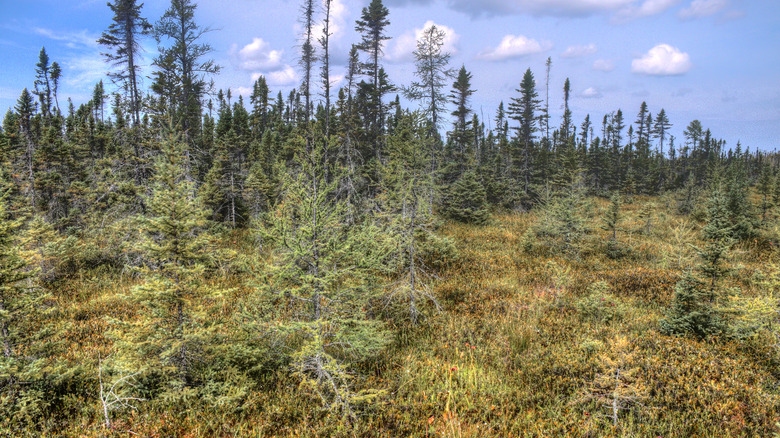
A peat bog may not sound like the most welcoming place to hike, but Big Bog State Recreation Area actually has about 4.5 miles of scenic trails. A 1-mile-long accessible boardwalk covers the bog's most biodiverse areas in the less-developed northern unit. As the boardwalk is elevated above the ground, hikers can walk over the bog without getting their feet wet. The boardwalk trail offers impressive views of the bog's spruce forests, with many up-close shots of carnivorous plants, rare orchids, and other unique bog flora. The boardwalk trail also comes with a viewing platform for landscape shots and birdwatching, plus benches for well-earned breaks. A longer, 2.3-mile hike combines the boardwalk with the Ludlow Pond Trail for additional views of the bog.
If Big Bog's northern unit is for wilderness immersion hikes, the southern unit has most of the park's recreational facilities. The most surprising of these may be Big Bog's sandy swimming beach. While not quite reaching the scope and grandeur of Duluth's hidden Lake Superior beach gem at Park Point, Big Bog's swimming beach does, thankfully, eschew the peaty bog for the much clearer waters of Upper Red Lake. Though Red Lake is the largest inland lake in Minnesota, the Upper Red Lake area is mostly shallow with a soft sandy bottom, making it the perfect place for small children and novice swimmers to relax and wade in the warm water.
Big Bog State Recreation Area's overnight camping facilities feature 31 individual campsites in the southern unit, including 26 sites with electric hookups. The camping area is located along the Tamarac River, with convenient access to boat docks, swimming beach, and picnic areas. The southern unit also features six reservable camper cabins equipped with electricity and heating.