
5 Caribbean Restaurant Rules American Tourists Break Within The First 10 Minutes

A Caribbean vacation is generally considered a beachgoer's dream come true, with its sandy beaches, startlingly teal or turquoise waters, and luxurious all-inclusive resorts. However, its beautiful scenery isn't the Caribbean's only attraction. It's also known for some of the world's most flavorful food, with a side of rich cultural heritage and history. As a result, many Americans heading to the Caribbean are as excited about the food as the beaches.
However, Caribbean restaurants (in the U.S. and in the Caribbean) don't operate on the same principles as American ones. The food and the history associated with it are often considered more important than anything else the restaurant offers, including ambience and customer service. In contrast, American establishments typically place customer service at the highest priority, coming from a culture where a friendly server and quick service are sometimes considered even more important than the food itself. Thus, Americans walking into a Caribbean restaurant for the first time may find themselves caught off guard by what they perceive as "bad service" – which the restaurant and its usual clientele simply consider standard operating procedure.
On top of that, different islands and types of restaurants in the Caribbean may have different norms around dress codes, tipping policy, and food customizations. Navigating these different norms can be tough for those who haven't been there before. So, after looking through articles and discussions on Reddit and social media, we've created this list of five rules Americans tend to run afoul of in Caribbean restaurants. Keep this list handy for your next Caribbean trip so you know what to expect!
The polite and friendly customer service trap
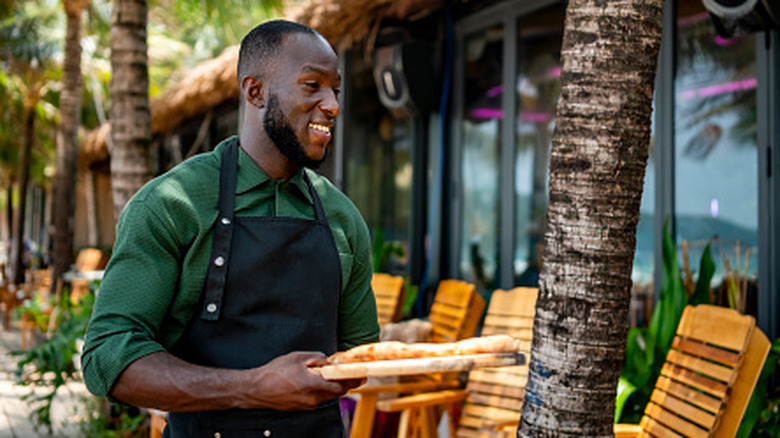
In American restaurants, servers, cashiers, and even chefs are expected to adhere to standard customer service expectations. They're not supposed to argue with the customer, they can't be rude or blunt, and they have to keep a polite and friendly tone when speaking to the customer at all times. However, Caribbean restaurants do not follow the same policy.
While different islands and nations have different customer service norms, the consensus about Caribbean restaurants generally points towards what most Americans would consider "substandard" customer service. Restaurant servers, hosts, and chefs can come across as brusque or even rude. You won't be greeted with a peppy "How may I help you?" (except in certain high-end restaurants), and the server is unlikely to check in regularly to make sure everything is okay. There's less tolerance for what locals might consider "silly" questions, and one-word, short answers to questions are quite common. A blunt "Wha yuh want?" is the standard way the average Jamaican restaurant server might ask for your order, and is, in fact, a sign that the food will be incredible. This applies to authentic Caribbean restaurants in other parts of the world too, with people on a Reddit thread agreeing that if the local Jamaican restaurant workers are rude to you, the food is going to be delicious.
Most small Caribbean restaurants seem to place more emphasis on providing delicious food and do not care about customer service beyond that. Some places, like Aruba, are generally known for having "friendlier" service. High-end, fine-dining restaurants in the absolute best Caribbean beach resorts may tailor their customer service to American expectations, but don't expect that from the hole-in-the-wall hidden gem restaurant you heard about from a local.
Island Time is real, so plan around it

You go to a restaurant, sit at your table, and place your order. Then, 45 minutes go by — no food comes out. You wait some more; still nothing. Finally, after what seems like forever, the server brings your food out, sets it on the table, and leaves without a word of apology for the delay. This unhurried, lackadaisical attitude towards prompt customer service is fairly typical of restaurants in the Caribbean.
Most places in the Caribbean operate on the unwritten rule of "Island Time," which prioritizes a slow, unhurried way of approaching most situations. Caribbean cultures generally consider meals a time for relaxing and spending time with your loved ones. There's also a cultural emphasis on taking the time to enjoy your food. Many traditional dishes — like oxtail soup and Jamaican jerk chicken — may require hours of cooking, which could also delay service, as Caribbean restaurants will almost always prioritize the taste of the dish over how fast they can get it in front of the customer.
Restaurants will typically take their time to seat you, serve you, or address specific requests. One Reddit post calls out several Barbados restaurants for their 2-hour-or-more wait time, although several replies say that such a long wait time is abnormal even in a place where "island time" is the norm. In general, you can expect much longer wait times at Caribbean restaurants than you might be used to in a standard American diner. If you're traveling with kids or need to eat at specific times for medical reasons, assume it'll take a while to get your food and arrive much earlier than you actually expect to eat.
Rules around tipping differ from island to island
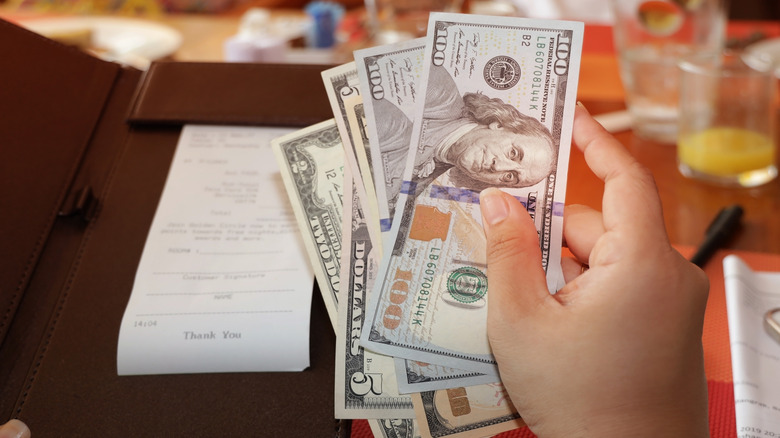
Tipping is such an ingrained habit for most Americans that it almost becomes a subconscious act to add 15% or 20% more to the figure on the bill. Tips are rarely included in the bill at American restaurants, and customers are usually prompted to decide how much they want to tip. However, while tipping is expected in the Caribbean, restaurants on some islands will add it to the bill automatically.
A 10% to 15% tip is expected in most Caribbean restaurants — just like their American counterparts — but they may not ask you for your preference. Many restaurants will calculate a standard tip themselves and just add it to the bill, where it generally falls under "tip" or "service charge." If a service charge isn't included on the bill, you're expected to add a small tip in cash, although it isn't mandatory. Where most American tourists mess up is in double-tipping — adding a large tip without realizing that it's already included in the total presented on your bill.
According to Travel Noire, different islands have different customs regarding whether tips are included in the bill or not. In restaurants in some places, like Trinidad and Tobago, the Cayman Islands, the Bahamas, and St. Lucia, tips and service charges are usually added to the bill, so you don't necessarily have to tip beyond that. Meanwhile, places like Puerto Rico and the Dominican Republic are similar to the U.S. in that tips are expected but not added to the bill until the customer decides the exact amount.
Most restaurants have a dress code
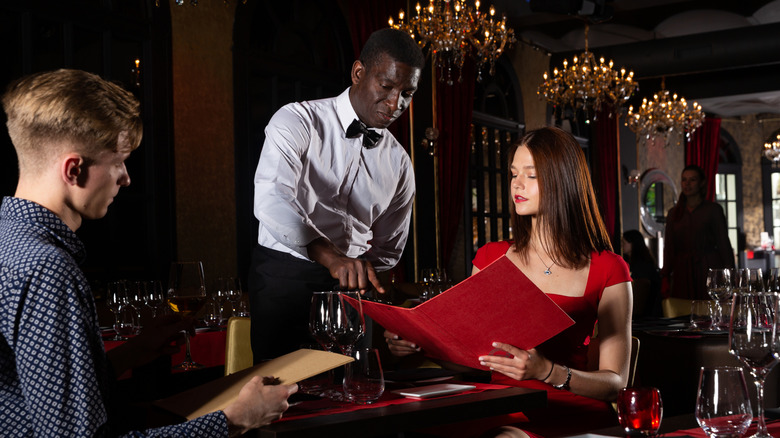
Most of us assume that an island vacation means we'll practically be living in our beachwear. However, Caribbean restaurants usually have strict dress codes, regardless of their size, location, or ambience. Some restaurants may have slightly more relaxed standards — like a "resort casual" vibe with tasteful shorts, shirts, or a simple sundress for women — but upscale restaurants typically expect their guests to arrive in more elegant cocktail attire. For example, St. Barts' Fouquet's Saint-Barth, named the best Caribbean resort of 2026, has "casual-chic" and "casual" mentioned next to the restaurants/bars on its dining page, indicating the attire expected of its guests. Similarly, ONE|GT, a Grand Cayman beach escape that opened in 2026, strictly prohibits beachwear and flip-flops in its main restaurant, Perle, according to the restaurant's FAQs page.
If you're planning to visit smaller, local restaurants during your Caribbean vacation, you should be able to make do with simple shirts/tops paired with beach shorts or khakis for men and a skirt or sarong/wrap-up for women. However, men will usually have to wear collared shirts and khakis at upscale restaurants, while women will be expected to wear a nice dress or evening gown. For more resort-casual restaurants, we recommend packing a versatile one-piece swimsuit that can be paired with shorts, skirts, or sarongs for a quick restaurant-ready outfit. However, if you're staying in an all-inclusive resort and using the resort's own restaurants during your vacation, check the resort's dress code before packing, and keep a nice dress or shirt just in case. One Reddit commenter mentions being turned away from his resort's buffet breakfast for wearing swim trunks with a towel around his shoulders, so you know these resorts are serious about their rules.
Asking for ingredient swap-outs or food that's run out
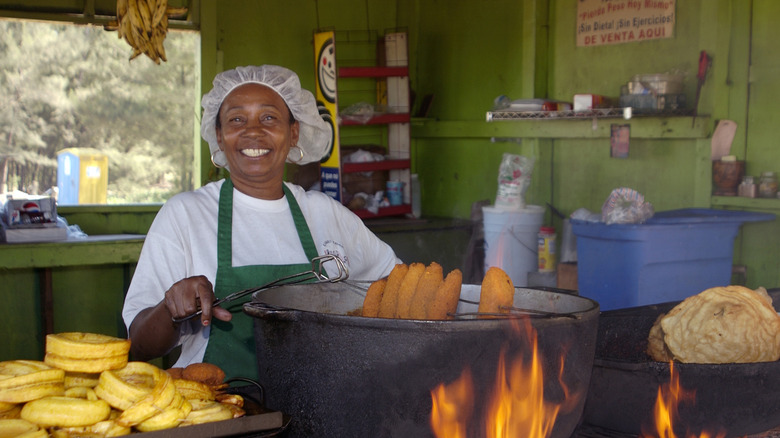
Ordering food at a Caribbean restaurant isn't the same as eating at the local McDonald's. Fast food in the U.S. is easily customizable; you can ask them to leave off the cheese or add extra pickles with no problem. Many non-fast-food American restaurants also allow those with medical or dietary restrictions to ask for ingredient swap-outs. However, few Caribbean restaurants offer this option. It isn't because they don't care about their customers' health, but because of the way their traditional food is made. Meats can be marinated as early as the day before, and dishes like oxtail soup are generally slow-cooked in large batches. So if you come in during lunch and ask for less garlic in your chicken marinade, that's not a request they can accommodate.
In the same vein, small, family-run Caribbean restaurants may also run out of food early. If they spent 7 hours making oxtail soup in the morning and it runs out by lunch, they can't make more for the customers sitting there because, well, it'll take another 7 hours to make a fresh batch. In fact, it's become a kind of running joke that the best Caribbean restaurants run out of food before you even get there, and seldom have what you want. "We nuh have dat" usually MEANS "we nuh have dat."
If you're traveling with picky kids, or you're unsure if a dish has ingredients you're allergic to, it's a good idea to research that dish before you head to the restaurant. If you let the staff know that you have a medical problem and can't have certain ingredients, they're usually happy to help suggest alternatives. You can also make side-dish modifications, like asking for rice and peas instead of rotis.