
Georgia's Popular East Coast City Known For Its Historic Waterfront Wasn't Always In 'Best Of' Lists
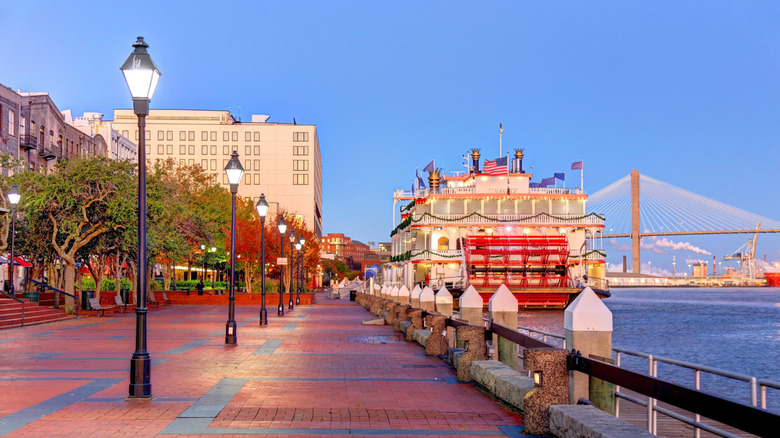
Savannah is one of the most recognizable destinations in the American South, known for moss-draped oak trees, historic squares, and a riverfront lined with businesses. The Georgia city regularly appears on travel lists for its historic character and walkable downtown, but Savannah's current reputation as a polished Southern getaway took decades to develop. Its historic district endured immense hardship, before preservation efforts and one famous novel turned the city's architectural heritage and haunts into some of its biggest draws.
Founded in 1733 by James Oglethorpe, Savannah was Georgia's first colonial settlement and became an important port on the Savannah River. Its location helped the city develop around trade in cotton, rice, and lumber, while its grid of public squares established the framework of today's Historic District, which is one of the 12 best historic districts to visit in America. Savannah also played significant roles during the American Revolution and Civil War. General William T. Sherman's Union army captured the city in December 1864 and gifted Savannah to President Abraham Lincoln for Christmas.
The city's historic character prevails, but embracing history was not always a priority. Parts of Savannah's downtown were deteriorating by the mid-20th century, as residents and businesses moved to newer, more car-centric areas. Some historic buildings faced demolition, including structures that preservationists later recognized as essential to the city's identity. The establishment of the Historic Savannah Foundation in 1955 helped launch a sustained preservation movement, and the organization's efforts helped save buildings and entire blocks that might otherwise have disappeared.
Savannah's decline and historic preservation
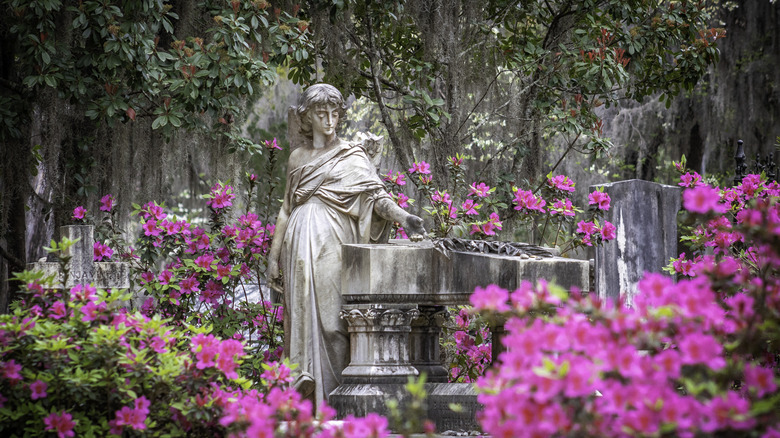
Savannah's challenges did not end with the preservation movement. Like many older American cities, it experienced decades of disinvestment, poverty, and crime. However, Savannah's crime rate today is half of what it was nearly 20 years ago. The city reported 5,274 crimes in 2025, down by 53% from 11,171 in 2007.
Part of Savannah's tourism focuses on true crime stories. The 1994 non-fiction novel "Midnight in the Garden of Good and Evil" by John Berendt tells the story of James Arthur Williams, who was charged with murdering his assistant in 1981. After four trials, he was let go, but the fame surrounding the story changed Savannah's tourism industry forever. Thanks to the book, Savannah's tourism dollars increased by 46% in just three years. The book went on to sell 4 million copies, and it received a Pulitzer Prize nomination. Savannah is no stranger to the dark and macabre, and many of the recommended activities on TripAdvisor revolve around ghosts, true crime, and dark history.
Today, Savannah is known as a walkable gem of lush gardens, Southern food, and picturesque streets. Visitors began arriving specifically to experience the city's historic architecture and tales, while restored buildings found new uses as restaurants, hotels, shops, museums, and residences. It is also no stranger to being ranked among the top destinations in the U.S. — Savannah is one of Georgia's best places to call home and is one of the 9 best cities in America for a spring escape.
A visit to Savannah today
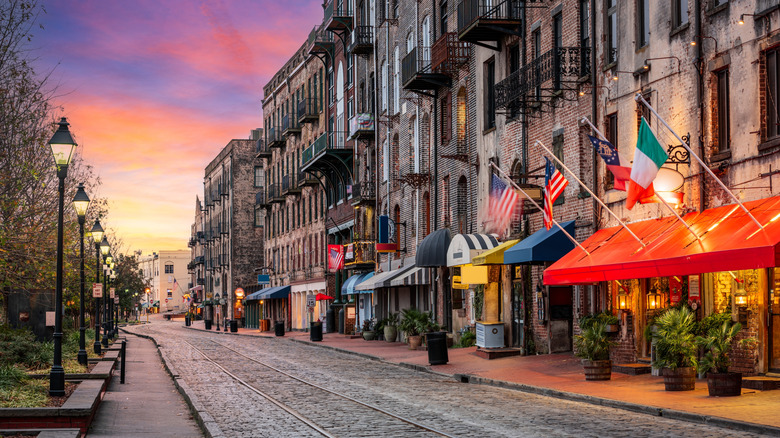
Savannah's Historic District is the heart of the city, with 23 remaining city squares spread across the original street plan. Chippewa Square is one of the best-known — it was even a prominent feature in the 1994 film "Forrest Gump." Meanwhile, Forsyth Park anchors the southern end of the historic core with its large fountain, walking paths, and 30 acres of green space. Visitors can explore the district on foot, by trolley, or through guided tours covering Savannah's architecture, military history, cemeteries, and ghost stories. Savannah is even home to one of the best spooky ghost tours in America.
The Savannah River remains central to the city's identity. River Street follows the commercial waterfront, where converted warehouses now house restaurants, shops, and hotels overlooking the river. Visitors can watch container ships and other vessels pass through the port, take river cruises, or cross to the eastern end of the district for views of the Talmadge Memorial Bridge. Just beyond downtown, the Victorian District and Starland District offer additional restaurants, bars, galleries, and independent businesses.
The city's proximity to the coast makes the destination even more desirable. Tybee Island is about 18 miles east of downtown, while nearby waterways and marshes offer opportunities for kayaking and other water sports. The closest airport to the city is the Savannah-Hilton Head International Airport (SAV), which is about 10 miles from downtown. Savannah is also located directly off of Interstate 95, which makes it a convenient stop on an East Coast road trip.