
Forget Crete — Retire To This Affordable European Alternative Nicknamed The 'Rome Of Portugal'
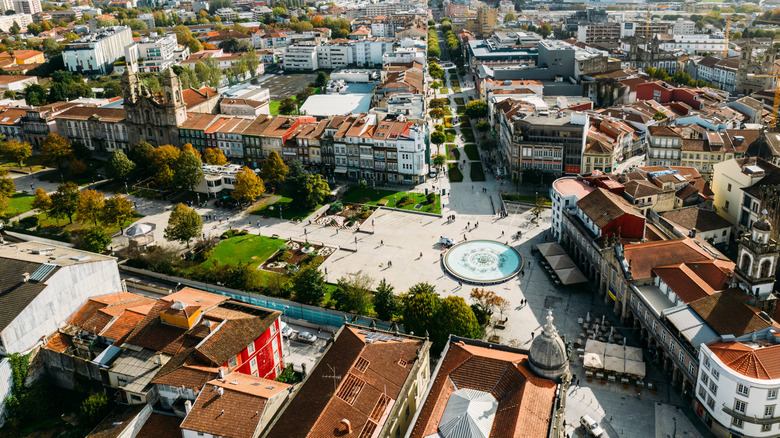
While it's true that classically popular European retirement destinations like the island of Crete offer a cocktail of sun, culture, and convenient living that can be hard to resist, there are plenty of alternatives that do all the above while remaining a touch more off the beaten path. One such option is the enthralling Portuguese city of Braga, where thousands of years of history combine with relative affordability and some seriously stunning architecture.
Referred to as the "Rome of Portugal" by publications like Daily Sabah, Braga initially rose to prominence as a Roman city called Bracara Augusta. It is one of the oldest cities in the country and boasts plenty of age-old landmarks to prove it: the ruins of Roman bathhouses here, a millennium-old cathedral there. And there's a kicker for the would-be retiree with Braga on the mind, as the city comes relatively cheap — the online cost-of-living database Numbeo estimates that everyday expenses in Braga are nearly 55% cheaper than in New York and 20% cheaper than in other popular EU retirement hotspots like Chania in Crete. On top of that, the weather in Braga isn't quite as scorching as, say, the Algarve, so you can feel free to wander the historical town and enjoy al fresco drinks in relative comfort.
Ready to check it out? Since Braga is set amid the lush topography of Portugal's northern Minho region, it's best accessed via the international airport in Porto, which is just over 40 minutes' drive to the southwest. It's also possible to make the same journey by train or bus in around an hour, another major reason why Braga is among the best day-trip destinations from Porto.
Why affordable Braga is a retirement gem
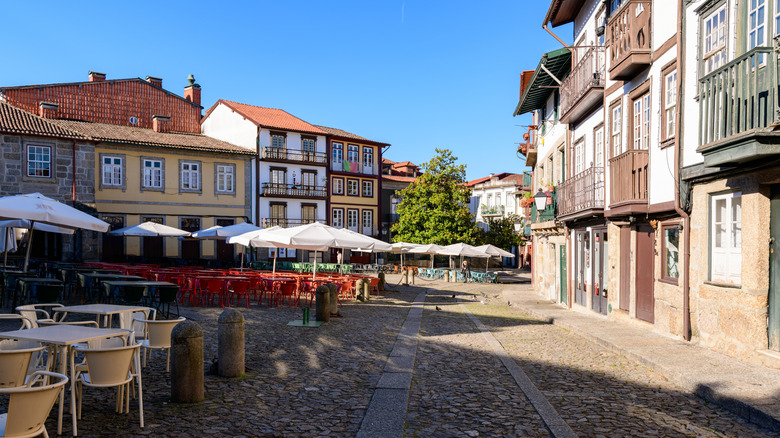
Portugal is no stranger to tip-top retirement destinations. Not only was it named the safest country in the world for retirees in 2026, but it's home to places like Caminha, which blends mountains and ocean beaches in a perfect retirement setting. Braga is also often lauded as a tremendous place for that post-work life. Forbes includes it alongside the sunny Algarve and vibrant Lisbon on their list of great places to retire in Portugal, while the eSIM company Holafly picks it out as one of the country's best specifically for its moderate costs and walkability.
Braga isn't likely to be as costly as some bigger cities. One commenter on a discussion on the r/PortugalExpats subreddit sums it up like this: "All in all Braga is cheaper than Porto which is cheaper than Lisbon." That's backed up by Portugalist, an online guide that deals with all the ins and outs of moving to Portugal. They point out that rental costs are significantly lower in Braga than in nearby Porto, and also nod towards the town's range of festivals for arriving expats — from the Roman festival in May to the green wine festival in July, there's oodles to keep you social here.
Another reason Portugal is such a popular retirement destination is the relative ease of visa rules for émigrés settling in the country. One route is the D7 Visa, which is open to anyone over 18 who can support themselves financially. In 2026, the financial benchmark for a single applicant is €11,040 a year (approximately $12,300). Once granted, the temporary residence permit is generally valid for two years, but can be extended for successive three-year periods. After five years of qualifying legal residence, applicants may be eligible for permanent residency in Portugal.
What to see and do in Braga
That's all the technical retirement stuff sorted. Now to delve a little deeper into what really makes Braga stand out from the crowd: Its rich, tangible history. You'll pass through centuries-old gateways to enter the beautiful old town of Braga. The whole area is pleasantly walkable, letting you hop between heritage gardens, cafes, and market halls without even thinking of hailing a taxi. The buzzy walking strip of Rua do Souto forms the heart of it all. Stroll that to find a thoroughfare dating from the 1400s that still throbs with life in the form of vintage book emporiums and those ubiquitous Portuguese wine taverns.
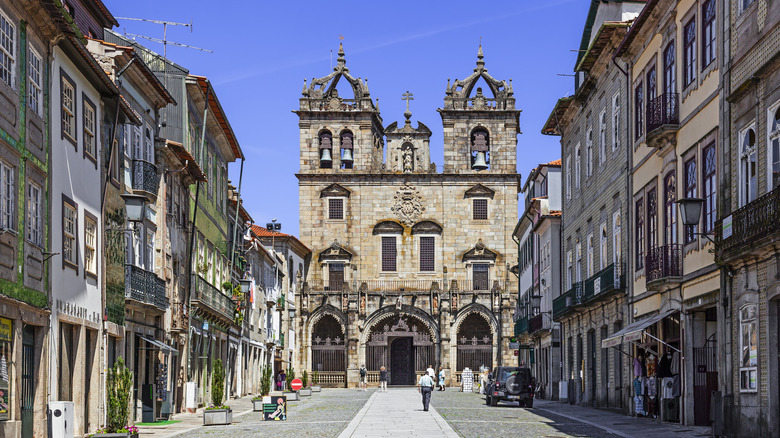
From there, it's only a few steps to the grand Santa Maria de Braga Cathedral, or just the Sé de Braga for short. It's a layer cake of styles that's been built and rebuilt over the centuries, now reigning as the oldest cathedral in the whole country. Look out for those friezes depicting medieval legends carved into the western gateway, and the distinctive soaring towers.
Then there are the traces of Braga's more ancient history; the spots that explain why it is known as the Rome of Portugal. Stroll just 10 minutes towards the southwestern side of the city center to find the Roman Thermae of Maximinus, where a 9,000-square-foot excavation site reveals the remains of a public spa once used by the Romans themselves. Make no mistake about it, Braga is a fine place to retire if you love spending your days strolling through the annals of Europe's long past.