
The World's Largest Marine Protected Area Has Pristine Reefs, Rare Wildlife, And Incredible Diving
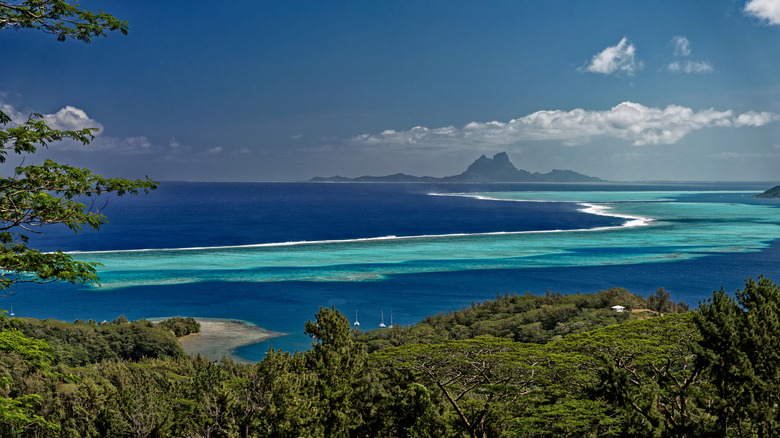
118 islands across five archipelagos in the South Pacific make up French Polynesia, aka the Islands of Tahiti. These far-flung islands are spread across an area that is roughly the size of Europe. While the islands are beautiful, the water is really the star of the show. It ranges from a deep blue ocean to clear turquoise lagoons, and you'll find stunning coral reefs and all kinds of wildlife beneath the surface. This incredible expanse of water is nearly all a part of Tainui Atea, the largest marine protected area on the planet.
Covering around 1.9 million square miles, Tainui Atea was first established in 2018 as a Managed Marine Area, and at the United Nations Ocean Conference (UNOC3) in 2025, it officially became a Marine Protected Area (MPA), which legally limits certain human activities. It includes nearly all of the waters in the territory's Exclusive Economic Zone (EEZ), which includes everything 200 nautical miles out from land, and it took years of work to put in place. Specific goals for Tainui Atea are "better-preserved lagoons and reefs, stronger biodiversity protection, and enhanced quality of observation and exploration for travelers." In practice, that incorporates a number of things, including reserving some lagoon and ocean areas solely for traditional and small-scale fishing. Industrial fishing is prohibited in fully protected areas, while seabed mining is banned throughout Tainui Atea.
"In French Polynesia, the ocean is much more than a territory — it's the source of life, culture, and identity," French Polynesian president Moetai Brotherson said at UNOC3. "By strengthening the protection of Tainui Atea ... we are asserting our ecological sovereignty while creating biodiversity sanctuaries for our people and future generations ... This ambitious choice also carries a universal message addressed to the international community — that of an Oceanian people who protect their vital space not only for ourselves but for all humanity."
Rare sharks in French Polynesia and where to see them up close
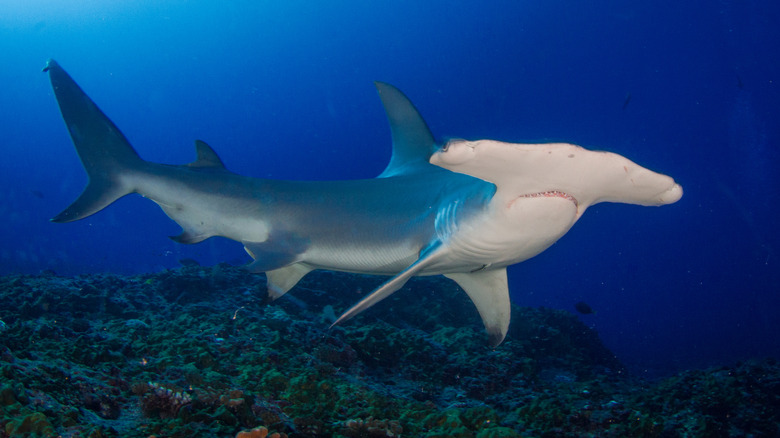
With restrictions on certain activities in Tainui Atea, the waters around French Polynesia provide a protected marine sanctuary for animals of all kinds, including 21 species of shark. Of those, a number are vulnerable, threatened, or endangered, including the scalloped hammerhead, oceanic whitetip, and blacktip reef sharks. For some, sharks have the reputation of being scary or out to get you, but you can actually swim with them if you keep a safe distance. Tahiti is one of the best places to do just that. Sharks are also culturally significant for the people of French Polynesia, and they are "tāura," or totem animals, who represent ancestors and protectors.
You'll find reef sharks throughout much of the region, and you can spot them when you're snorkeling or even sometimes just from shore. But if you want to see some of the sharks that spend time deeper in the water, you'll want to get your scuba certification before you visit French Polynesia and plan a dive trip or two. If you want a good chance to see hammerhead sharks, go scuba diving at Rangiroa, French Polynesia's largest atoll lagoon. January through March is great hammerhead shark mating season, and they gather at Rangiroa's Tiputa Pass. Then from around July to October, Tiputa Pass is a hot spot for manta rays.
Fakarava, a Polynesian paradise with tranquil lagoons, is another good scuba diving spot for shark lovers. You might see tiger, great hammerhead, and lemon sharks along with all kinds of fish and coral.
Whales, turtles, and coral reefs in French Polynesia
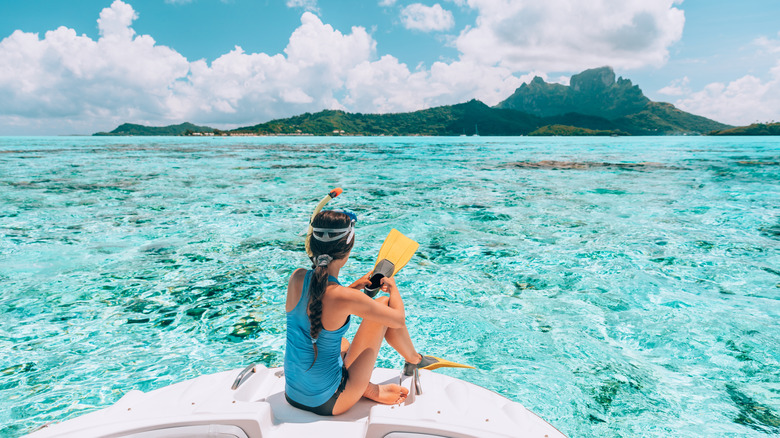
If whales are more your thing, visit Moorea, Tahiti's "sister island". Humpback whales come to French Polynesia from Antarctica to have their babies and breed from around July to November. The calm waters around Moorea make the perfect place for a baby humpback whale to start life. Moorea can also be a good place to spot sea turtles.
Along with the larger species like sharks, whales, and turtles, the Islands of Tahiti have some incredible coral reefs — they're some of the healthiest in the world. One of the most incredible reefs here is the "Garden of Roses." Large rose-shaped corals create a stunning underwater landscape. This gorgeous natural wonder is off the coast of Moorea at depths ranging from about 70 to 140 feet. For reefs that don't require a scuba dive, you'll find coral gardens near many of the islands. You can take a boat tour for coral snorkeling, while some reefs are accessible from the beach. An easy way to see the reef is with a drift snorkel. There's a popular one off the coast of Taha'a, aka the "Vanilla Island". Near the luxury hotel Le Taha'a by Pearl Resorts, you can get into the warm, clear water and see all kinds of beautiful fish and vibrant corals as the current takes you into the lagoon. To help keep the corals healthy, make sure to use reef-safe sunscreen before you get in the water in French Polynesia.
One reason that the wildlife and reefs are thriving in so many parts of French Polynesia is that the people there have worked to actively protect them. With Tainui Atea now established as the world's largest marine protected area, the Islands of Tahiti are proving themselves to be at the forefront of ocean and marine wildlife conservation.