
The 'Gateway To Cornwall' Is A Medieval Market Town With Shops, Scenic Castle Ruins, And Breathtaking Valley Views
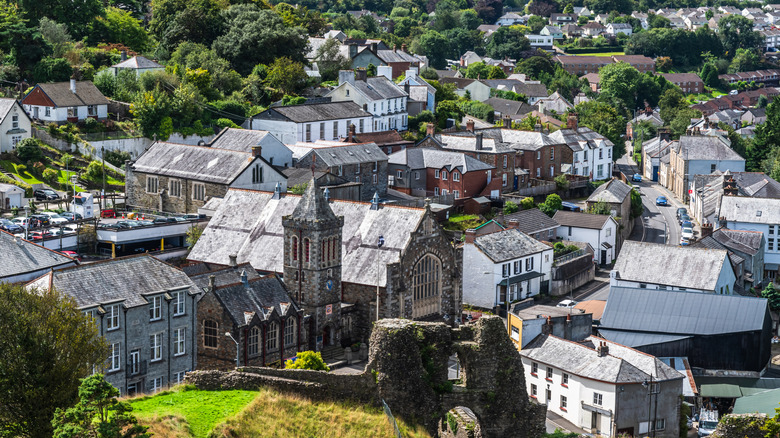
You'll probably see Launceston's most famous landmark long before you arrive. The castle spire soars above the town on a grassy bluff, keeping watch over the rolling farm fields, wiggling riverways, and woods that cover this rustic inland corner in England's South West. Below the castle, there's a charming chocolate box of a center ringed by ancient walls, gilded with handsome houses, and forever buzzing with the sound of commerce — there's a regular market, plus oodles of independent shops.
Launceston has long been hailed as the "Gateway to Cornwall." It's not hard to see why. The ancient market town made its name, in part, as a trading center as it sits right atop the main roads leading in and out of the county. It was the capital of the whole region for long spells in the Middle Ages. What's more, the border between Cornwall and Devon is but a whisker to the east, cutting a line straight across the countryside, from the English Channel in the south to the Celtic Sea in the north.
If you've got a hankering for a taste of old Cornwall, a glimpse of the great castle, and a trip through this bucolic part of the country, then you're in luck, for there are multiple ways to get to Launceston. You could jet straight into the Cornwall Airport Newquay (NQY), a short-haul regional hub that's under an hour's drive to the southwest. You could come down from the larger Bristol Airport (BRS), about a two-hour drive northeast. Alternatively, you could drive over from London Heathrow (LHR) – Europe's busiest airport – which takes under four hours.
Launceston's castle, church, and happening cafés
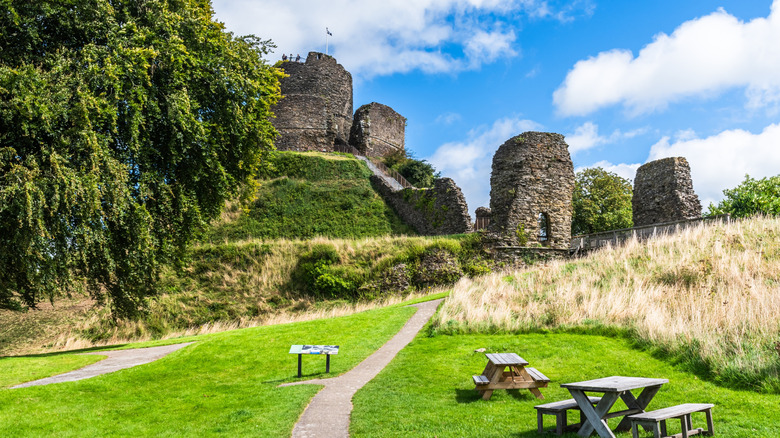
The 700-year-old Launceston Castle has grown, changed, and been rebuilt over the centuries, and visitors today are invited to wander through what remains of the medieval site. You'll enter via a half-ruined gateway on its south side, before scaling a set of steep steps and pathways to get to the tower. Once there, narrow spiral stairs lead all the way to the top, and to sweeping panoramas.
Beneath all that, the town center is a masterful mingling of the lively and the historic. Step onto Church Street to find St. Mary Magdalene's Church, a granite chapel that rises on the spot where an older shrine dating to the 1300s once stood. Nearby, the Southgate Arch stands as the sole remaining entry point through the medieval walls. And, between those, the bijou center unfolds in a medley of intriguing shops and cozy cafés.
They include Keep Audio Co., a sort of mishmash of a café and vinyl emporium that hosts regular music events, and The Byre, a gift shop with a five-star rating on Google that stocks a real hodgepodge of things — think bee-honey lip moisturizers next to nature books. There's food, too. Drop into Launceston's outlet of the local Malcolm Barnecutt bakery to get that fix of real Cornish pasty bakes, which it's been making for over 90 years.
The lovely Cornish countryside around Launceston
Launceston is huddled into the northern part of the Tamar Valley, a region that spreads between Cornwall and the scenic haven of Devon in a show of forest-clad hills and lush fields. You can gaze with wonder at large swathes of it from the top of that aforementioned castle, but there's also plenty to be said for getting out and exploring at ground level.
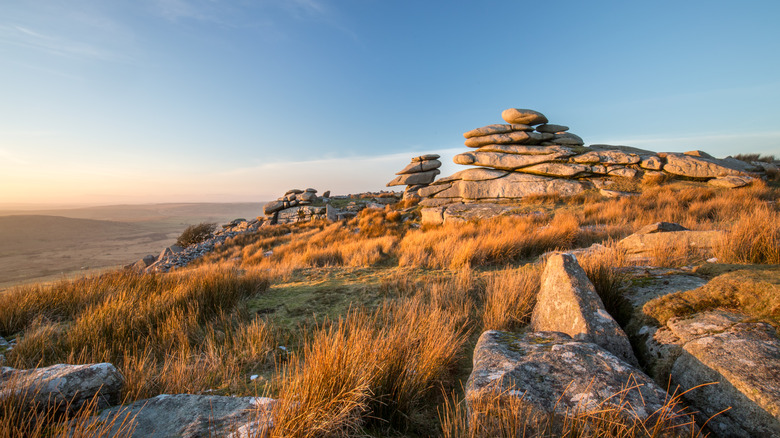
That might mean stepping onto the Tamar Valley Discovery Trail, a 31-mile route that goes all the way from Launceston to the lively coastal escape of Plymouth farther south. It crosses farms and forests, and offers views of Bodmin Moor in the distance. Talking of Bodmin, you could find yourself lost in that land of barren hilltops and heaths after driving just 20 minutes southwest of Launceston. There are lots of hikes within the moorland, ranging from woodland loops to harder paths up to the region's granite outcrops. The charming town of Bodmin is a little farther away.
The Two Castles Trail is another regional hike that heads eastwards to the town of Okehampton, going via the remains of prehistoric hill forts and through some seriously peaceful backcountry. That usually takes around four days to complete end to end. It will guide you all the way to the northern edge of the legendary Dartmoor National Park, where you can launch even more adventures through Britain's oldest forest, Wistman's Wood, or up to the heights of High Tor for views across two counties.