
10 Airbnb Red Flags Travelers Should Never Ignore
Airbnb, despite its controversies, remains a handy option for travelers, particularly long-term travelers seeking cheaper alternatives to hotels. It may have lost some of its core "live with locals" concept, with many listings operated by large management companies, but it's still a viable option that's comparable to hotels, guesthouses, and hostels. Of course, if you're still not super comfortable, there are some safer alternatives to Airbnb as well.
I've lived in Airbnbs almost exclusively for the past seven years as I traveled the world full-time. Although I've had some unbelievable stays throughout my career, I've also had some terrible ones too, and learned to pick up telltale signs that something might be wrong. A lack of consistent hosts, oversight, and across-the-board standards that are difficult to enforce, guests can often find themselves blindsided by negative experiences or even scams. So, here are 10 Airbnb red flags you shouldn't ignore as you plan your next trip.
To compile this list, I relied on my first hand experience as a full time traveler, coupled with some research into similar complaints from other travelers around the internet — as well as some hard data whenever appropriate.
Low ratings
This might seem like stating the obvious, but ignoring low ratings is always a terrible mistake. Purely from my experience, a lower-rated hotel can still be acceptable. Scores might reflect cleanliness, interactions with staff, or minor gripes like slow elevators, but hotels usually have a commercial framework for protecting guests.
Airbnb, however, is a far more intimate experience. Guests often feel like they're reviewing a host on a personal level, and feel a sense of guilt about marking them too low. In 2024, a whopping 85% of guest reviews logged 5 stars, with less than 1% clocking 1 star. This seems oddly positive, considering how many people complain about Airbnb stays on the regular. It's not helped by the awkward reciprocal reviewing system, where neither host nor guest can see what the other has said until they post a review themselves. Research from Boston University also found considerably more 5-star ratings on Airbnb than Tripadvisor, even among properties listed on both platforms. So, if I see a listing dropping below 4.5 with more than 10 reviews, I'm almost never going to book that place. Airbnb even thinks the same, with repeated low ratings potentially triggering enforcement. You'll also find that a lot of truly catastrophic stays that warrant a 1-star review are weeded out by cancellations, refunds, and other methods.
The best advice for this? Dig deeper. Other Airbnb review red flags are worth checking, too. If the Airbnb is fairly new, one low rating can do serious damage, so look into the reviews themselves and see if someone was just being harsh, or if there's a continual pattern. You can also reverse search images to see if it appears on other sites, too.
A host who asks you to communicate (or pay) outside the Airbnb app
Airbnb is designed to protect both the guest and the host when it comes to malpractice. So when a host asks to communicate or pay outside the app, it's a major red flag. There are other ways to make an Airbnb stay safer, too. Don't get me wrong, sometimes there are no bad intentions. The app can be clunky, and it's easy to communicate with WhatsApp. It's also cheaper to pay off-site as you can dodge all of Airbnb's fees — but that leaves you without AirCover protection.
Airbnb bans requests to communicate off-platform before booking. Some alternative communication is permitted afterward, but Airbnb may not have access to those messages when investigating a dispute (if it happens). Even guests sometimes instigate this in hopes of getting a cheaper rate.
I've learned this the hard way, and some of the issues I had with a particular stay were completely disregarded because I approached the host on WhatsApp instead of the platform. Now, I keep everything strictly in-app, only allowing off-app communications in specific situations — like if a cleaner or manager who checks on the house needs faster communication. Even then, I screenshot everything and post it in the app. Remember, a host requesting this isn't necessarily looking to scam you, but the request in itself should raise some concerns — especially if paired with some suspicious reviews. It's also worth noting that some hotels that list on Airbnb could be an exception, but make sure you know what's listed in your fees first, as they need to disclose everything.
No reviews — or reviews that seem suspiciously perfect
As noted earlier, plenty of Airbnbs have high ratings, but this may not reflect the full truth. So, it's important to analyze the more detailed reviews and broader listings to get a better idea of what you're working with. Some will have tons of reviews to search through, which has its pros and cons, while others will have none at all.
It's worth noting that a listing with no reviews is by no means a deal-breaker; every listing needs to start somewhere. You could just be the first potential guest (in which case, you might get a solid deal out of it). But if there isn't anything to go on, look at the pictures. If it's boasting professional-looking pictures — or super vague ones — and an alarmingly good price, your scam alarm should be going off. Equally, if there are countless 5-star reviews pumping out bland and similar write-ups, there's probably something fishy going on. Airbnb bans reviews not based on genuine reservations, although fake reviews remain a risk. Remember, you can also check other reviews guests have left to help make sure they're real people.
If it's clear that fake reviews are involved, avoid the listing at all costs. It's not worth the risk. A listing with no reviews, while less risky, should still prompt some more checks. Dive into the hosts themselves, see if they have other listings with good reviews. You can even check to see if they've left reviews as a guest on other Airbnb properties. Someone who has multiple stays of their own is leaving also leaving a big paper trail. If they seem like real people, send a message and see what they say.
Reviews that repeatedly mention the same minor problem
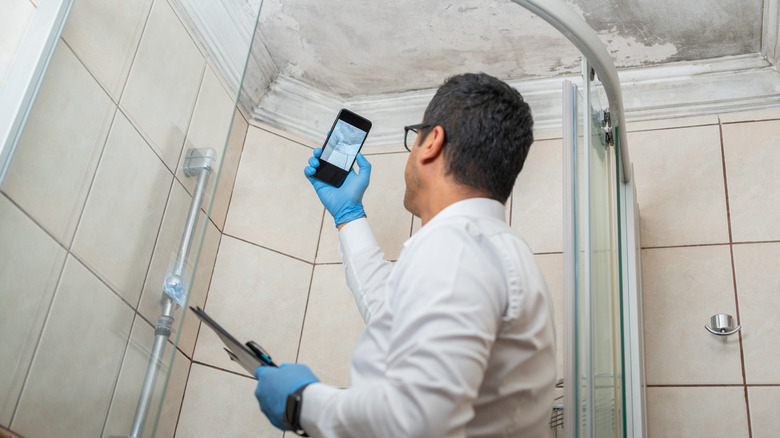
This one might sound simple, but after years of ignoring some small signs, this is one of the first things I look for. We've already mentioned that people tend to downplay or temper their complaints when it comes to Airbnb reviews — whether it's from fear of offending the host or any number of other reasons. So, reading one review that suggests the street below might be a little noisy on the weekend might not seem like a dealbreaker. Instead, focus on how often a complaint comes up, even if the reviews make it seem like a minor issue.
If you run through five or six of the same passive observations. You might find that the "little bit of noise" downstairs is actually a popular club that's full four nights a week, and the window doesn't even have double-glazing to tune it out. The same goes with cleanliness. "Could do with a deep clean" or "there's some room for improvement on the cleaning front" read over and over could possibly be a seriously filthy apartment that needs a lot of work done in actuality — not just a bit of dust in the cabinets.
It also suggests inaction by the host. If guests are continually mentioning the same thing — even if it is relatively small — there's at least some lack of accountability or care for the place. If you're in a situation where you need some help, that might not be the person you can count on.
Photos that carefully avoid parts of the property
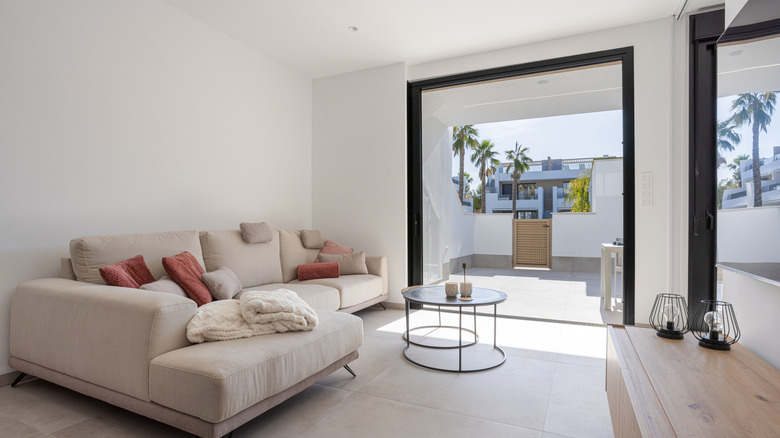
If you've ever looked for a rental apartment online, you'll know how sneaky people can be. Wide-angle lenses stretching the walls by a few feet and smart staging that gives off a flattering perspective are tools of the trade these days. And while it's not exactly screaming "trustworthy," they're not really lying either. But if an Airbnb host seems to be avoiding photos of a specific room or feature, it's worth it to take a pause.
You'll find this in listings advertising big "features." I've had situations like this in Paris, where I get so distracted by the epic balcony view of the Seine that I completely miss that there's only one awkwardly angled photo of the bedroom — which is also, apparently, the living room and the kitchen. I understand it. If an apartment isn't spectacular, but has one huge upside, I'd market that, too. But there should still be some transparency. If a listing specifies there are three bedrooms, a kitchen, a living room, and two bathrooms, there should be at least one clear image of each of them.
In these cases, don't be afraid to reach out for clarification. The host may be able to provide you with room dimensions or other photos of the place to help ensure you're getting exactly what you want. Also check what the "view" is that they're talking about. My "Burj Khalifa view" in Dubai was the very top of the spire, with the building next to us covering 99% of the view — I should have checked. Next time, I'll just stay at a lavish, luxury Dubai beach resort. The possibility that a host is willing to deceive their guests (even a little) doesn't bode well for the rest of the stay.
Question-dodging hosts
Communication is key with most things in life, and that's never more true than when dealing with Airbnb hosts. If you have questions — valid ones, of course — and the host seems unwilling to help, doesn't answer, or gives vague responses, that red flag should be waving high and fast. This is one of the few times I wouldn't advise digging deeper — just end the conversation.
There are levels to this, of course. The aforementioned rise of Airbnb management companies means that some communication can feel a little corporate. In this case, many of the people you'll be speaking to may have never set foot in the building. But they should still respond with professionalism and get back to you with the answer as soon as they can. A smaller set-up, or individual host, however, should have nothing to hide. For instance, as a digital nomad, having strong Wi-Fi was a big deal for me. I learned quickly that listings stating they had strong Wi-Fi did not guarantee it, so I started asking for a screenshot of a speed test. Almost all my hosts were fine with this, but others were immediately defensive, refusing to do so — and even accusing me of having bad faith. Interestingly, the one time I booked anyway, I almost lost my job thanks to the patchy connection.
This applies to any major question. If they're not clear on how far it is to the station but advertise it as "convenient," you should double-check. Their answer, or lack thereof, will tell you everything you need to know.
Prices that seem too good to be true
Sometimes you find an absolute gem. Maybe it's new listing that dropped its rate to attract its first few customers. Or, maybe you just have a remarkably kind host that wants to give people good value. However, sometimes what's being advertised just doesn't make sense for the price, especially if descriptions, photos, location, or amenities feel off.
If the price is unusually low compared with similar spots, there may be a reason. It might say "Central London" or "up-and-coming New York neighborhood," but what that may be hiding is the fact that you're actually a 45-minute walk from the nearest subway station (or in an unsafe area). This takes advantage of tourists' relative ignorance when it comes to a new place. My parents fell into this trap on a trip to New York City back in 2021, before the city's ban came into effect. The apartment was brilliant, with quintessential NYC vibes, but the neighborhood was extremely run-down and, after being harassed multiple times on the street outside, Ubers to the doorstep became essential.
Use all the information at your disposal to double check what is being promised. The listing says it's "minutes to Central Paris?" Check the map, because that could mean five minutes or 60. Does it claim to be in a "trendy district?" Get Googling. Maybe it's just an affordable, underrated suburb like Montrouge — in which case, great! Then, take a deep dive into the reviews and see if there are any patterns worth noting. Be careful with photos, too. If someone is using a rendering from original plans — or worse, AI-generated photos — ask for up-to-date pictures. Something is triggering that lower price, and the host isn't likely to let you know why straight away.
A long (and mildly aggressive) list of house rules
Objectively, a host has every right to have a few rules to help protect their home. You shouldn't be freaked out by someone asking you to try and keep things clean and leave your used towels in the bathtub when you leave. What can be a red flag, however, is an absurdly long list of house rules — and a ton of fees and fines attached to them. Airbnb says hosts should not charge penalties for specific cleaning or checkout tasks.
Again, there are levels to this. This Airbnb host that was complained about on Reddit, for example, has an insanely long list of warnings and household chores, but it probably could have been summarized to "use common sense and try to not make my neighbors angry." If there are fees for every slight faux pas, it's worth taking a breath and deciding if you're happy walking on eggshells on your next stay. The thing is, accidents happen, and hosts need to accept that. But monetizing basic expectations, especially alongside a huge cleaning fee, should concern everyone.
Some hosts have been found to charge $25 for missing a single item that needed washing, or, in some truly deranged cases, $10 just to lock the door in a shared listing and $50 to use the pool. Be sure to read the listing carefully, and reach out to the host. Maybe they're being overly cautious — or they're looking for any excuse to squeeze a buck from you. An Italian host I experienced attempted to charge me $900 for "damage to a unique sofa from the 1990s." There wasn't any damage, and it was never mentioned in the listing, but it shows that some hosts are willing to scrape a penny if they can.
Unclear check-in agreements or last-minute changes
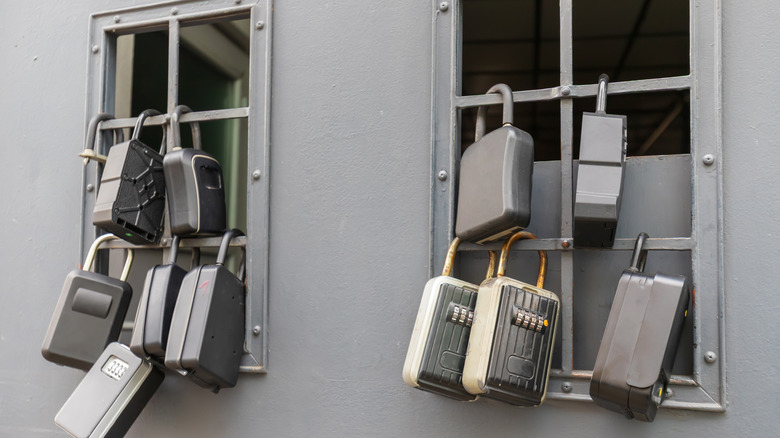
Unclear check-in arrangements can just be the hallmark of an unorganized host. I've definitely had this on multiple occasions and still had an amazing stay. I usually ask for the instructions well in advance. I'll also triple-check the address I've been given with Google Maps Street View, to ensure it really is in the place they say it is. If the host refuses to provide details, I cancel — that's that.
Last-minute changes, however, are something you can't really control until you've booked a place. This is why it's so important to run through all the other tips first to make sure you're not at risk in any way. That's because sudden changes, maybe a burst pipe or a broken lock, mean you need to move to another unit. There's a chance that this could be a bait-and-switch scam. The host has drawn you in with images of a luxury apartment, or at the very least a nice one, and on the day you're supposed to check in, they've moved you to a lesser unit. If you're unsuspecting, you might believe it's a host doing what they can. Instead, they've likely just grabbed money they knew you would pay for a superior place.
Be thorough when you check reviews for the listing to see if there are multiple instances of guests being moved, and even reverse search photos to see if the images appear anywhere else. If they pop up on another listing or another website altogether, avoid it at all costs. If your stay moves, record everything. Screenshots, voice recordings, and photos. Airbnb asks for supporting evidence when considering rebooking or refund requests.
It's in a place with bans on short term rentals
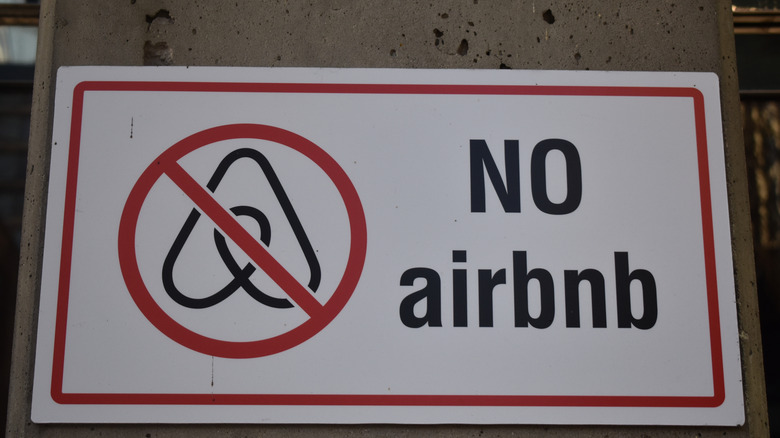
This seems a bit drastic, but you'd be surprised how many hosts are operating their Airbnbs in buildings that ban them or in cities that don't allow them. Cities have tightened short-term rental rules, sometimes partly to protect housing availability. New York City, for example, has a lot of rules — including requiring registration and restricting rentals shorter than 30 days. And, most of the time, those short rentals for entire apartments or houses where the host isn't present are prohibited.
If there's an out-and-out ban built into the city (like the one Barcelona is working on now), there's a good chance it won't be up there for long. Local councils and governments are also ramping up their methods of detection in these destinations, but that doesn't mean you won't come across someone who's chancing it. Check local laws so you aren't booking somewhere illegally. And if they were already happy to break the rules here, there's nothing saying they won't do it somewhere else.
In other cases, it might just be a building ban. These are harder to spot for guests, as there isn't any major law to discover. But your senses should start tingling a little when your check-in instructions feel a little evasive when it comes to the front desk or security, or even asks you to say you're visiting friends and family before being let up. These are all signs that something's off. I've cancelled two properties for those exact things, and unsurprisingly, both listings were gone a week later.