
Flight Attendants' Must-Have Travel Essentials For Stress-Free Journeys And Ultimate Comfort
We may receive a commission on purchases made from links.
Flight attendants live in a unique world. They have their own secret language that can be tough to decode, they operate in extremely tight spaces, and it's not abnormal to live in multiple time zones every day. Constant travel means, though, that flight attendants have plenty of tricks, tips, and hacks when they're passengers on planes. This includes how (and what) they pack in their luggage. Here, we'll take a look at 10 of flight attendants' must-have travel essentials for stress-free journeys and comfort.
Seeing the world is a dream for many people, but getting to far-off destinations can be a bit uncomfortable, especially if you're spending a long-haul flight in the economy cabin. Each of these items, from products that make it easier to sleep to goods that combat dry skin, will make every trip feel a little bit more luxurious (or even just bearable).
To compile this guide, we used firsthand comments from flight attendants on Reddit, Instagram, and Facebook, as well as articles written by flight crew on Travel + Leisure and the Future Flight Attendants blog, and information provided by NBC expert commentators.
Graduated compression socks
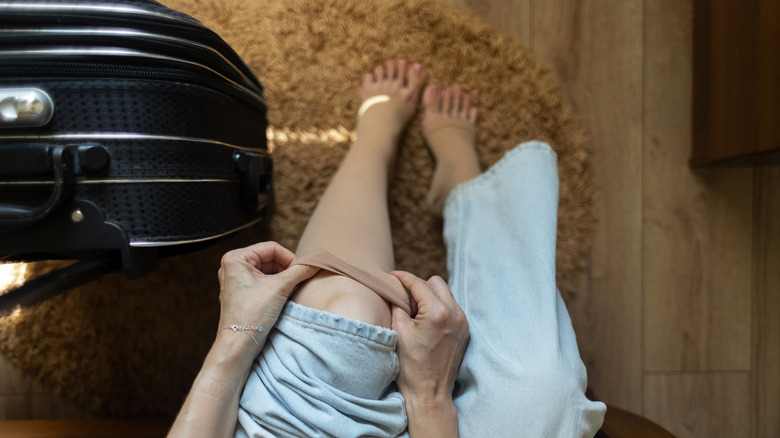
There are lots of things flight attendants notice about you when you board, including what you're wearing. If you're decked out in layers and compression socks, for example, they might assume that you're a seasoned traveler who knows that plane temperatures can fluctuate and lengthy flights can cause leg swelling. Flight attendants themselves tend to swear by graduated compression socks. Rather than offer equal compression from ankle to knee, graduated styles are tightest at the bottom and fit more like a standard sock at the top.
On the r/FlightAttendants subreddit, crew members had an entire discussion about wearing compression socks at work. One commenter wrote that they "work 8-9 hour flights to/from Europe and I wear compression socks every leg. At this point i have been wearing them for 5+ years and I don't like regular dress socks anymore." Meanwhile, another flight attendant chimed in to say she doesn't "wear compression socks because I wear dresses, but I do wear compression pantyhose on every flight I work." Some flight attendants on the board noted that their health insurance actually covers their compression socks or stockings. Depending on your personal profession, that might be worth looking into as well.
Dr. Motion's knee-high styles offer gentle 8–15 mmHg graduated compression and are available in many fun patterns. Comrad sells knee-high options are available in firmer 15–20 mmHg and even stronger 20–30 mmHg versions. If you have risk factors for blood clots, including a family history of deep vein thrombosis or known vein injuries, the CDC recommends talking to your doctor about what type of compression sock to wear during travel or other periods of prolonged sitting.
An inflatable seat cushions and foot rests
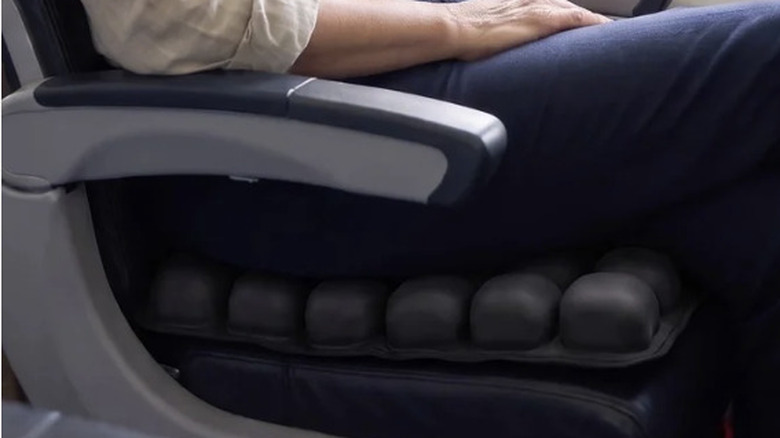
Uncomfortable seating is among the most common traveler complaints about Allegiant Air and other budget carriers. Even mainstream airlines like Delta, United, and American are not immune, with some travelers on Reddit claiming that the worst seats they've ever had were on United planes. Regardless of what airline you choose, an uncomfortable seat can make even a short flight miserable. This is why flight crews, who often spend hours sitting on tiny, barely padded jump seats, are fond of inflatable seat cushions.
The SunCloud brand asserts that its travel cushions are preferred by airline crews. The brand offers airplane seat cushions that are specifically engineered to reduce pain, and are lightweight and compact enough to travel well. With a cooling option and an outdoor style, there are SunCloud designs for all kinds of travelers. Another great option is the Travelr pillow. Former flight attendant Brenda B. recommended this brand because of its versatility — she has also used it at sporting events and other activities. Brenda wrote on the Travelr website that "it weighs about a pound, blows up in 30 seconds, and packs down small."
In a Travel + Leisure article written by flight attendant Carin Ryan, she also suggests the blow-up footrest stool by FlyPal. Make sure to check your airline's policies before packing an inflatable comfort item of any kind. Southwest, for instance, allows people in window seats to use inflatable footrests at altitude but requires them to be deflated during taxi, takeoff, and landing. Additionally, it's important to comply with all flight crew instructions whenever you are using an extra cushion or stool while traveling.
A weighted blanket
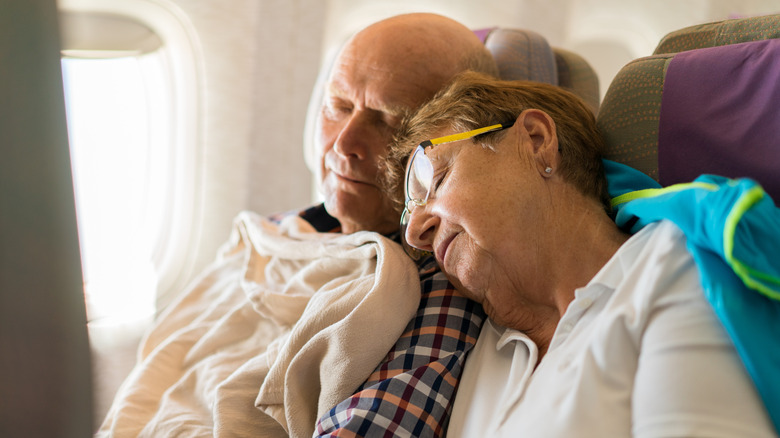
For nervous flyers, experts recommend a variety of things to make air travel feel safer. Weighted blankets are one item that can greatly help with anxiety, whether you're at 30,000 feet or on the ground. Some studies, like 2024 research shared by the National Institutes of Health (NIH), suggest that weighted blankets can be greatly beneficial for people who struggle to sleep, due to anxiety or medical conditions. In the r/FlightAttendants subreddit, flight crew members have discussed the least cumbersome weighted blanket options that work in the air.
One Redditor shared that the Cocoon Blanket brand is an excellent alternative to a conventional weighted blanket, noting that they "seem to be light weight and help with the anxiety aspect of sleeping." For travelers who want a true weighted blanket, the Magic Weighted Blanket Travel, which clocks in at 9 pounds, is crafted especially for those who suffer from travel nerves. The 10-pound Bearaby Travel Napper is another excellent option that includes its own carrying case.
It's important to note that the TSA does not issue specific guidance pertaining to weighted blankets. It is up to travelers to check their airlines' specific regulations and to ensure that their luggage meets all weight requirements. In some cases, a weighted blanket may be categorized as a passenger's personal item, but this differs from carrier to carrier. On Facebook, there is some anecdotal evidence that certain airlines may allow both a weighted blanket and a personal item, but this is not everyone's experience. The best option is to contact your specific carrier if you plan to travel with a weighted blanket.
A non-U-shaped neck pillow
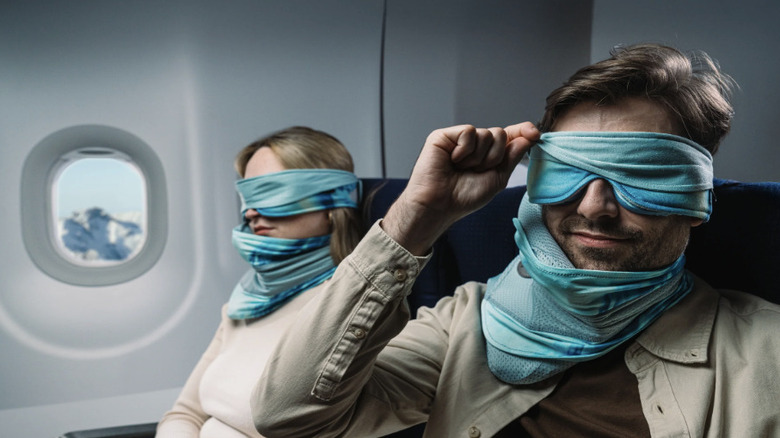
Although U-shaped travel neck pillows have become the standard in big box stores and airport shops around the world, this shape is not comfortable for many people. In some cases, these padded pillows can actually force the head forward, leading to more neck pain than you would have had without a pillow in the first place. Neck pillows that lack chin support can lead to similar issues, causing one's head to fall onto one's chest. Fortunately, there are some great travel-attendant-approved options available to today's travelers.
The Trtl Neck Pillow is one compact alternative to the bulky options that dominate the market. Flight attendant Rosie Marder shared on Travel + Leisure that she loves the Trtl because it takes up very little space and offers plenty of support. The Ostrich Pillow, which wraps all the way around the neck, is another good option that eliminates the chin support problem. The brand also offers other travel essentials, like earplugs and a heated neck wrap for relaxation.
Before you buy any neck pillow, it's a good idea to consider what your personal sleeping style is on planes. If, for example, you always purchase a window seat so you can lean against the wall, you may need a different pillow style than someone who prefers an aisle seat. For those with specific health concerns, such as spine problems, it may be worth consulting a doctor before purchasing a travel pillow to see which style is the best fit for their needs.
An oversized pashmina

The best travel accessories tend to work overtime serving multiple purposes, and an oversized pashmina is among the most versatile products one can have in one's bag. It can function as a traditional neck scarf, a shawl, a light blanket, and even a head covering (if you need it). You can even fold or roll a large pashmina to act as a makeshift lumbar pillow in your airplane seat.
Longtime flight attendant Deanna Castro, who runs the Future Flight Attendant blog, says that a cashmere pashmina is among her personal must-haves. She says it's a great way for travelers to stay warm without the weight of a jacket or blazer, and it can even serve as a way to dress-up casual outfits or uniforms. J.Crew's 79-inch by 33-inch cashmere wrap and Alo Yoga's large Merino wool scarf are both excellent choices for travelers, but there are also plenty of affordable options on Amazon or local retailers.
Pashminas are also readily available in many of the world's most fabulous travel destinations, so they make for excellent souvenirs that continue to be useful, trip after trip. I have a few from both Istanbul and Bali that bring back fond memories whenever I wear them. Street markets often have hand-spun pashminas for a good price. You can even chat with the artisans, which is always enjoyable, in my experience.
A contoured blackout eye mask
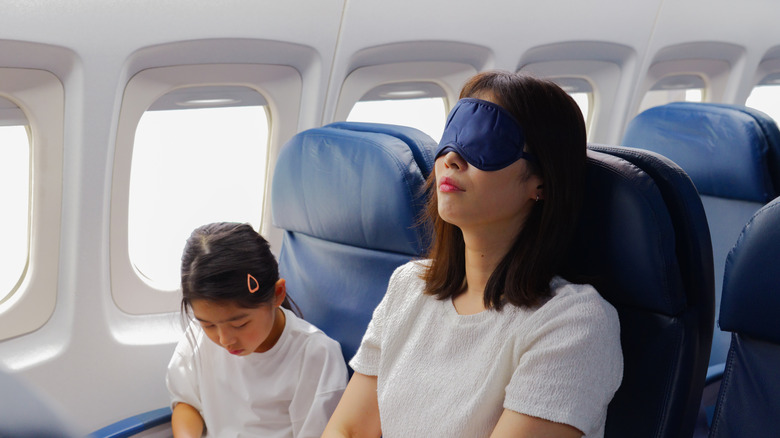
One of the toughest parts of sleeping in-flight is dealing with lights. Between cabin lighting, which can be intrusive even when it's dimmed, reading lamps, and illuminated seatback screens, there is never true darkness in an airplane. This can be challenging for people who require blackout shades at home. A blackout eye mask is an excellent way to trick the mind and body into beginning your normal nighttime wind-down routine, even when you're on an overnight flight.
Crew members on the r/FlightAttendants subreddit chimed in to help a fellow flight attendant who was struggling to rest after transcontinental red eye jobs. One person suggested, "Get an eye mask and some cheap noise canceling headphones ... Get into some ASMR or Calm Apps to help you relax." Flight attendant Natalia Yepes shared her advice with USA Today, noting that she finds that it's easiest to rest in sleep masks that don't press on the face. Typically, contoured masks are the best option to avoid undue pressure and discomfort.
The Slip mask is a great option that has been specially designed for people who wear eyelash extensions. Even if you don't have longer-than-average eyelashes, this mask offers a luxe experience overall, with reviewers noting that it's easy to blink while wearing it and that it's very comfortable. Another great contoured style is the Manta, which comes recommended by Ethan Green at No Sleepless Nights. This mask features individual padded "pockets" for each eye.
Noise-cancelling headphones
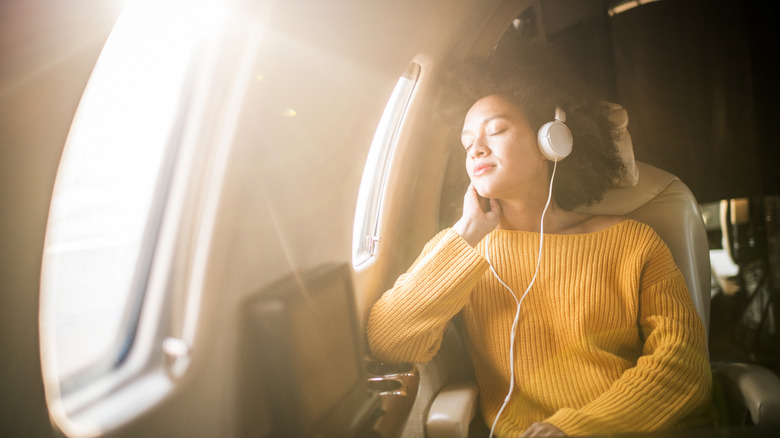
As you might have gathered from the previous section, noise-cancelling headphones go hand-in-hand with an eye mask for staying comfortable on overnight flights. From the engines' incessant droning to announcements from the cockpit to crying babies, airplane cabins can be too noisy for some travelers to rest. Back on the r/FlightAttendants subreddit, crew members have several suggestions for specific headphone models that they love.
One flight attendant shared that they "bought the Sony XM4s a few years ago and they work great! I use them on pretty much all my deadheads!" Someone else suggested the Ozlo brand, which manufactures earbuds that are specifically engineered for sleep. Yet another Redditor offered suggestions for both in-ear and over-ear models, noting that they prefer Bose QuietComforts for larger headphones and Sony WF-1000XM6s for earbuds. After almost 30 years as a flight attendant, Sherry Martinez also told USA Today that the QuietComfort model is her favorite.
Typically, over-ear headphones offer more complete noise cancellation, but some people find them uncomfortable to sleep in (and they require more luggage space if you plan to pack them). It's also important to note that every person's preferences and ear shape differ, so it's smart to test several styles before making a final decision. Headphones that work well for another traveler may not be the right fit for you personally, but these flight attendant suggestions are a great starting point.
In-flight skin and eye hydration products
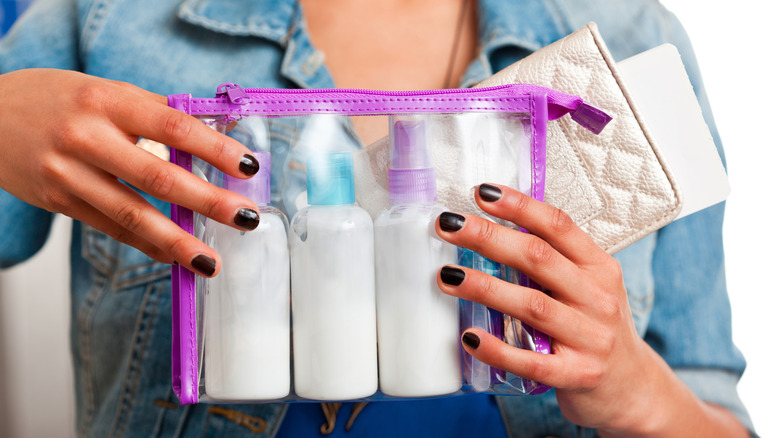
It's not uncommon for the air inside of a plane cabin to leave passengers and flight crew alike with dry skin, chapped lips, and irritated eyes. Crew members on the r/FlightAttendants subreddit have a lot of advice about this particular problem. The flight attendant who started the discussion shared that they "cannot seem to keep my skin hydrated enough to stop the flaking." One of the first suggestions was to combine "dove for sensitive skin body wash, then a sugar scrub in the shower" with a full-body Aquaphor regimen afterward.
Another crew member said that they love "Cicaplast balm B5 from la Roche Posay and rose hip oil from the ordinary." For those on an even tighter budget, old-school products like bag balm and castor oil can also soothe cracked, dry skin. Those with sensitive skin may find that it's a good idea to test all products at home before taking them on a flight. In regard to combating dry eyes in the air, people who wear contacts should pack a TSA-approved bottle of rewetting drops. Consult your ophthalmologist before selecting a brand since everyone's eyes are unique. Additionally, you may be more comfortable wearing your glasses on long-haul journeys.
If you want to build your own in-flight skin and eye hydration kit, there are a few logical essentials you should pack. A fragrance-free moisturizer (so the smell won't bother other passengers), hydrating lip balm, and eye drops, whether or not you wear contacts. Flight attendant and aesthetician Aimee LaMay told Condé Nast Traveler that she prefers Obagi skincare products, while flight attendant Shari Nunez told the magazine that M.A.C is her go-to brand.
Electrolyte packets
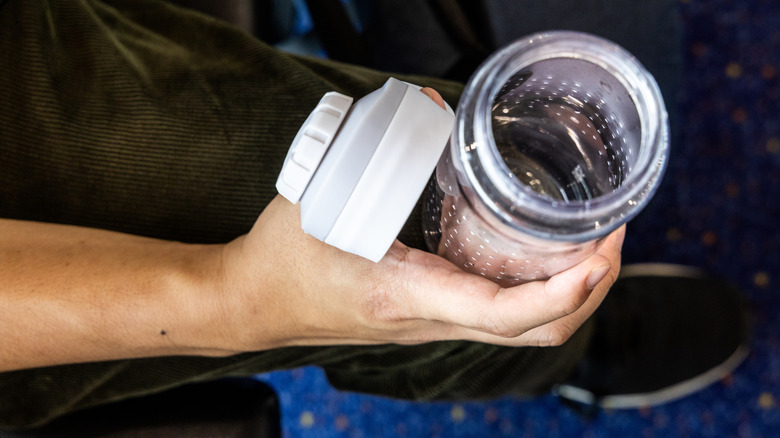
Some airline passengers may struggle to drink enough water on travel days simply because they don't enjoy the taste of plain water. Electrolyte packets are a great way to add more flavor to your H20, potentially helping you avoid dehydration. Flight attendants often use these packets themselves, and numerous crew members recommended Liquid I.V. in a particular r/FlightAttendants subreddit conversation. Another flight attendant suggested just using lemon and a tiny pinch of salt in your water as a nearly-free alternative.
Before you purchase electrolyte packs, bear in mind that different brands are intended for different purposes. For example, Quince's Recovery electrolyte powder is great for a post-workout beverage, while Magna's version is ideal for people who wanted a shot of magnesium in addition to sodium and electrolytes. Then, there's Nectar, which comes in many flavors, and takes pride in being fully organic. Some electrolyte packets may be more workout-focused than what travelers need, while others may have artificial flavors or too much sugar for your liking. Do your research or consult your physician before making a final decision.
If you decide to get some hydration packs, take an empty refillable water bottle through security with you. Then, fill it at one of your airport's water filling stations. Remember to pay close attention to the instructions on your specific packet. Different electrolyte powder brands have different directions. You may, for instance, need to mix your packet with a specific amount of water for best results.
Ginger chews or peppermints
Even experienced flyers can get a bit of airsickness in intense turbulence — or any number of other reasons. Fortunately, flight attendants have a couple of tried-and-true remedies. Ginger chews, peppermint candies, and peppermint tea are all excellent all-natural nausea remedies. Peppermints, in particular, can also double as breath refreshers prior to landing.
An American Airlines flight attendant named Jacey told Southern Living a nostalgic tale about how she started carrying ginger chews with her on every flight. When she was a child, a caring flight crew member gave Jacey's mother some ginger chews when she felt queasy during a trip. She never forgot this, and has made it part of her own passenger-care routine. An attendant who works for British Airways also shared her favorite tip to combat indigestion in-flight. She told Oxford Mail that a cup of peppermint tea every several hours does the trick.
NBC spoke to healthcare professionals who recommended some effective ginger and peppermint options that are all acceptable for plane travel. Dramamine's Ginger Chews are made by a trusted brand, while Gin Gins Original Ginger Chews are among the strongest on the market. If you're more of a peppermint lover, experts suggest a roll-on essential oil like one from UpNature. Simply roll a bit of the scent on your wrists and sniff it as needed.