
Between Two National Forests Is A Charming Pacific Northwest City With River Views And Nearby Outdoor Fun
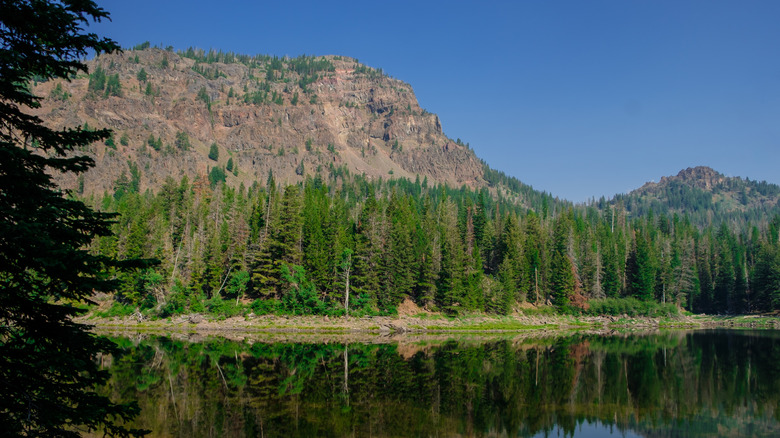
It's hard to imagine a place more beautiful than western Oregon, with its craggy coasts, mossy forests, and soaring mountain summits. But the eastern part of the state gives the west a run for its money. Here, there's a bit of everything: forests, deserts, gorges, painted hills, mountains, lakes, rivers. One town is perfectly positioned to enjoy all of it, and that's Prairie City.
Located in the John Day Valley, the quaint Pacific Northwest-based community of Prairie City sits sandwiched between two national forests, the Umatilla and the Malheur. Rivers and creeks carve across the landscape, several having earned federal recognition for their grandeur. The Strawberry Mountains and their namesake wilderness area sit at the city's doorstep; a lake-dotted alpine idyll full of hiking trails and wild-growing strawberries. Head west, and you'll hit an otherworldly landscape of rainbow-hued badlands, strata-lined cliffs, and shrublands where many a fossil has been unearthed. The best of eastern Oregon, all within reach; this makes Prairie City, a former mining camp and railroad town, the perfect basecamp for an outdoor adventure.
In order to get to Prairie City, fly into the Redmond Municipal Airport (RDM) near Bend and drive three hours east. Alternatively, since Prairie City is close to the Idaho border, you can fly into Boise Airport (BOI) and drive about three hours northwest. Either way, you're in for a long road trip, but the views are worth it. If you have access to your own plane, there's also the Grant County Regional Airport (GCRA) 20 minutes from town, which is open for public use but doesn't have commercial flights. Once you arrive, there is lodging at the Hotel Prairie or the Depot RV Park. Even though "city" is in the name, Prairie City is on the small side, so you can get your bearings on foot. Visit the famous "Welcome to Prairie City" mural, grab a bite to eat at a local restaurant like the Oxbow Dinner House and Pizza Company, and get ready for full days exploring the region's great outdoors.
Finding outdoor fun in Prairie City's two national forests and nearby mountain wilderness
Cradled between twin national forests, woodland adventures are Prairie City's forte. Spanning 1.4 million acres, Umatilla National Forest sits to the north. The vast 1.7-million-acre Malheur National Forest is a national forest full of scenic lakes, cabins, and trails. This forest is home to the roughly 68,700-acre Strawberry Mountain Wilderness and it extends south of the city. If it's hiking you're after, Malheur National Forest and the Strawberry Mountains are the place to go. There are tens of trails to choose from among the mountains and forest, many of which lead to alpine and subalpine lakes (like the short-and-sweet 0.56-mile Little Strawberry Trail), pass through Oregon's enchanting old-growth forests with magical evergreen scenery (like the 3.9-mile Meadow Fork Trail), or head to spectacular viewpoints overlooking the John Day Valley, as is the case with the short and easy Roads End Trail. Trailheads aren't accessible directly from town; you'll need to drive to your desired starting point, which, depending on the trail, could be anywhere from half an hour to an hour or more from Prairie City. Many trails are open to equestrians as well, and there are two camping areas, Slide Creek Campground and Strawberry Campground, that have vault toilets, fishing streams, and access to trails. These are very rudimentary camping areas, with no potable water, so you'll need to pack in (and then pack out) all essentials. Some trails and areas may be closed seasonally in winter or inaccessible due to road or weather conditions, so be sure to check the Forest Service website before visiting.
If you don't want to drive too far, there are a few close-to-town outdoor recreation options as well. Bates State Park is a 20-minute drive from Prairie City, where you'll find hiking trails and tent and RV camping. In winter, there's also the Dixie Sno-Park, a mere 10 minutes from town, for winter sports like snowshoeing and snowmobiling.
Discovering Prairie City's wet side at rivers and lakes
Prairie City's name is a bit misleading; while eastern Oregon is more desert-like, it's far from fully dry. The nearby national forests and mountain ranges have plenty of lakes, and the Strawberry Mountains are home to the headwaters of nearly 10 creeks and rivers. Many of these lakes and streams are home to a variety of trout, including brook and rainbow, making this area a trout-chaser's dream.
But another reason to visit is for the wild and scenic rivers, a federal designation for river systems of exceptional beauty and cultural value. There are two such rivers close to Prairie City, one of which is the Malheur Wild and Scenic River, whose headwaters originate in the Strawberry Mountains. Located roughly 27 miles south of town, the multi-forked river's wild and scenic stretch snakes through the backwoods of Malheur National Forest, making it difficult to access, but a few Forest Service roads like Forest Road 1647 can be used. One of the best ways to see and admire this stunning river is heading to the Malheur River Trail, a 7.5-mile hike that passes through old-growth forests along the riverbank. There are also horseback riding trails, camping areas, and fishing, especially along the North Fork.
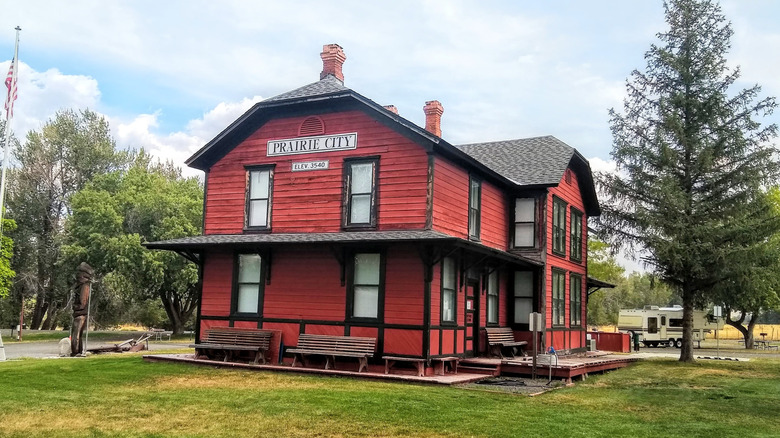
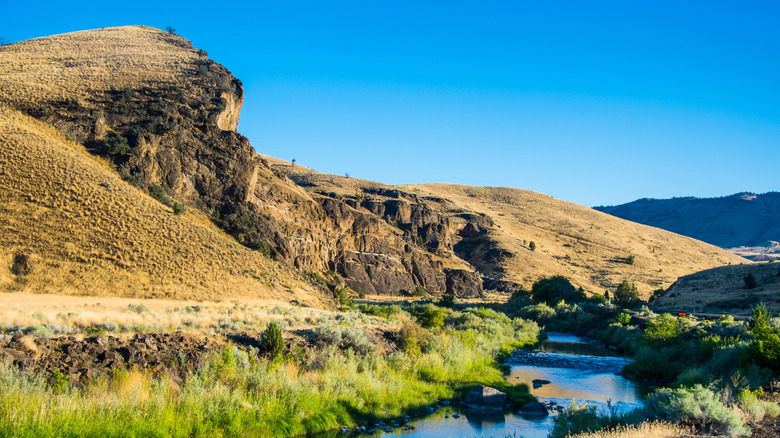
There's also the nearby John Day Wild and Scenic River, which is the longest undammed river in the state. The river passes right through Prairie City near the Dewitt Museum & Sumpter Valley Railway Depot (a fun spot to learn about local railroad history when you need a break from hiking and outdoor fun). Pro tip: for a day trip, follow the river west out of town along the John Day Highway. The route runs along the river for miles. With rolling grasslands, wooded mountains, and rocky gorges all around, it makes for an especially picturesque drive. After an hour, you'll arrive at the John Day Fossil Beds National Monument, an off-the-beaten-path colorful hill paradise where you can marvel at painted hills, hike through the desert landscapes, and visit the fossil gallery at the Thomas Condon Visitor Center.