
5 Japanese Onsen Rules To Learn Before Your First Soak
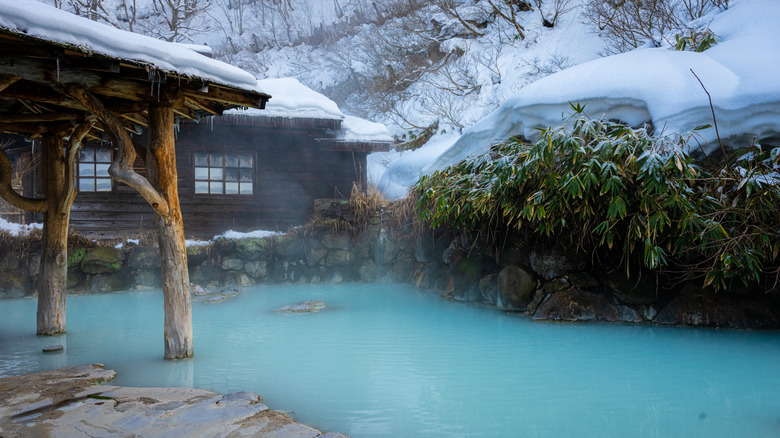
Japan's elaborate temples, springtime cherry blossom festivals, and world-class cuisine make it a fantastic destination for both newbie and experienced travelers. But those seeking true relaxation can't miss a visit to one of the island nation's more than 3,000 registered onsen resorts, Japanese hot springs rich in therapeutic mineral waters. However, the nuances of onsen etiquette can make even the most experienced travelers a little anxious before their first soak.
To avoid any embarrassing missteps, we relied on guidance from Japan's official government sources, including the Japan National Tourism Organization (JNTO) and the Japan Tourism Agency, as well as studies by regional tourism boards. We also turned to first-hand accounts on Reddit and from experienced travelers to see where tourists are going wrong. The author also used her experiences visiting onsens in Japan to help first-time onsen-goers make the most of their visits.
Before easing in, it's important to note that onsens aren't just hot tubs. They are filled with geothermal water from the ground — if not, these bathhouses are simply "sentos." In addition, onsens must meet certain requirements listed under the Hot Spring Act of 1948, including a temperature of 25 degrees Celsius (77 degrees Fahrenheit) or over when it emerges from the ground and the presence of specific dissolved minerals, such as lithium, bromine, and barium. Thanks to its location along the Ring of Fire, Japan is a hot spot of geothermal energy, with evidence of onsen use dating back to the Nara Period (A.D. 710 to 784). Nowadays, onsen culture is an integral part of Japanese life, and an experience many travelers are eager to try.
Research the specific guidelines for your chosen onsen experience before visiting
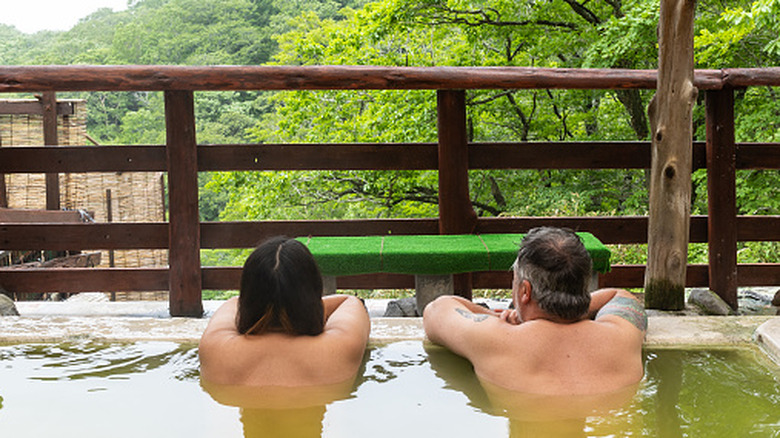
While the term "onsen" might be used broadly in the U.S., Japan also has many different facilities, each with its own offerings. Visitors can choose from entire onsen villages built over hot springs to humble communal bathhouses or mineral-water pools at upscale hotels.
Visitors with tattoos need to carefully check the onsen's policies, as most don't allow tattoos of any kind. However, as times change, some facilities allow guests with visible tattoos, while others may allow small body art concealed by a waterproof patch. Make sure to apply your patch in the changing room rather than in the bathing area. However, visitors with large tattoos on r/JapanTravelTips recommend opting for a private onsen, as wearing and removing the patches can be uncomfortable. In addition, traveling tattoo experts note that tattoo-friendly onsens often advertise their policies in English to attract international guests.
Most onsens are divided into separate men's and women's bathing areas, but there are a few that allow both genders to relax in the same spaces. However, keep in mind that this is not the norm. If you'd like to enjoy a calming soak with your partner, consider booking a night at a ryokan. Among the world's oldest types of hotels, these traditional inns often include a personal tub, in-room dining, and futon-style beds. They may also offer access to communal baths or private hotel onsen or sento that can be reserved for a set amount of time.
Take off your clothes and stow all belongings in the changing room
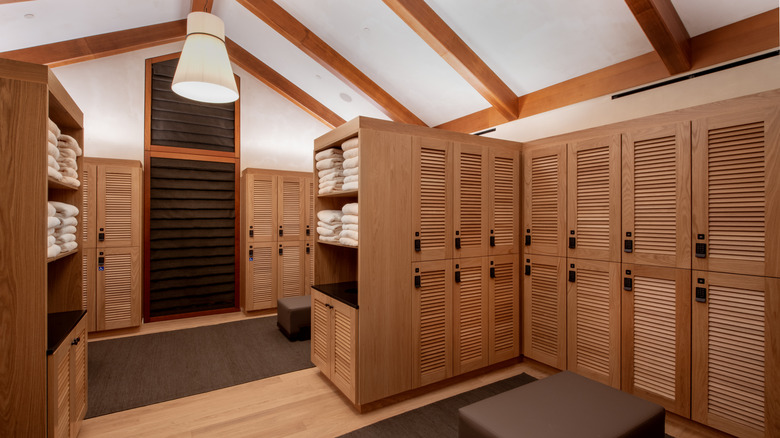
Unlike many of the best hot spring hotels across America, Japanese onsens usually don't allow clothing of any kind, including swimsuits or trunks. This means you must remove underwear, bras, socks, hats, and any other garments in the gender-specific changing rooms. Many onsen facilities identify the men's changing room with blue curtains and the women's with red, but if you're having trouble figuring out which room to enter, speak to staff or wait for a Japanese person to go first.
Before entering the changing room, take off and stow your slippers on the designated shoe shelf. Once inside the changing room, remove your clothes and put them in the provided baskets or lockers. This is also where you leave your phone, wallet, and any other personal belongings. Frequent onsen visitors recommend on Reddit removing any jewelry — except wedding bands — to prevent tarnishing, so it's a good idea to leave valuable pieces at your hotel. Regardless of whether you rent or bring your own large towel, leave it in the changing room to dry off with at the end.
You can enter the onsen area completely naked or cover your modesty with a small towel sold or included at many onsens. If you're worried about being naked, don't be. "While you might feel a little awkward at first, public bathing is completely normal in Japan, and people tend to be discreet and respectful of each other's space," per the JNTO. That being said, staring at other bathers is a big no-no.
Wash thoroughly before entering the onsen water
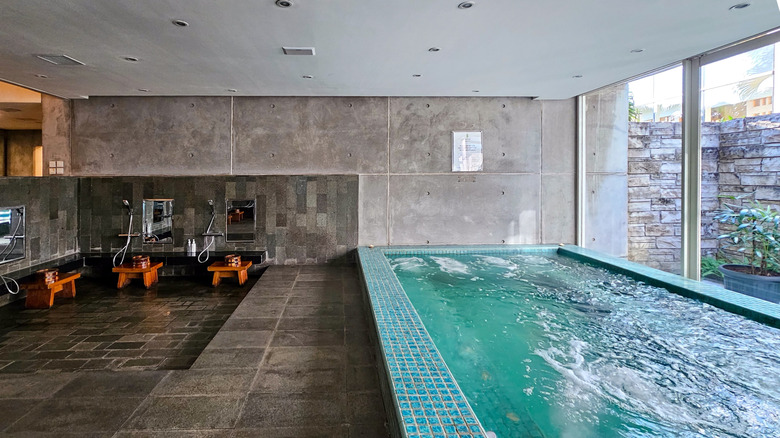
Arguably the most important rule is that visitors should maintain the purity of the onsen's water for all to enjoy. While a perfunctory spray down may be enough at your local public pool, Japanese onsen etiquette requires a thorough cleaning before your relaxing soak. This ritual is for both cleansing the body and mind so you can fully relax in the pools. Upon entering the onsen area, you'll find a section with stools, buckets, a shower, and usually soap, shampoo, and conditioner.
Here, you should take a seat and thoroughly scrub your body with the small towel usually provided by the facility. Remove makeup and sunscreen, then rinse away all soap and shampoo before entering the bath. You don't necessarily need to wash your hair, but anyone with long hair should tie it up and keep it out of the water. "Not all onsen have amenities (especially the ones that are located in a neighborhood area)," advised an onsen-goer on r/JapanTravel. "So it's a good idea to bring a travel-sized soap and shampoo at least if it is your first time."
Before entering the onsen pools, check your body for suds, leftover dirt, or anything else that may sully the water. Unlike taking a dip in your home bathtub, the intention behind onsen soaking isn't to remove dirt. It's relaxation, rejuvenation, and the transfer of minerals from the water to your body.
Never put your towel or hair in the water
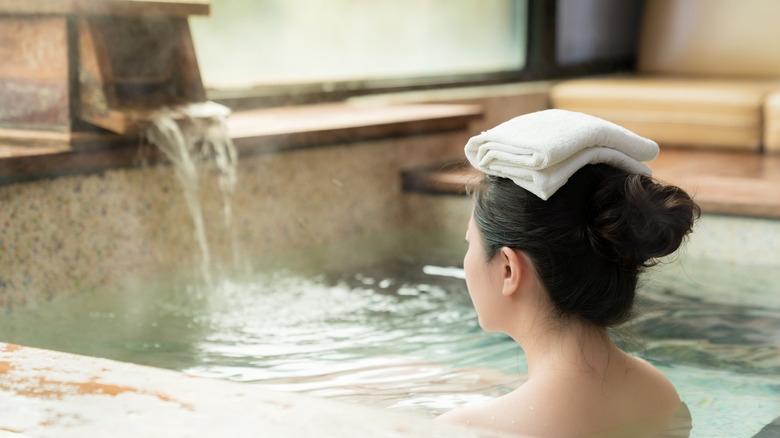
Once you've thoroughly washed your body, it's time to enter the onsen pools. The exact facilities depend on the specific onsen experience. For instance, some day-use onsens have only one or two tubs, while massive "super sentos" like Tokyo's Spa LaQua come with restaurants, saunas of all sorts, beauty salons, and spacious relaxation areas.
Regardless of the setup, never put the tiny towel in the water or accidentally let it dip into the onsen. Remember, this is the towel you used to scrub your body and possibly cover your private parts while walking around, so it's considered dirty. "Leave the towel off to the side of the bath or do as the onsen experts do and balance the towel on your head as you take a soak," advises the JNTO. Make sure no water drips from the cloth and that it's completely free of soap.
Visitors shouldn't put their heads under the water, and, if you have long hair, it's important to keep it out of the water. You can wrap your hair up with the tiny towel, or keep your locks secured in a bun or knot on the top of your head. Some frequent onsen visitors on Reddit recommend buying a terrycloth hair wrap to keep your hair out of the water and prevent water dripping from your hair into the bath.
Maintain the calm atmosphere and don't drip in the changing room
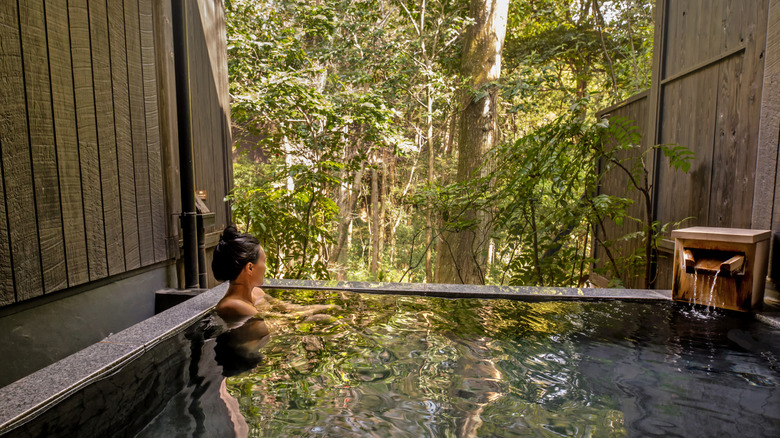
From the moment you arrive, before you've even entered the bathing area or changing rooms, keeping your voice down is essential. Being loud is a common travel habit that can make Americans seem rude abroad, and the practice of speaking quietly should extend beyond the onsen experience to public transportation, restaurants, and other shared spaces.
Splashing, jumping, running, and swimming are also breaches of etiquette. Instead, simply relax, close your eyes, or enjoy the scenery from an onsen with open-air tubs like Nishiyama Onsen Keiunkan, the world's oldest hotel mountain retreat. Besides excessive physical activity, there are a few other things that break the calm and are not allowed. "It's absolutely prohibited to take photos inside the bathing area, and also please refrain from bringing any alcoholic beverages into the bath," urges the Japan Tourism Agency.
Once you've had your fill of the warm water, pat yourself off with the small towel you used to scrub your body. If you're thinking, "How on Earth can that small, damp cloth get me dry?" the answer is it won't. The tiny towel sops up some of the water and keeps you from dripping on the changing room floor. Once inside, you can use the large towel to actually dry off. Whether you rinse off or not is entirely a personal decision. While many visitors pat dry to keep the minerals on their bodies, those with sensitive skin should consider washing off.