
Forget Colorado, Retire To This Underrated Midwest State That's Packed With Parks Without The Crowds
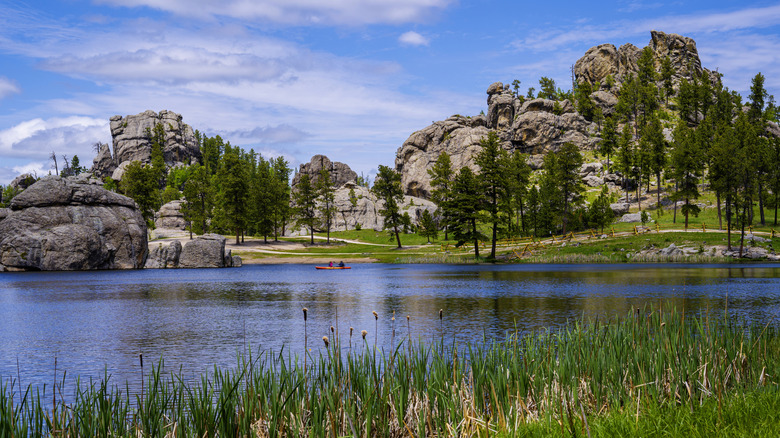
If you're staring down the long tunnel of retirement and daydreaming of possible escapes, you're likely considering several options. For those hoping to spend their post-work life or a longer vacation changing pace and living in an outdoor valhalla, the Rocky Mountains may seem like a worthwhile option. But there's plenty of reason to forget Colorado and consider a less-popular yet equally-worthy state: South Dakota. The underrated Midwest state is packed with parks without the crowds, and is a bit gentler on travelers' and retirees' wallets.
The underrated Midwest state offers many of the same benefits of a Colorado escape, sans many of the downsides. Take the most basic of factors: demographics. South Dakota's 935,000 residents are slightly older than Colorado's, with 19% at retirement age compared to 16% in Colorado. Retirees and travelers also have more elbow room in South Dakota, which is one of the least densely populated states in the nation, well below Colorado. That difference trickles down to the municipal level, where the largest city in South Dakota (Sioux Falls) has half a million fewer residents than Denver.
The Mount Rushmore State has the Rocky Mountain State beat on several fronts, especially when meeting the needs of retirees living on fixed incomes. As one of the most affordable places to retire in the country, costs, both in terms of assets like homes as well as daily expenses like groceries and transportation, are significantly lower in South Dakota, which has a cost of living index well below Colorado's. Median home values are also 46% lower in South Dakota, according to the real estate data site Nextburb. The only major downside is South Dakota's significantly higher healthcare costs, which may be a consideration for retirees living with chronic medical conditions. But overall, you'll likely be spending less in South Dakota than you would in Colorado — leaving more money for trips to all the nearby state and national parks.
The many parks and few crowds of South Dakota
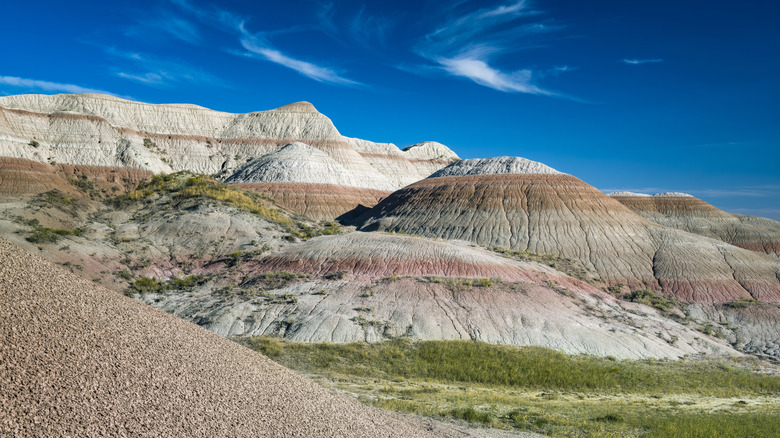
If you want to see the biggest difference between South Dakota and Colorado, a topographical map puts the comparison in stark contrast. Colorado is the vertically gifted state with majestic mountain ranges and snowy peaks. South Dakota is the mellow, plains-filled opposite (for the most part). That laid-back terrain is mirrored in the state's atmosphere and in South Dakota's numerous, less crowded parks. Take the state's two most popular national parks as an example. Colorado's Rocky Mountain National Park welcomed more than 4 million visitors in 2025, according to the National Park Service. On the other hand, Mount Rushmore National Park in South Dakota saw nearly half as many in the same year. That doesn't mean you won't be looking to escape the crowds at Mount Rushmore for another park. It means you'll have plenty of other options.
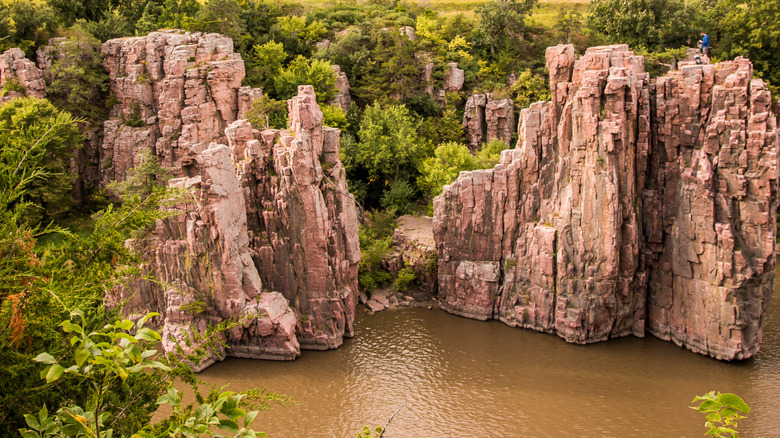
Badlands National Park clocks in at 244,000 acres compared to the 1,278 acres of Mount Rushmore National Park, yet it has almost half as many visitors, reducing the amount of time spent rubbing elbows with other retirees or travelers. The state's smaller, lesser-known state parks and recreational areas deserve attention as well. Newton Hills State Park, for example, offers a wildlife gem for lake fun, camping, and hiking under an hour from Sioux Falls. For a cozier experience, head to the relatively smaller confines of Palisades State Park. The 435-acre area offers the steep vertical cliffs and arresting visuals of Split Rock Creek. And you won't have to break the bank to experience South Dakota's natural treasures. Its affordable outdoor activities make it one of the three best states to retire to in 2026.
Life in South Dakota
South Dakota's small population and relative obscurity on the travel map leave it without a major international travel hub to land in. Instead, retirees and travelers can get there via more than a handful of regional airports scattered around the state. Visiting or moving there, however, won't allow ditching a daily driving habit. South Dakota's lower population density translates into lower walkability. The state ranks in the bottom half of SafeStreets' walkability data (it's one of the few areas where Colorado beats South Dakota). The harder part may be choosing where to live.
South Dakota's, known as the "Land of Infinite Variety," has four distinct regions, each with its own unique character. The many bodies of water in the state's Missouri River region could draw anglers, while the jagged terrain of the west, home to the Black Hills, may appeal to hikers and outdoorsy types for a trip or longer stay. It's also home to Custer County, a midwestern gem with roaming bison, vibrant parks, and mountain views, just west of Badlands National Park. If you'd like to keep the family around after retirement, you'd be in good company. South Dakota is known for multi-generational households, with five counties ranking among the top 10 for the highest percentage of multi-generational households in the nation. That variety translates to the weather too. South Dakota's residents enjoy the full breadth of all four seasons. It's the sort of place you can go snowshoeing in a blizzard or wine tasting in the sun, depending on the time of year.