
Between Middlesbrough And Scarborough Is A Historic Village Inside A National Park With Trails And Quiet Charm
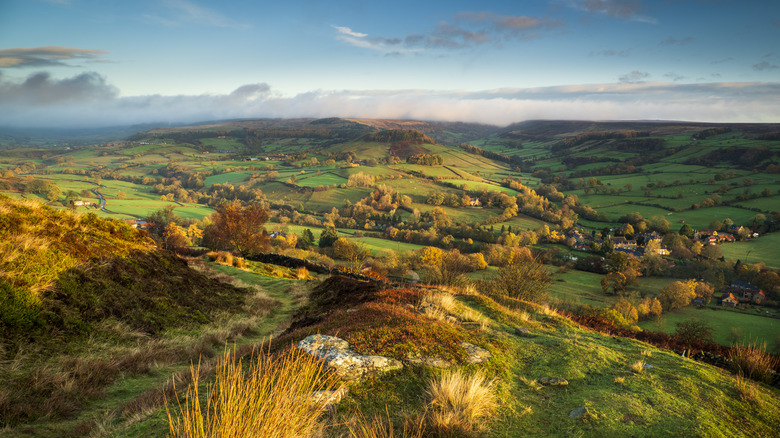
England has no shortage of small, charming rural villages to visit, but Rosedale Abbey deserves a special mention for anyone looking to explore English history and natural beauty in one trip. Far from the gravitational pull of the London metro area, Rosedale Abbey is located in the northern English county of North Yorkshire, roughly 28 miles southeast of Middlesbrough and 28 miles west of Scarborough.
Though Rosedale Abbey no longer has a functioning railway station, it is 18 miles from Malton Railway Station, which connects to both Scarborough and the city of York (both reachable from London by train) on the York-Scarborough Line. During the summer, the Moorsbus service runs buses between Malton and Rosedale Abbey. In keeping with its pastoral village atmosphere, Rosedale Abbey has several cozy lodging options, including traditional English B&Bs, rustic inns, and self-catering cottages.
While a quiet rural escape in the Yorkshire countryside is reason enough to visit for many travelers, Rosedale Abbey has a much richer foundation of history and scenery than most countryside destinations. The village's name harkens back to its heritage as a medieval-era nunnery, although the word "rosedale" is thought to have Viking origins, and much of its walking infrastructure follows historic railroads dating back to the Industrial Revolution. Best of all, Rosedale is located within the gorgeous North York Moors National Park, which provides a scintillating panorama of remarkable beauty around the village's borders. As a result, Rosedale Abbey is perfect for soul-stirring walks across a lush corner of the U.K., or quiet days enjoying the village's tranquil charms in an authentic rustic setting.
Yorkshire's quiet, historic escape on the moors
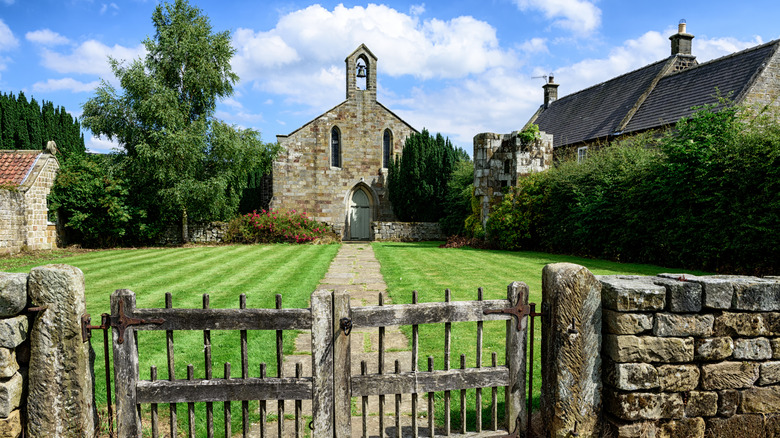
Nestled in a green Yorkshire valley, Rosedale Abbey sits amidst a vista of open moors, fields, and small thickets of trees. The River Seven flows next to the village's quaint stone houses and harmonious village green, a stark contrast to Rosedale Abbey of the 19th century, when the village was a loud and busy center of the region's mining industry. But Rosedale Abbey's history is much longer. Humans have inhabited this part of what is today North Yorkshire for more than 10,000 years, and Rosedale Abbey itself has seen everything from the Romans to the Celts to the Vikings. In fact, the "rose" in "Rosedale" may have come from an Old Norse word for "horse" or "moor."
The "Abbey" part comes from the medieval-era Rosedale Abbey. Built around 1158, Rosedale Abbey was actually a "priory," rather than a true abbey, serving as a home for a small group of Benedictine nuns before becoming associated with the Cistercian order. Sadly, the medieval structure that gave the village its name has long since crumbled into ruin. Today, only a single stone turret from the original priory remains in the churchyard of the Church of St Mary and St Laurence, though the new church may contain stones from the old priory.
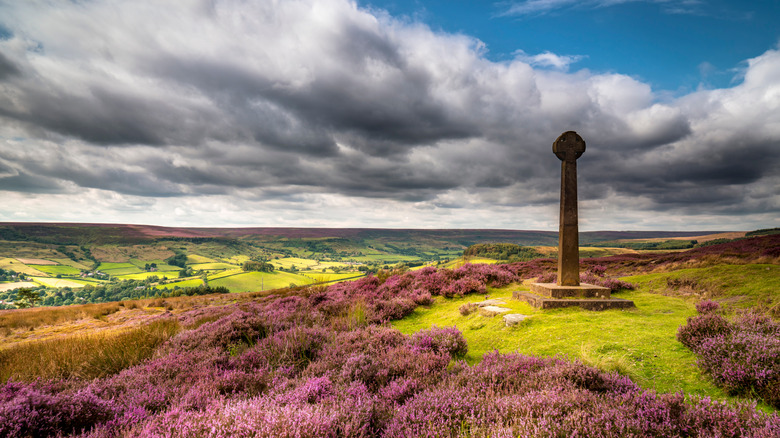
While visitors won't find the grandiose "fairy tale movie" vibes of France's dramatic Mont Saint-Michel abbey, Rosedale Abbey still shines with quiet splendor thanks to the surrounding North York Moors National Park. With haunting moorlands interspersed with ancient forests and coastline, North York Moors National Park evokes an image of England's ethereal side like few other destinations. Rosedale Abbey shares part of the national park's lush green dales and open-sky country, with terrific views of the colorful heather moorlands that make the national park stand out.
Exploring Rosedale Abbey
Rosedale Abbey is not as big or touristy as some of the top national park towns in the United States. However, it still serves as an excellent gateway to North York Moors National Park and its wonderful trails of different lengths and difficulty levels. A particularly rewarding tour of Rosedale Abbey and North York Moors National Park is the 7.5-mile Rosedale Walk. Following the course of rural roads on a circular trail, the Rosedale Walk covers the gorgeous valleys and farmlands dotting the national park landscape, as well as remnants of the area's mining days. Hikers will even get picture-perfect views of Rosedale Abbey itself.
Rosedale Abbey hikes are terrific for visiting the intriguing remains of industrial kilns and 19th-Century mining railways that add an eerie allure to North York Moors' flowery hay meadows. History buffs can take walking tours of mysterious ruins such as the old Rosedale Mineral Railway on the 10-mile Rosedale Railway and Rosedale Moor Loop, and the 4-mile Rosedale Abbey Calcining Kilns and Iron Mines Circular. Cyclists can explore Rosedale Abbey's national park landscape along sections of the epic Moor to Sea Cycle Network, which connects the moors to the Yorkshire coast over 19 miles of bicycle paths.
Rosedale Abbey's activities extend beyond hiking, of course. Visitors can also enjoy unique attractions like the one-of-a-kind Hanging Stones exhibit (a memorable art project that connects previously derelict buildings into one evocative artistic expression) and the prominent Rosedale Millennium Cross on their walking tours. Other Rosedale Abbey attractions include meditative relaxation retreats, agritourism farms, and glass studios, to say nothing of its exquisite tearooms. Just 10 miles away is the vibrant medieval town of Pickering, famous for its preserved 13th-century castle, market square, and dramatic Yorkshire scenery.