
What Happens If Your Bank Freezes Your Cards While You're On Vacation?
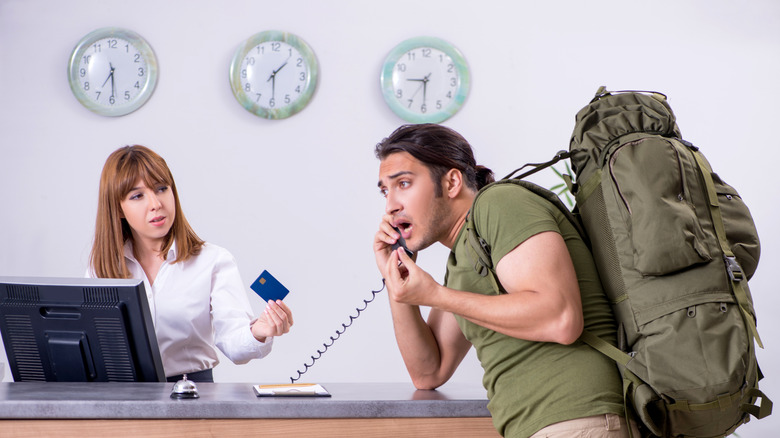
After all these years, you're finally on your dream trip to a remote island in the middle of the ocean, hundreds of miles away from the mainland. As you watch the waves crash to shore with a tropical drink in hand, the last thing on your mind is your bank account. As you go to the beach bar to settle your tab, you request to use your bank card when all of a sudden, the bartender looks at you straight-faced and says, "Your card has been declined." You raise an eyebrow, thinking to yourself, "I know I paid the balance before I left, and I certainly have enough to cover the bill." You get a ping on your phone. It's your bank. They've just sent a security alert stating that there's been suspicious activity on your account and that your cards have been frozen for your protection. In this scenario, what actually happens if your bank freezes your cards while you're on vacation, and what can you do while abroad?
Unfortunately, this has happened to me on three separate occasions while traveling abroad, with no way to contact my bank. It happened to my card while in India, Mauritius, and Croatia. All three times were a shock, and all three times were just as annoying and definitely worrisome. As someone who has been through this numerous times, the best thing to do is not to panic.
Banks typically use data analysis algorithms to detect whether or not a transaction — be one, or a few — fits the description of fraudulent or suspicious. This might raise a major red flag to the banks when the transactions just happen to be in a country outside of your origin. The Financial Times reported that fraudulent charges rose astronomically during 2020, causing banks to tighten their security measures when it came down to card transactions.
How to deal with a frozen bank card and other precautions to take before traveling abroad

If your account has been frozen, know that your money hasn't gone anywhere, but you won't be able to complete any transactions that involve moving or withdrawing funds. The first thing you'll want to do when this happens is to contact your bank's customer service line as soon as possible. You may even be allowed to arrange an amount of cash to withdraw from your account at a specific ATM while on the phone with the customer service agent. This can be tracked in real time with the agent to ensure it is you on the phone with them.
If you're unable to connect with your bank at that moment, having enough cash as an emergency fund when traveling is always a smart idea. Even travel guru Rick Steves advises tourists not to abandon cash, and not having any cash is actually one of the most common mistakes to avoid while on a trip to Switzerland. So what can you do to avoid a frozen card? The best thing to do is alert your financial institution of the dates of your travel, as well as where you plan on traveling to. Although the practice is said to no longer be needed, it's better to be safe than sorry. By calling in advance, banks can make a note on your account, so when a purchase is made in another country, it won't be flagged for potential funny business.
Having your bank accounts frozen while abroad can certainly be a daunting thing to deal with, but take comfort in knowing that temporary freezes are usually lifted fairly quickly. Once you've confirmed a transaction and verified your identity with the financial institution or credit card issuer, your bank will remove the freeze on your account. If you're planning to travel soon, check out the best credit card for travelers — and it isn't one you'd expect.